Growing up, I learned early on how to pretend. Not pretend in the playful, childhood sense — like dress-up or imaginary games — but a more quiet, painful kind of pretending.
I learned how to act like everything was fine even when it wasn’t, especially when it came to food, my body and how I saw myself. And If I’m being honest, a lot came from growing up next to someone who seemed to have the body I was always told I should want.
My sister has always been skinny. Naturally thin, effortlessly “perfect.” I’d hear people compliment her over and over: “You’re so tiny!” “You could be a model!” Even when they didn’t say anything directly to me, I could feel the comparison hanging in the air like a fog I couldn’t escape. Like a moth watching a beautiful butterfly flying through flowers. I was growing up in a body that didn’t match hers, and somehow that made me feel like mine was wrong — like I was the “before” picture no one wanted to be. I remember my mom saying, “Put the food down Saybel, your sister needs it more.” This cut deep between me and my mother’s relationship.
So I started hiding. I didn’t talk about how hard it was to eat in front of people. I didn’t admit how often I skipped meals, or how much shame I carried around after eating something “bad.” I smiled. I laughed. I made jokes. And inside, I quietly punished myself for not being “enough.” I told myself if I could just be skinny like her, things would feel OK. That I’d feel OK.
But it wasn’t just my sister’s body I was comparing myself to — it was every girl on my screen. Social media, TV shows, magazines, ads … they all sent the same message: thin is beautiful, and everything else you have to “fix.” Every time I opened Instagram or TikTok, I saw endless videos of girls with flat stomachs, perfect angles and “What I eat in a day” clips that added up to barely a snack. When those images are all you see, they start to feel like the only standard that matters. What made it worse is how fake so much of it is – filters, Photoshop, angles and lighting tricks. I didn’t just want to be skinny ; I wanted to be accepted, loved, and seen the way those girls were. I didn’t realize that I was measuring myself against something that isn’t even humanly achievable most of the time.
But here’s the truth : Striving to look like someone else — especially someone you love — is a trap. It doesn’t make you feel better. It just makes you feel invisible. I was fighting a battle inside my own mind, and nobody knew. And I let that happen, because I thought admitting it would make me weak. I didn’t know that there is real strength in saying, “I’m not OK.”
Now I’m starting to learn that I deserve to be seen as I am. That my body is not a failure just because it isn’t like hers. That no one should feel like a failure because their bodies are different. That food is not something to earn or fear. And that pretending doesn’t protect me — it only isolates me. What I needed back then wasn’t perfection. It was protection and compassion. It was someone to say, “You don’t have to look like her. You’re already worthy.”
I am proud of who I am and how I look. I’m not going to pretend anymore.
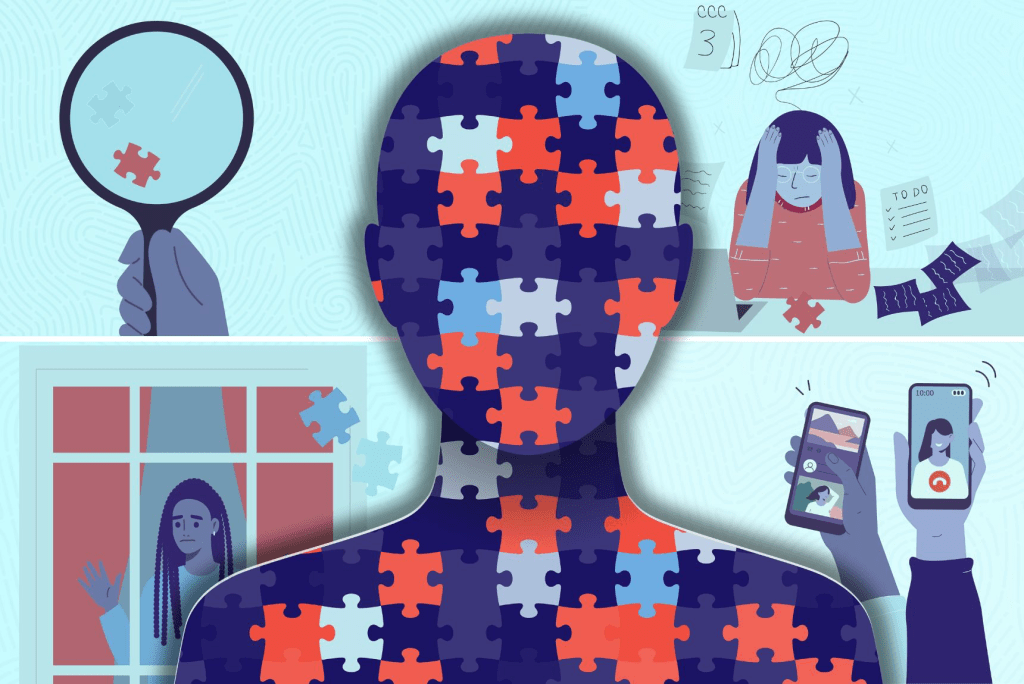
On the surface, college campuses buzz with energy – late-night study sessions, packed lecture halls and students chasing dreams with iced coffee in hand. But beneath that energy, many students are struggling with something less visible: their mental health. Anxiety, burnout and depression are increasingly common among college students (https://sph.umich.edu/news/2023posts/college-students-anxiety-depression-higher-than-ever-but-so-are-efforts-to-receive-care.html) , yet talking about those issues make some students uncomfortable and nervous. For many, the pressure to “have it all together” drowns out the need to ask for help.
Despite growing conversations around mental health, stigma remains a major barrier. Some students often feel that admitting they’re struggling could make them appear weak, dramatic or incapable of handling college life.
“I felt like everyone else was thriving, so I kept pretending I was too,” said Natasha, a third – year biology major at Mercer University.
This mindset – one that values toughness over vulnerability – can leave students isolated right when they need support the most.
Awareness of available mental health resources is another challenge. Many colleges and high schools offer counseling services, wellness centers or peer support groups but students often don’t know how to access them – or they assume the wait times are too long to bother.
“I thought the counseling center was just for people in crisis,” Maggie, a high schooler at Northview High School, shared. “I didn’t know I could go just to talk.”
Schools may host mental health events during midterms or finals, but that’s not always enough to change a culture of silence.
Students may benefit from more than just a flyer or a single awareness week. Ongoing, visible messaging from professors, resident assistants, and campus leaders can help reinforce that seeking help is a common and supported choice. Even when some teachers praise mental health as an important thing, some don’t realize they give more work than relaxation time.
“There are professors who preach that mental health is important and say you should take care of yourself, but then they say OK and you have a test in three days that is half your grade.” Naluchi, a senior in Mercer university, says.
When faculty incorporates mental health resources into their syllabi or when student organizations engage in open discussions about emotional well-being, it communicates to students that their challenges are recognized. Even modest efforts – such as faculty highlighting office hours or promoting designated wellness days – can contribute meaningfully to a supportive academic environment.
Breaking the stigma around mental health in college starts with honest conversations. Students are under pressure: managing school, jobs, relationships and identity – all at once. Minimizing or overlooking emotional challenges may influence the way support resources are accessed or perceived.
“My school includes mental health and daily conversation, some weeks, which benefits the kids who are struggling in secret, and I think that’s what makes it stand out from all the schools that don’t.” Kerisha is a two-year psychology major from Mercer University.
These outcomes may offer a broader perspective on what success in education can look like.
CNN reported children’s deaths by guns have been steadily increasing each year, , passing car accidents in 2020, with at least 18 school shootings being reported in the US as of May this year.
In the spring semester of freshman year, my school had its first school stabbing. In America, gun violence in schools is normalized as it happens so frequently. In most cases, school shootings are forgotten a month later until the next one cycles through. That next week, no resources were provided and nothing was discussed, I was terrified for my life. The intruder was discovered to be an enrolled student, and he successfully stabbed a student. The victim was severely injured, stabbed multiple times and immediately transported to the hospital to undergo surgery.
Youths are the number one demographic targeted towards gun violence, all of them being too young to experience life to the fullest, their lives being cut short by a bullet. This is a result of the lack of background checks and instruction teens are given. In many states, there are few regulations for teens possessing guns at a young age.
These major effects can mentally and physically consume a person, a situation they had no control in permanently changing their perspective in life. Disproportionately affecting minorities
The Second Amendment gives Americans the right to “a well regulated Militia, being necessary to the security of a free State, the right of the people to keep and bear Arms, shall not be infringed.”However, this amendment never states that gun rights supersede human life. Imposing stricter gun laws does not erase gun rights. Countless lives have been taken because of the lack of regulations to get a gun. A massive decrease in deaths will occur with stricter laws being applied to gun access following higher age requirements, weapon licenses, and extensive background checks. This will massively impact society to have a decrease in homicide, school shootings, suicides, and accidental deaths if we implement stricter gun laws.
CNN reported children’s deaths by guns have been steadily increasing each year, , passing car accidents in 2020, with at least 18 school shootings being reported in the US as of May this year.
In the spring semester of freshman year, my school had its first school stabbing. In America, gun violence in schools is normalized as it happens so frequently. In most cases, school shootings are forgotten a month later until the next one cycles through. That next week, no resources were provided and nothing was discussed, I was terrified for my life. The intruder was discovered to be an enrolled student, and he successfully stabbed a student. The victim was severely injured, stabbed multiple times and immediately transported to the hospital to undergo surgery.
Youths are the number one demographic targeted towards gun violence, all of them being too young to experience life to the fullest, their lives being cut short by a bullet. This is a result of the lack of background checks and instruction teens are given. In many states, there are few regulations for teens possessing guns at a young age.
The Second Amendment gives Americans the right to “a well regulated Militia, being necessary to the security of a free State, the right of the people to keep and bear Arms, shall not be infringed.”However, this amendment never states that gun rights supersede human life. Imposing stricter gun laws does not erase gun rights. Countless lives have been taken because of the lack of regulations to get a gun. A massive decrease in deaths will occur with stricter laws being applied to gun access following higher age requirements, weapon licenses, and extensive background checks. This will massively impact society to have a decrease in homicide, school shootings, suicides, and accidental deaths if we implement stricter gun laws.
If you or someone you know has experienced suicide ideation or trauma by gun violence, dial 988. Reach out, you aren’t alone.If you or someone you know has experienced suicide ideation or trauma by gun violence, dial 988. Reach out, you aren’t alone.
“One of the ways that we know that increases dopamine in the brain are extreme feelings,” Joe Dennis, a professor at Piedmont University and a former journalist, says. “So extreme feelings of anger is one of the ways that people keep engaged on platforms.”
As artificial intelligence evolve, the challenge of pulling the truth from online is only getting harder. AI technologies enable individuals to generate images and news that can be difficult to tell apart from factual information. People with large followings with spiteful motives can rapidly produce and spread propaganda across social media platforms. Videos can be altered with realism to make people appear to say or do things they never did. Truth and fiction are even harder to differentiate real and fake.
“Even just regular people who don’t use AI just to tell stories and use pictures of people who aren’t even part of the story to describe it,” Vayda, a rising sophomore at Loganville High School, says. “Most people scrolling will believe it without Googling it.”
“They’ll be like, I’ve read about that and blah, blah, blah. And then you go there and blah, blah, blah is not even a website you know?” Saybel, a rising freshman at Academy for Classical education, says. “It’s like you read these and then you think they’re actual people commenting and being smart, but it’s false information.”
Bots and fake accounts spread information and they also help boost analytics by interacting with posts. When bots flood a post with likes, shares or comments; even if the content isn’t true, it gets pushed into more people’s feeds. The result is that false or misleading posts get more attention, while real information can get buried. It’s not just what the bots say, it’s how they help spread and amplify the lies.
“They’ll comment over posts and they’ll increase the engagement on those posts. And so that’s what pushes it into more people’s algorithms,” Alli, a rising sophomore at Academy for Classical Education, says. “So, even though the bots and themselves don’t seem to be doing anything, they’re pushing out that misinformation.”
Misinformation can spread like wildfire. The truth is still out there, you just have to look a little harder to find it.
By: Caroline Conner Walter M. Williams High School Burlington, NC
Sanford Stadium, UGA, 2025. Photo by Caroline Conner
“The first question out of their mouth is ‘How much money am I going to get?’,” Todd Berry, executive director of the American Football Coaches Association in Texas, told CBS News.
He was describing the new reality coaches are facing when recruiting college athletes. With the creation of Name, Image and Likeness (NIL), student athletes have the opportunity to profit off of their profile and performance. Many are receiving direct payments from established donor collectives at their respective university, while also partnering with different local and national brands. These opportunities have become what most coaches consider the most important aspect of recruiting and acquiring players in the transfer portal. A Big East basketball coach told On3, a network that primarily covers high school and college athlete recruitment, that “NIL is the single biggest factor in the criteria prospects now use to pick a college. Playing time, style of play, conference affiliation are now clearly second tier criteria.”
Athletic departments are shifting their financial approach to focus on this new aspect of recruiting and roster construction. “It’s part of everything we’re doing in the department. It’s just a new way of operating that everybody’s trying to get used to,” said Kris Pierce, Chief Operating Officer for the University of South Florida’s athletic department. She shared that USF has created a new NIL strategy unit that is responsible for finding NIL deals for their athletes and creating a strategy for revenue sharing across different sports. This is a model used by hundreds of athletic departments across the country due to the growing importance of NIL to athletic success.
“Five years ago, I wasn’t in conversation saying, ‘How much do you want to be paid?’ I never thought that would happen in college basketball,” Steve Alford, the head coach of Nevada men’s basketball, told Nevada Sports Net.
“NIL plays a huge role in transfer portal recruiting,” an SEC coach told On3. “Unfortunately, too much in my opinion.” An ACC coach added, “You cannot have enough money to compete in the portal.”
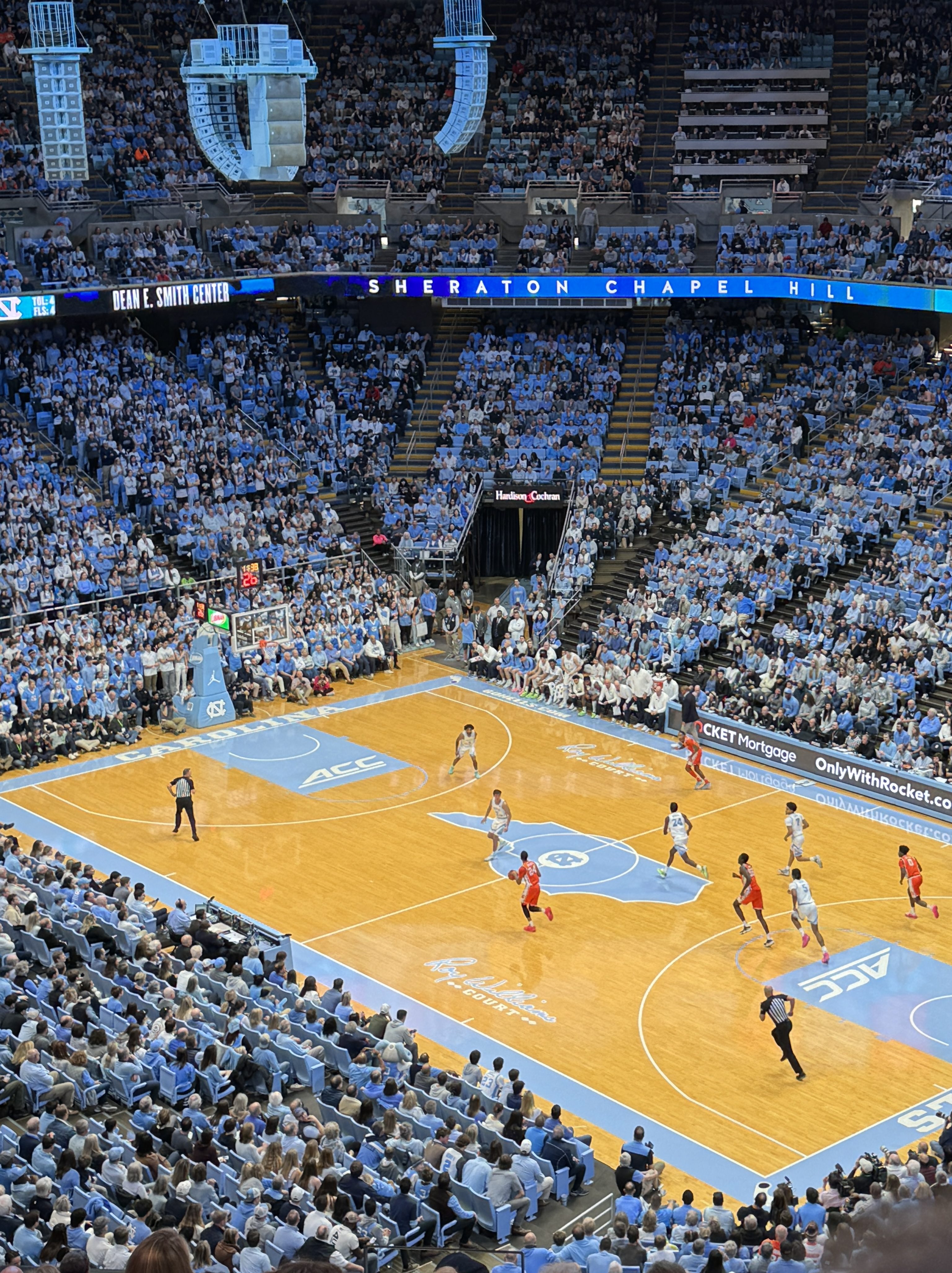
Dean E. Smith Center, UNC, 2023. Photo by Caroline Conner
Many, including former Alabama head coach Nick Saban, believe this new era of NIL is putting schools at a competitive disadvantage and they are highlighting the need for rules that establish a level playing field. Saban told “NIL Daily” on Sports Illustrated that, “It [NIL] has to be done in a way where you have some kind of competitive balance. Every school must have the same thing. One school can’t spend $30 million for players while another school is spending $3 million.”
In an attempt to provide a solution to this issue, the House v. NCAA case settlement was approved in June. This landmark agreement changed college sports forever. It allows for schools to directly pay athletes for the first time in history. This new revenue sharing model, according to The Athletic, allows athletic departments to “distribute roughly $20.5 million in name, image and likeness (NIL) revenue to athletes over the 2025-26 season.”
Previously athletes could only receive NIL compensation via outside organizations, such as local businesses, large brands like Nike or school donor collectives. The new House settlement also places a limit on team roster sizes, which has forced schools to adjust their scholarship distribution approach.
“We’ve already adjusted our scholarship limits for our sports going into the 25-26 year.” She added that USF is focused on “implementing it [House settlement] in a way that the student athletes are benefiting from it as they were intended to do so,” Pierce said.
Another aspect of the House settlement that is affecting college coaches and NIL donors alike is the establishment of a new NIL rule enforcement committee, known as the “College Sports Commission.” This entity is responsible for reviewing all NIL deals worth over $600 and determining whether they are “for a valid business purpose and reflect fair market value,” according to The Athletic. Many coaches seem optimistic and grateful for the creation of this committee, as it will aim to thwart any attempts to overcompensate athletes for minimal to no contribution to NIL providers.
Washington Huskies athletic director Pat Chun told Sports Illustrated, “We all recognize that nobody wants to exist in an unregulated, unsustainable environment. Relative to enforcement, I’m probably optimistic because, knowing what’s been done in the past, this is backed by a court-approved settlement.”
According to Yahoo Sports, some schools had been “hurriedly signing current players and transfers to new contracts before the approval of the settlement in deals that frontload a majority of the compensation.” The rush was driven by the fact that any contracts signed before the settlement approval and paid out before July 1 were not subject to the clearinghouse (College Sports Commission) or cap.
“Death Valley”, Clemson, 2023. Photo by Caroline Conner
For many fans, the biggest impact of NIL is its tendency to result in players transferring. Logically, if a different school offers a player more NIL money or resources, they are likely to transfer. Kris Pierce, a UNC Chapel Hill alumna, says, “I think I grew up in a golden era of college athletics. Being a Tar Heel, I know the value of folks staying around four years.”
Before the addition of NIL and the era of paying athletes, most players stayed at their respective schools for the duration of their college careers. This began to change in 2021, following the COVID-19 pandemic, when the NCAA granted every active student athlete one penalty-free transfer. With the introduction of NIL in 2021 as well, the floodgates were opened, sending a wave of student athletes into the transfer portal. These waves have continued to grow over the last four years with the increase in financial support of NIL.
That begs the question: will college athletics ever return to its “golden era” that so many miss? Only time will tell. For now, the introduction of the College Sports Commission and NIL spending cap, in an effort to control the transfer portal, is a step in that direction.
The death penalty is many things, but for starters, it is flawed, expensive and defined by bias. Besides this, there is also the essential question of whether human beings deserve to kill.
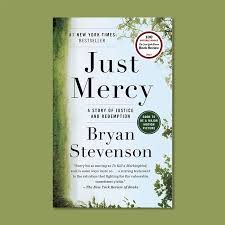
In 1989, Bryan Stevenson, a lawyer and bestselling author of “Just Mercy” created the Equal Justice Initiative (EJI) to provide “legal representation to people who have been illegally convicted, unfairly sentenced, or abused in state jails and prisons.” Part of their mission is to challenge the death penalty and excessive punishment as well.
“Just Mercy” follows the true story of Walter McMillian and how he was wrongly convicted of murdering a white woman in Alabama and sentenced to capital punishment. With the help of Bryan Stevenson and the EJI, McMillian’s innocence was proved with clear and frank evidence, but the book also follows the stories of other incarcerated individuals.
One of these individuals was Joe Sullivan, who was sentenced to die for a non-homicide crime he committed as a 13-year-old. Sullivan was finally released in 2017, 25 years after he was sentenced. The book also shed light to the issue of botched executions, especially with the use of lethal injections. According to a study conducted in 2024, 73 lethal injection executions were botched, which is just over 5% of those conducted since 1982. There is no doubt that the instances and statistics listed are painted in bias, as majority of the botched executions and unjust sentences are carried out on Black men.
American society as a whole must look at the problem as it is and draw attention to the truth — the death penalty is unjust, cruel and adds no benefit to the safety of our country. How do we as human beings grant ourselves the right to end another person’s life? How do we allow retributive principles — a life for a life — to govern our justice system? This is not a justice system dedicated to justice.
At the root of the problem is how little attention is given to this problem. It takes a significant accident to spark empty conversations dealing with the issues of mass incarceration. The leading thought is that these people truly did commit their crimes, so they deserve their punishment.
The world discusses human rights concerns with civilians around the world, so shouldn’t the same rights apply to these prisoners? Let’s start with the most basic right, the right to life.
Joe Dennis is a professor at Piedmont University. He is a former journalist who writes when he isn’t busy attending to his students. Additionally, he has a new found love for cooking and a big Kesha fan. On days where he wants to “dominate the day” he’ll play “Blow’. If he is in his “feels” he will listen to “Praying’ due to the heartfelt touch it leaves on him. He last mentions a song he really likes called “Raising Hell”, which is a song about standing up for your rights.
“She’s someone who I feel is very inspiring because of her history.” He says “She has really overcome a lot in her life, and she’s persevered.”
Joe takes pride in his Filipino culture by cooking some of his favorite cultural dishes. During the pandemic as all of our bored minds did, Dennis wanted to resurrect some of the Filipino dishes he cherished growing up. He’s made dishes like coconut adobo (a stew or braise of meat), lumpia(fried spring rolls), and pancit (a variety of noodle dishes). Joe’s background being Filipino is not only an inspiration to him but his kids, specifically his eldest son, Jaydon.
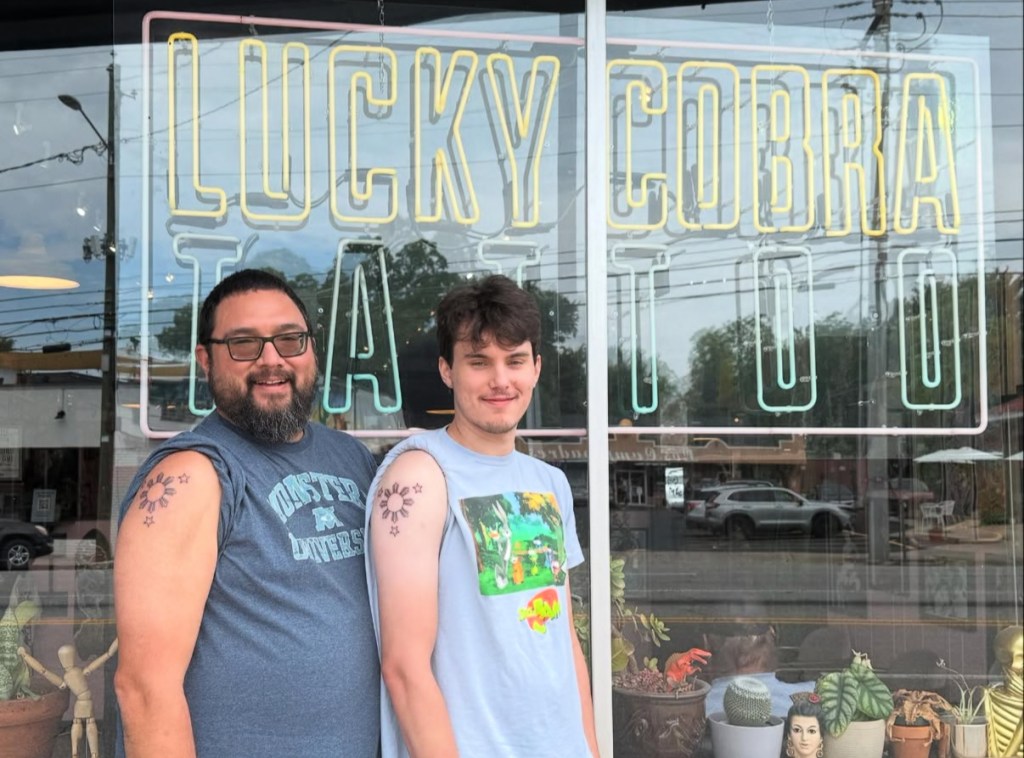
“I’ve gone 48 years in my life without a tattoo, and on my son’s 21st birthday, we got matching tattoos” Joe said.”That was maybe one of the most meaningful things my kids have ever done”.
Joe’s kids aren’t the only children he inspires. Being a teacher at Piedmont University for 10 years, he has been a supportive professor to all of his students, even a safe space.
“When students are struggling I want them to know that there’s someone there for them.”
With the vastly diverse students Joe teaches, his students come to him for comfort during tough times. Joe speaks on the morning after the election and how his students reacted.
“I had students in my office, I had an openly bi-sexual student, illegal immigrant, a feminist, African American, and they were all just devastated.” He says. “And they were waiting for… me.”
Joe speaks on not really having a safe space during his years in k-12. Catholic schooling wasn’t very inviting to mental health as Joe would describe it. Dennis reveals that he grew up with severe depression that was not diagnosed because it wasn’t believe in by his parents or teachers.
Someone who is such an inspiration to others must have inspiration on their own. The knowledge that Joe does never leaves his mind as soon as it hits the paper (or the keyboard). Joe has written many stories, but one important one was a local judge he interviewed who needed a liver transplant. He was able to complete five stories on the judge and update the decline of him. Unfortunately, he died before he could get a transplant.
“I’ll never forget the day he died and I actually went and became an organ donor myself. It was no reason for this man to die.”
Regular journalist don’t change their lifestyles due to the people they met, and Joe is far from regular. We need more people like Joe, a father, a empath, a man of culture, and an educator.
Florida State and University of Georgia graduate Karmen Morrison uses her skills in the communications and journalism industry and being a graduate assistant. Morrison grew up in Jacksonville, Florida playing basketball, volleyball and flag football throughout high school.
“What drew me from sports to journalism? When I was in high school, I was asked to do a lot of interviews about school and sports. I was in an early college program, so people were asking me a lot about that. I ended up being the Female Athlete of the Year of my city. So I did a few different interviews for that, and I had fun doing it. I was the interviewee, obviously, but I enjoyed it. And I was like, I think I could probably do this. So that’s where I got my start. ”
In high school being an involved student athlete, Morrison said she saw the difference between men’s and women’s sports quickly.
When going to Florida State majoring in media communications studies, she used her social media platforms to advocate for women’s sports. With women’s sports on the rise right now, it’s important to see other women and previous athletes show support. Female athletes deal with more pressures than men as professionals. For example,
when you’re a woman people will criticize your looks, skill, background, race and sexuality.
“I’m on social media, so I share my opinions,” Morrison said, adding that one interview she conducted was really powerful to her. “I got to talk to Lonnie Alameda. She’s their head softball coach, very, very renowned coach. And this was following a very late game. So I asked her, what’s your opinion on you guys playing really late? And she was very open, honest, blunt about it. It’s probably one of my favorite interviews I’ve done. She spoke about a lot of the things that could change with the Women’s College World Series, and so I included that stuff in my package.”
Morrison expresses herself through sports journalism and takes pride in women’s sports, whether it’s on social media, the stories she does, or just little quotes. Morrison mentioned that tennis is one of the only sports to pay women and men equally, at least in the majors. She thinks it’s important, but just a small step.
Morrison believes no matter race, age, or gender, representation matters. Even though she calls herself a rookie she likes to share what she knows with younger people to help them become better than what she is.
“I think for me, one thing that irritated me, is we had a good football team when I was there, and they would always get free shirts. But we were districts champs year after year, and I’m like, why we aren’t we getting free shirts? What’s going on?” This is one example of how something simple can make a difference. Looking beyond the sport, it’s the principle of it not being equal for the girls and boys teams.
“And I think for me, representation matters. Obviously, I’m a black woman, so you got to be able to reach back and show little girls, even little boys, and show them what’s possible. I think it’s really about representation at the end of the day.”
Karmen Morrison is a multifaceted journalist and graduate at UGA, and is an active supporter of equality of women’s sports. She continues to advocate by being vocal and telling stories to inspire youth and be that representation for others via social media.
“I did this one story about women and coaching…. and spoke about a lot of things that could change with the Women’s College World Series.”
Morrison believes in the importance of women’s sports that still stands now: “Tennis is one of the only sports that the men and women professional players get equal pay” she said, adding that this highlights that sexism continues to present itself today.
This results on her reporting on women’s issues in sports and yearning for change.
Karmen’s background in sports in her Florida hometown inspired her to follow journalism in college and advocate for others. “When I was in high school, I was asked to do a lot of interviews,” she said, adding that this exposed her to the media. “The Female Athletes of the year of my city”.
This experience contributed to discovering her interests after a long time of being confused about her future career, which made her find her voice after being stuck in the between.
Karmen shared her firsthand experience being discriminated against as the boys football team would get access to free shirts consistently. Meanwhile, her team wouldn’t get freebies despite being district champs every year. “That’s one thing that irritated me.”
Karmen said she loves doing interviews “I’m not going to do a story if I’m not interested in it.” This exposes the love she feels for telling stories on women’s sports and her passion for getting all perspectives to impact others and step forward to change for the better. She’s eager to share those stories with the world.
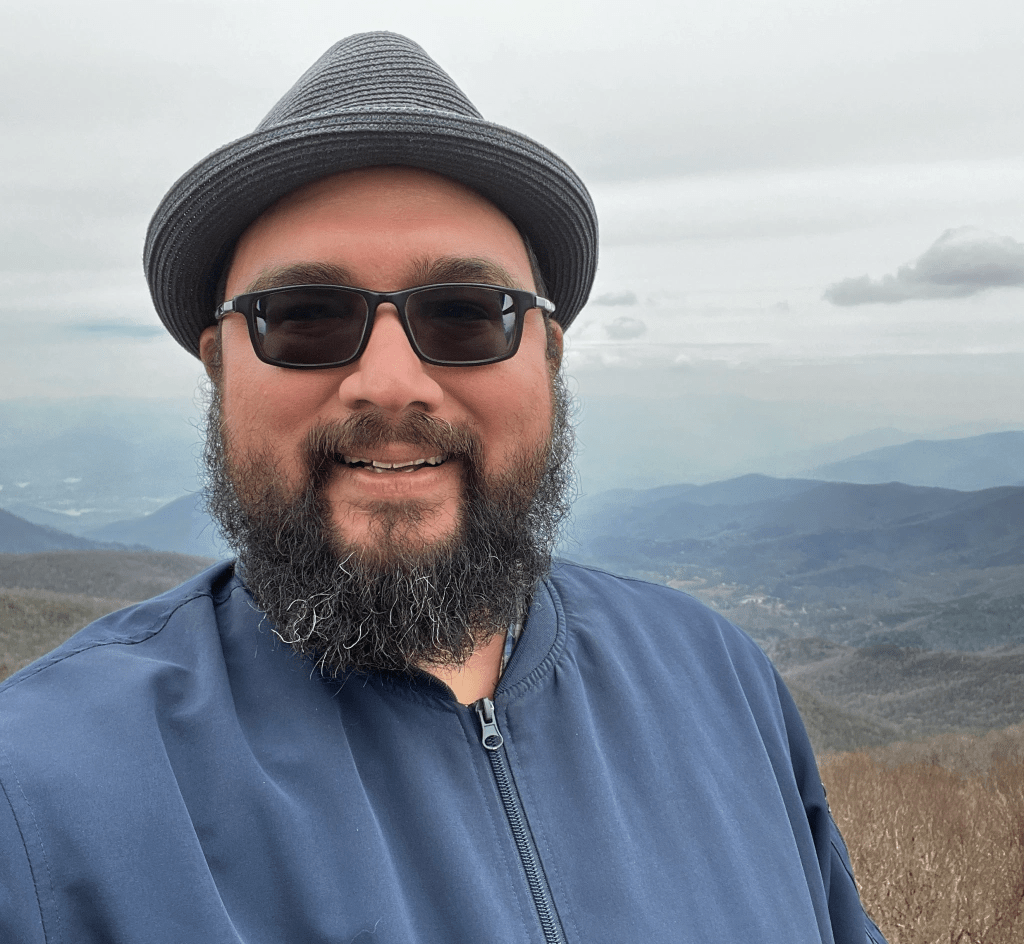
In between all of the silly fedoras, there is journalist Joe Dennis. His experiences within his culture have helped him shape him who he is today.
”When someone sneezes, you throw a party,” Dennis said. “Family gatherings are everything [In Filipino households].”
Dennis grew up in Chicago. During his youth, one of the ways his family expressed their culture was through food. He faced hardships, such as discrimination, as a child. Regardless of those hardships faced during his childhood, he’s proud of his heritage and continues to celebrate his heritage with his family through different traditions today.
While growing up, there were many different communities of different cultures. But the community he grew up in was predominately one race, and his family was Filipino. He has written opinion columns culture from a perspective of being some of the only people of color in his neighborhood.
“But I do think that I have written stuff in the past from a perspective of growing up as someone who was different,” Dennis said. “I mean, it was very segregated like that. And we lived in a white neighborhood.”
Throughout his time in Chicago during his youth, he faced the unimaginable.
“And even growing up in the 80s, I was discriminated against a lot, interestingly,” Dennis said. “People thinking I was Mexican and calling me [slur] It’s really hard. How do you deal with that when someone is yelling a racial thing at you that isn’t even applicable to you? It’s kind of like, what?”
Regardless of the adversities in his childhood, he continued displaying his culture with his family through cooking.
“During the pandemic, I really got into cooking and trying to resurrect some of the Filipino dishes that I grew up eating. And now I’m pretty darn good at it, cooking Filipino food. I cook a coconut adobo,” Dennis said. “When I was trying to get the recipes from my mom, my mom, of course, nothing was ever written down for her. So I’m like, mom, okay, so how much soy sauce do I put in? She’s like, enough. I’m like, how much is enough? Enough. So I really had to kind of figure it out.”
Today, Joe Dennis continues to share the meaningfulness of being Filipino with his son. Showing how he takes pride in being Filipino and his culture
“And on my son’s [Jaydon] 21st birthday, we got matching tattoos,” Dennis said. “So this is the tattoos that we both got. And that is the Filipino flag has a sun and three stars around it. So we got those matching tattoos. So when my son asked me, he said, we should do this. That was maybe one of the most meaningful things my kids, any of my kids have ever said because it was totally unexpected.”
Although Joe faced adversities during his childhood growing up in Chicago, he has continued to embrace his culture. Throughout his time being a journalist and professor, he has made it known for his students apart of different groups that he is there for them.
“But the day after the election, I had, and I write this in the column, I had students in my office. I had an openly bisexual student. I had an illegal immigrant in my office. I had a feminist, basically a self-identified feminist in my office. And I had someone who was severe like anxiety and mental disabilities in my office and an African-American student. And they were all, they just all were devastated, ” Dennis said. “They just needed someone to talk to. They just needed someone to vent, right? They needed to know they weren’t alone, that I was there and people are there to support them.”