Drake ; The Culture Vulture

By Uri Powell
Alpharetta High School

Hip-Hop. One of the most respected and recognized genres of music. Hip-Hop is a huge makeshift of culture, authenticity, and history. Hip-Hop has many notable and remarkable artists including DJ Kool Herc, Tupac Shakur, Biggie Smalls, Jay-Z, and more. Even though the story of hip-hop is changing over time, there are many modern artists who continue to shape the genre like Eminem, Drake, and Kendrick Lamar. Especially Drake and Kendrick Lamar.
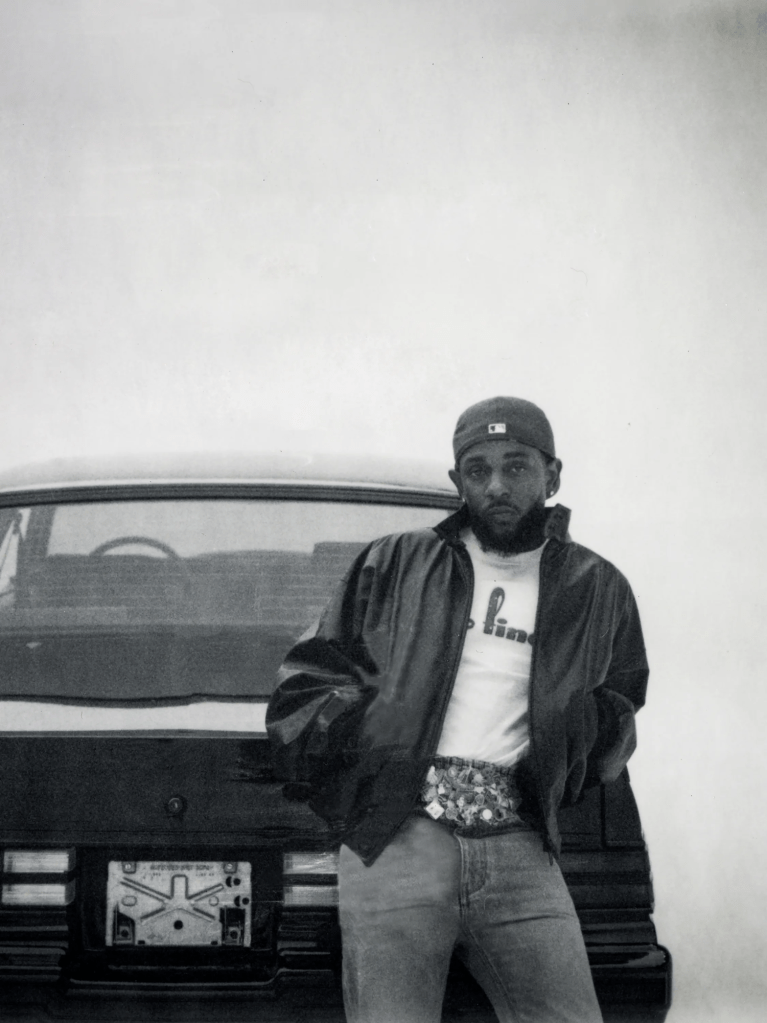
The whole feud began in 2013, When Kendrick Lamar was featured on a song by Big Sean named “Control”. In the song, Kendrick Lamar mentioned various names of other notable rappers such as J. Cole, ASAP Rocky, Pusha T, Jay Electronica, and even Drake multiple times along with six other artists. Drake specifically did not love how he was called out and dissed in the song. Over the next few weeks, Drake stated that he took it personally, lost respect for the song and was uncertain about working with Kendrick Lamar.

For the next decade, Drake refused to work with Kendrick Lamar under any circumstances. Over time, the two developed the habit of underlying disses and insults about each other in songs. If you forward this timeline to oct. 2023, J. Cole released a song named “First Person Shooter” stating that himself, Drake, and Kendrick Lamar were the ultimate undisputed “Big Three” of modern hip-hop. Not too long after, Kendrick Lamar released a song titled “Like That” where Kendrick very clearly expressed that he would not like to be grouped with J. Cole and Drake and stated there is no ‘Big Three’, And that there’s only a “Big Me”. Many say this was the spark to recent rap battle between the two.

After Kendrick Lamar released “Like that”, Drake responded with a song named “Push Ups” which made fun of Kendricks height and his contract. Kendrick soon fueled the fire by releasing “Euphoria” which completely just disses Drake’s personality just after Drake released his song “Push Ups” in Apr. 2024. In May. 2024 Kendrick also released a couple more songs dissing Drake completely. One of those songs were named “Not Like Us”. The song “Not Like Us” states that Drake steals music from multiple locations in America, especially Atlanta, because he has no culture of his own. Kendrick included lyrics in the song aimed towards Drake like “How many opps you really got? I mean, it’s too many options”, “Certified boogeyman, I’m the one that upped the score with ’em”. Those lyrics reveal that Kendrick still does not associate himself with J. Cole and Drake in response to the song “First Person Shooter”.

Kendrick Lamar’s song “Not Like Us” became a historical global number-one hit. The song stayed at the top of charts, and took over social media. The song broke the all-time record for the longest running number one song in history of the hip-hop charts for 22 weeks. The day the song released, Spotify, the biggest music streaming service in the world, broke the record for the biggest single day streams with over 6.5 million streams in one day for a hip-hop song in U.S history.
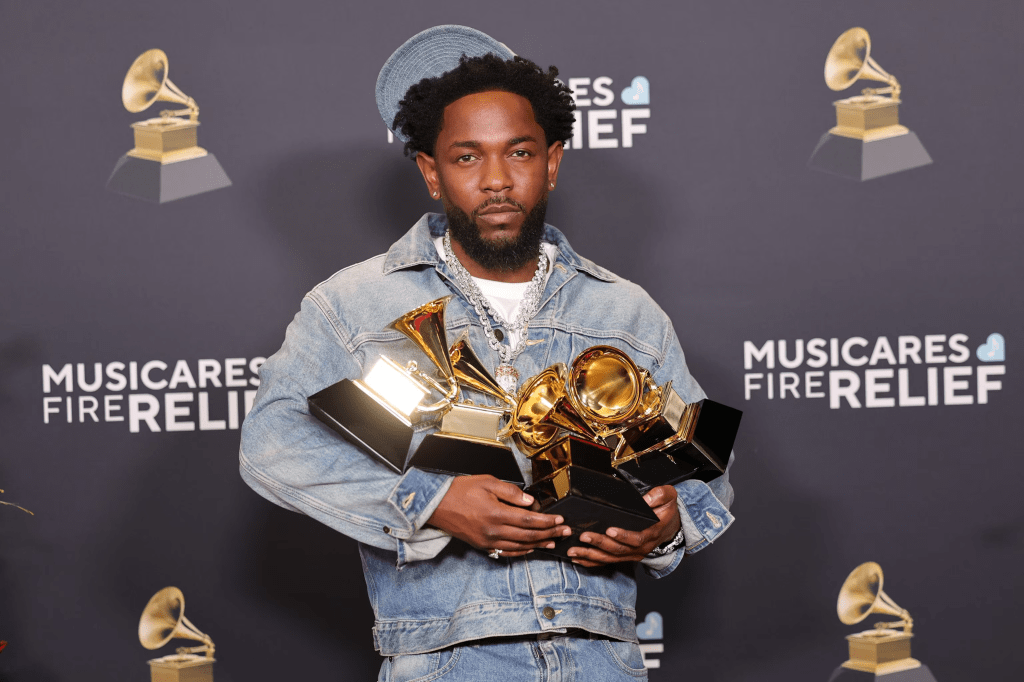
In my opinion, the historical song of “Not Like Us” by Kendrick was proof he was one of the best rap/hip-hop artists of all time. Drake had his time to shine, and now it’s Kendricks time to take over. Since Drake fueled the fire, Kendrick put him out instead of the fire. Drake isn’t from America, he just utilizes it for money and fame. He invaded the hip-hop culture, he is a culture vulture and he got burned from trying to take over. Kendrick has remained popular and is considered impactful. Kendrick is such a great artist that he has 27 Grammy Awards which makes him the most recognized and awarded rap in history while Drake only has 5 Grammys, none of them are recent. We obviously can’t forget to mention that Kendrick Lamar won a Pulitzer Prize for his album “DAMN”. He is also the first rapper in history to win any kind of award so important that he is also named one of the best poets in history. Kendrick makes history, Drake watches it, he’s probably sitting in his bed right now thinking ‘How can I write like Kendrick?’…Truth is, he can’t. He never will. Kendrick is one of kind. Kendrick could ruin his whole career is he wanted to.

A couple months after the song “Not like Us”, Drake sued his record label Universal Music Group. Why didn’t he sue Kendrick? Because he knew he would lose and most likely end up as a meme truthfully. Drake accused the record label of advertising Kendrick’s music more than his. I feel the judge was right the dispose the lawsuit, it’s his fault he can’t win a rap battle. Kendrick Lamar is just better, I’m listening to him while writing this article anyways. At the end of the day, Kendrick was ultimately right, Drake might have some people wrapped around his finger but when it comes to culture and true music, he’s not like us.


How many transfers are too many? Why college athletes need a transfer limit

By Reese Johnson
Tombs County High School

For centuries, college athletics have been built on loyalty, but the transfer portal has decided to throw away the culture athletes across the country have dedicated their lives to creating. While athletes should have the opportunity to find the best fit for their academic and athletic careers, there should also be a line drawn on the number of transfers allowed. Without restrictions, it creates an environment of distrust and disloyalty .

Team bonds take time to be developed, and teams are unable to do that with the transfer portal. The culture of different athletic departments is beginning to be lost due to a lack of stability provided by the athletes. Coaches spend countless hours investing in athletes only to watch them leave after one season. Teammates who have bonds require chemistry and time spent together, but the transfer portal creates a space of wondering what your teammates’ next move will be. College teams were once about overcoming adversity united as a team, but now, once a conflict arises, the team scatters.

Photo by Jack Biddinger on Pexels.com

Another aspect of the game that the transfer portal has created is uneven playing fields. Larger schools have more influence over where a player goes due to having more resources and a greater opportunity for exposure. Smaller schools often become used as stepping stones for athletes to find their footing as they experience the college sports world for the first time. This creates harder playing situations for the smaller schools that are constantly having to rebuild their rosters during the offseason.

Supporters of an unlimited number of transfers for athletes argue that athletes should get the same access to transferring schools as academic students do. While that can be viewed as a fair point, Athletes have different privileges than regular students, such as, scholarships, training, and unique opportunities.

A limit of one to two transfers still allows athletes to seek better situations while still keeping the integrity of college sports.

College Athletics should consist of development, commitment and stability. The transfer portal has granted athletes with valuable opportunities, but unlimited transfers create unintended consequences. Setting boundaries with the amount of transfers per athlete can give athletes the freedom to find better opportunities while also keeping the culture of college sports. Finding the right balance is essential to preserving the future of athletics.

Batman is better than Superman

By Sam Crumly
Stonehaven Upper School

One of the main reasons why Detective Comics (DC) has any traction at all is because of these two characters. They have been around for over 87 years. DC has never really had a successful career in building a cinematic universe unlike Marvel. But the few movies that have done well have a common theme. They are either about Batman or Superman movies. But who is better? Batman, it’s Batman, Batman is better.

Photo by Ronu00ea Ferreira on Pexels.com

Christopher Nolan states that, “Superman is essentially a god, but Batman is more like Hercules: he’s a human being, very flawed, and bridges the divide.” Superman was an alien who was given powers by virtue of just being on earth at all. Batman is a human who actually had to be creative to beat his villains. The thing that makes Superman interesting as a character is how he deals with a god complex. That is not a relatable struggle at all, his whole thing is that he is too overpowered for all of his bad guys, it’s boring and not relatable. Batman is just a rich dude who isn’t built like a cyber truck. He has to actually think about how to beat the bad guy, and even though he doesn’t have all the powers of a god like Superman, he is still responsible. Both Batman and Superman have a no kill rule, but Batman is dealing with a much worse situation. It’s easy to have a no kill rule when you’re fighting some budget humpty dumpty. Batman is being nice in Gotham. Everyone likes Batman, even Barack Obama, he doesn’t just do things operatically he has to put effort in.

In the 2000s when the Dark Knight movies were coming out, everyone loved them. Even Barack Obama praised the movies made by Nolan. Along with Kevin Hart and Henry Cavil. The literal actor for Superman knows it too. Batman is just better, the whole man of Steele movie was just larping Batman the whole time. Superman isn’t bad, but Batman is better. Even now the new Batman movie is better than the new Superman movie. they are both extremely different, Batman still bets out Superman. Just look at the box office numbers the new Batman movie made 772.5 million while Superman made 670.1 million. They both made a lot of money but still, Batman beat Superman in the box office.

When asking a student about this debate they agreed, “Batman is just better.” Because he is! Who genuinely is saying Superman is better? I don’t know, because they don’t exist, because everyone agrees Batman is better. He, Superman, and Wonder Woman carried DC for many years, but that doesn’t change the cultural effect Batman has had on the world, and in the DC Universe.

Opinion: Why cats are better than Dogs

By Ty Garrett
AB Tech Early College

Cats are better than dogs because cats are so much easier to have as a pet. I love dogs too, but I love cats more. Cats require less maintenance than dogs; cats don’t have to go outside for a walk, already know how to use a litter box to go to the bathroom and don’t need any formal training. Dogs, on the other hand, do need a walk, go outside for the bathroom and need formal training.

Cats make so much less noise than dogs; the only time they are loud is when they meow. Cats are also great pets for apartments because they are better suited than dogs. Compared to dogs, cats require less space and take advantage of the space. The cost of taking care of a cat is $65-$125 a month compared to the cost of taking care of dogs, which is between $145 and $505 a month.

Photo by Johannes Rampp on Pexels.com

Another one of the reasons why I think cats are the best pet is that they are very independent. Unlike dogs, which require a lot of attention, cats are very enjoyable by themselves. Cats sleep a lot throughout the day; in fact, they sleep up to 15 hours a day. Cats enjoy being with humans and don’t demand attention like dogs do.

Cats have a very long lifespan; on average, cats live up to 12 years but can live to their high teens or early twenties. Cats are also good for your health; they have a calming effect on their owners. Another reason is that cats play a part in lowering your risk of a heart attack and lower your blood pressure. A study was found that cat owners are 30% less likely to die of a heart attack or a stroke than non-cat owners.

If you hate unwanted pests (mice, bugs, etc.), so do cats. They keep unwanted pests out of your house and make sure that your home stays clear of any bugs/mice. In conclusion, cats are better because they are less hyped, less work and more rewarding than dogs.

Experience v. Youth/Knicks v. Spurs

By Anthony J.T. West
Natchez Early College

The 2026 NBA finals isn’t just a battle for a championship, it is a clash between two totally completely different identities. The New York Knicks represent experience, leadership and composure, while the San Antonio Spurs bring youth, energy, and hunger. This series shows how different paths can lead to the same stage, but only one approach will come out on top. This series has shown us (so far) that it will be based on who can stay calm under pressure. Right now the 2026 NBA finals may go down in history for one simple reason.The New York Knicks are putting together one of the greatest comeback performances the league has ever seen, while the San Antonio Spurs are showing signs of being one of the weakest second-half teams on the biggest stage.

Photo by Rockwell branding agency on Pexels.com

The Knicks have built their Finals run on resilience. No moment has been too big, no deficit too large. Their ability to come back from massive leads, most recently a historic 29-point comeback, shows a level of toughness that separates good teams from great ones. When the game gets tight, they don’t panic. They stay cool, calm, and collected while at the same time executing every possession to slowly chip away the lead that any team has during that time of a game. This is a team that believes that until the clock hits triple zeros in the 4th quarter of a game that it’s not over until it’s over.

On the other side, the Spurs are telling a completely different story. For a team with so much talent and potential, their second-half performances have been their biggest weakness. Time after time, game after game, night after night, they would build leads early only to watch them disappear after halftime. Whether it’s poor shot selection, defensive breakdowns, or simply losing composure, the pattern is hard to ignore. This is a team that has defeated last years NBA champions the Oklahoma City Thunder. During the whole series they were relaxed, stayed composed, and made smart decisions. However, when you go to the NBA finals it’s a different setup and you have to find how you are through all the chaos and not lose site of who you are in the process. Sadly, the San Antonio Spurs have not been the team that we have seen all year.

Photo by Israyosoy S. on Pexels.com

The difference between these two teams is not skill it’s the mentality. The Knicks play like a team that expects to win no matter the situation. The Spurs, at least right now, look like a team still learning how to handle pressure when everything is on the line. That’s why the Knicks’ comeback ability feels historic. It’s not just one game anymore, it’s starting to become a consistent identity. They absorb runs, stay disciplined, and strike when it matters most.

Meanwhile, the Spurs’ second-half struggles raise a bigger question. Are they really ready for this moment yet? Talent alone isn’t enough to win a championship. You need focus, composure, and the ability to FINISH. That’s exactly where the Spurs’ have fallen short multiple times during this series. Last night in game 4 they have just blown the biggest lead in the history of the NBA Finals. “To me that shows that they probably are not ready for the stage yet even though they are extremely talented.” a person I interviewed said. “There is no excuse for the Spurs’ as good of team as they are to blow a lead like that on the biggest platform basketball has to offer.” he continued.

This series is proving one thing clearly. Great teams don’t start strong, they play strong the entire game and finish the game strong as well. Right now, the Knicks are doing exactly that, and it’s why their comeback run may be remembered as one of the greatest in NBA history. “The Knicks are showing us who they are and why they are finally showcasing us what they can do when they make it to the greatest stage in basketball.” he said. It has been 53 years since the Knicks has won the NBA championship. During that time my granddad was in middle school and my grandma just entered middle school. “The Spurs’ have a lot of learning to do this offseason”. he says. “Knicks in 6” he continued putting emphasis on have he believes this series will end.

“The Knicks are making history by never giving up, while the Spurs are learning the hard way that in the Finals, a great first half means nothing if you can’t finish.”

“Pouring out my heart to a stranger:” The power of Taylor Swift’s songwriting

This image has an empty alt attribute; its file name is img_6885_original-1.jpeg
Photo by: Meredith Rein

By Meredith Rein
Sequoya High School

Since her 2023 kickoff of The Eras Tour, Taylor Swift has been more relevant than ever before. Whether one is a fan or an excessively close-minded individual, it just doesn’t seem like they can shut up about the Grammy-winning powerhouse that is Taylor Swift. Those who do criticize Swift’s success usually denounce her songwriting ability. This is simply projection. Swift is the most meaningful, talented and intentional songwriter that the music industry has ever seen. Her unique ability is not unseen when considering the reaction of both the hardcore “Swifties” and those who attempt to tear her down.

In every single song that is in her discography, as well as the ones she has collaborated on, Swift “pours her heart out to a stranger,” elevating the standard of innovative, inclusive, and articulate songwriting.

Of the 12 albums that construct Swift’s discography, listeners are able to hear the transformational and experimental choices Swift has made throughout her career, which spans over 20 years. Some notable songs that mark her shift of lyricism over the course of each “era” are “Picture to Burn” from her first album released in 2006, and “Chloe or Sam or Sophia or Marcus” from her second most recent album released in early 2024. The lyric “I really, really hate that stupid old pickup truck you never let me drive,” while still technically relatable to a specific audience, does not show Swift’s capability of using the English language. However, the series of lyrics “could it be enough to just float in your orbit? can we watch our phantoms like watching wild horses? cooler in theory, but not if you force it to be” provide a wide variety of context for her listeners to relate to whatever situation they believe fits. Not even considering the incredibly eloquent manner in which the lyrics above were written, there is no possible way that someone can say that those lyrics, derived from incredibly different songs, sound anything alike or have the ability to predict that the entireties of each song sound similar to each other.

As a dedicated Taylor Swift fan, I have experienced the emotional traction that her lyrics carry. Though maybe a little para-social, no matter what emotion I am feeling, I can scroll through 274 songs, knowing I can find one that will be able to bring me comfort and clarity. While I will likely never turn the lessons I have learned from Taylor Swift’s lyricism into lyrics of my own, Swift has greatly impacted the music industry, inspiring many contemporary artists like Phoebe Bridgers, Gracie Abrams, and Maisie Peters, as well as rising Gen-Z stars Conan Gray and Olivia Rodrigo. The recently rising artists above, three of which performed as opening acts on The Eras Tour, have attributed much of their inspiration in their respective careers to their experiences much like the one I described.

As I grow up, I realize the positive impression that simply listening to Taylor Swift’s music has made on me. When I write, I find myself working in vocabulary words that I have gathered from different songs. I see the similar impact on my peers who believe in the magic of Taylor Swift, as they exuberate joy and intelligence. I see the opposite in those who undermine her influence, as they introduce negative aura into any room.

In my favorite song of all time, “Fresh Out The Slammer,” which resides on Swift’s 11th album, “The Tortured Poets Department,” Swift sings “fresh out the slammer, I know who my first call will be to.” My first call will always be to Taylor Swift, and I know I am not alone in that belief.

Education Shouldn’t Come With a Lifetime of Debt…

Photo by Pixabay on Pexels.com

By Jeremiah McKinney
North Cobb High School

Ever since I was a kid, college was never presented as an option. It was presented as the next step. Work hard, get good grades and get accepted into a university that helps build a successful future. That was the message I heard from teachers, parents and society for years. It wasn’t until I started looking at tuition costs, housing fees and student loan statistics that I realized pursuing an education could also mean taking on a financial burden that follows students long after they walk across the graduation stage.

The more I researched colleges, the more overwhelming the process became. What once seemed like an exciting milestone quickly turned into a series of questions about affordability. How much debt is too much debt? Is a degree worth tens of thousands of dollars? How many years will it take to pay off students loans after graduation? These are questions that many students are forced to consider before ever stepping foot on a college campus, and they highlight a growing problem with the cost of higher education in the United States.

College is no longer just about paying for classes. Students are expected to cover tuition, housing and meal plans. None of that even helps cover the cost for supplies which can quickly drive up the total cost of attendance. For many families, these expenses are unrealistic to pay out of pocket. As a result, student loans have become the norm rather than the expectation. Instead of graduating with a sense of financial freedom and opportunity, many students leave college carrying debt that can take years or even decades to repay.


Photo by Tara Winstead on Pexels.com

The impact of student debt does not end at graduation. Many graduates enter the workforce already owing thousands of dollars, forcing them to make major life decisions based on their financial situation. Buying a home, starting a family or saving for retirement can become far more difficult when a significant portion of a paycheck goes toward loan payments. Rather than beginning adulthood with a strong financial foundation, many graduates spend years trying to recover from the cost earning their degree.

The impact of student debt extends far beyond graduation. According to Forbes Advisor, Americans collectively owe approximately $1.75 trillion in student loan debt, making it one of the largest forms of consumer debt in the country. Forbes advisor also reports that the average federal student loan borrower owes more than $35,000. These numbers highlight how common it has become for students to take on significant financial burdens in order to earn a degree. Rather than entering the workforce with financial freedom and opportunity, many graduates begin their adult lives focused on repaying loans that can take years or decades to eliminate. As college costs continue to rise, the question becomes not whether students will face debt, but how much debt they will be forced to carry.

Photo by Nicola Barts on Pexels.com

Perhaps the most concerning aspect of rising college costs is that they discourage students from pursuing higher education altogether. According to the Nation Center for Education Statistics (NCES), concerns about affordability are among the most common reasons students choose not to attend a four-year institution. Many students are forced to settle for school they did not originally want to attend, while others delay college or avoid it completely because of the financial burden. Education should be an opportunity available to anyone willing to work for it, not a privilege reserved for those who can afford increasingly expensive tuition bills.

Higher education has long been viewed as a pathway to opportunity, personal grown and career success. However, as tuition and other college expenses continue to rise, that opportunity is becoming increasingly difficult for many students to access. While earning a degree remains important, students should not have to sacrifice their financial future in order to receive an education. Colleges, lawmakers and educational institutions must work toward making higher education more affordable so that future generations can focus on learning and building successful careers rather than worrying about years of debt. Education should open doors, not create financial barriers that prevent students from reaching their full potential.

Creative Writing is a Core Skill, and Should be Taught As Such

By Fiona McGaraghan
Menlo-Atherton High School

“Ships at a distance have every man’s wish on board.” 

Almost every high schooler recognizes this iconic opening line from the novel “Their Eyes Were Watching God,” and many could write a great essay incorporating it. However, few could write a line like it. For how much school systems emphasize the analysis of creative works, they are remarkably apathetic towards actually teaching creative writing. Creative writing is equally as important as traditional writing and requiring creative writing would add considerable value to students’ education.

Photo by Houssam benamara on Pexels.com

 While many schools offer creative writing courses, they are elective courses–treated like a fun add-on to education and not a core discipline. This attitude ignores the fact that creative writing is an integral skill for many jobs, including ones where writing is primarily fact-based.

“Every writer, even if you’re a nonfiction writer, you have some elements within you that want to be creative,” says Piedmont Mass Communications Chair Joe Dennis. “I think creative writing has a strong impact in journalistic writing and nonfiction writing… When I was in college I was really close friends with a very excellent creative writer and she ended up taking a journalism class with me. Her influence in that class was so important because she helped people be more visual in their words and painting a better picture for people who were really well trained in writing facts… [she] really did a great job of embellishing the stories to make them come to life.”

The immersion in literature that a creative writing class offers gives students a new perspective on writing. “It’s experiential learning, and that’s something that I feel like a lot of people would benefit from,” says Madeline Willcocks-Hodlick, who took creative writing as a sophomore at The New School of Atlanta. 

Rose Klingsporn, a rising sophomore at Berklee College of Music who took creative writing in her senior year of high school, adds: “you’re doing a lot of reading of creative writing, and therefore you’re doing a lot of interpretation of creative writing. And that really helps in terms of general media literacy… a lot of English class is, like: these are the characters’ motivations. This is the character’s feelings. This is why they’re doing these things in the universe of the story. Creative writing is more [from] a technical perspective: why does this work? What technique are they using to make this poem good?” 

Photo by RDNE Stock project on Pexels.com

Getting hands-on experiences is valuable for students’ academic growth as well as their confidence in applying their skills outside the classroom. Klingsporn explains, “I go to music school. I’m talking about art all the time, and it helps to have those tools where I’m able to engage with art on a critical and technical level.” 

While not everyone has the opportunity to directly apply creative writing skills to their jobs, they can still apply in everyday life. Klingsporn says, “Going into that class, I was like, I don’t really like poetry… Now I write poems for fun sometimes, which I never used to do.” 

Writing in free time can boost vocabulary, critical thinking and empathy. An English class that encourages students to write outside of class is valuable to students’ personal and professional life, but also to their academic success. While discussing the idea of creative writing as a core class, Willcocks-Hodlick predicted that, in addition to promoting success in English,  “Work for other classes would be higher quality, too, because people would fall into the norm of kind of forging their own path and being creative with every process.”

Creative writing class gives students the chance to see academia from a new perspective. At the prospect of adding Creative Writing as a core English class, Klingsporn lights up: “[It would give] students a different way to engage with writing,” she says, “and hopefully foster some creative spirits in kids, because we need more of that.”

The Hidden Costs of Social Media

By Evelyn Jeffords
Whitfield Academy

Social media has changed the way people shop and discover products, but it has also made it harder to identify trustworthy information and easier to buy unthinkingly. Influencers, trends and targeted advertising often encourage overconsumption and impulsive spending while hiding concerns about product quality and company ethics. As a result, consumers must be more aware of how social media influences their purchasing decisions.

Photo by greenwish _ on Pexels.com

A common problem many people have in this social media centered time is how to determine false information from the truth. When deciding what brand to make a purchase from, many social media users are not properly informed on how to find reliable information about the brand and their credibility. Once a micro trend emerges from the internet, all companies move fast to take advantage of it and hop on the boat. Some companies don’t just take advantage of the trend but also take advantage of the consumers, “greenwashing” and falsely advertising the quality of their goods and how they treat their workers. 

According to an article from Medium: How Much Is Too Much? Overconsumption in Social Media, “When talking about ethical practice, companies like Temu and Shein may come to mind. They sell poorly made, cheap products. Both have a reputation for unfair labor practices and a significantly poor impact on the environment.”

When it comes to making purchases some consumers prefer to pay less for lesser quality products rather than invest in a sustainable product that will last long term, making these companies increasingly popular. Some other social media platforms, like TikTok have come up with new strategies to make making purchases more convenient, encouraging shoppers to spend more impulsively. 

TikTok shop was founded in 2023 and has strongly outsold some of its competitors. It gained 47 million shoppers to the site, and had an estimated 11.9 million U.S. purchasers in 2024, according to an article from CNBC. By using the strategy of convenience, shoppers on TikTok shop don’t even have to leave the app to make a purchase, leading consumers to be able to quickly make purchases, leaving them with less time to contemplate their decision. This leads to more impulse buying and buying in bulk. Influencers can also post videos on TikTok of them using a product and get paid for it, making it easier for potential customers to have exposure to the product.

Online it’s been normalized to have 10 versions of the same blush, 12 different scents of the same shampoo and 30 colors of the same water bottle. When people post videos of their morning routines onto the internet and show how they own 100 different products from one brand, it’s often because they receive PR from that brand and sponsor them, which isn’t always disclosed in videos. After watching these videos, people get the wrong idea that it’s a normal lifestyle to have an excess amount of products. Then they spend on products they’ll only use once a month, quickly go out of style, or expire before they get the opportunity to fully use everything they purchased. It also portrays an unrealistic lifestyle that can make other users who may not be able to afford that lifestyle feel less than, unless they have those items.

In an article from Medium: How Much Is Too Much? Overconsumption in Social Media,  “This desire to have what everyone else has affects people beyond the screen. It promotes unhealthy spending habits, unrealistic expectations of others, and substandard goods created to meet demand.” 

The internet has made overconsumption more common by promoting impulse buying, unrealistic lifestyles and fast-fashion focused companies with questionable practices. By researching brands, recognizing advertising strategies and making informed decisions, consumers can avoid being influenced by misleading trends and spend more responsibly.

Are We Pulling Another Icarus? An Analysis on the Risks of Space Travel

By Addison Pendegraft
Johns Creek High School

Space — frequently described in religious, historical and mythological contexts as physical extension of heaven and the divine — is something humanity has always sought out to reach. But that trip comes with many perils and dangers, so much so that you might question if it’s reasonable to make that journey at all.

“Risk! Risk is our business. That’s what this starship is all about. That’s why we’re aboard her,” said Gene Roddenberry from Star Trek.

In terms of scale, the dangers of space travels are, quite literally, out of this world. NASA has categorized these lethal risks into five core hazards: space radiation, the physical distance from earth, microgravity and gravity changes, isolation and confinement, and hostile closed environments. Astronauts are exposed to high doses of ionizing radiation from galactic cosmic rays and solar particle events, drastically increases the long-term risk of cancer. Astronauts also experience accelerated muscle atrophy and bone loss, cardiovascular deconditioning and vestibular disruptions that cause motion sickness and balance issues upon returning to a gravitational field. They also are prone to sleep deprivation, anxiety, depression and interpersonal friction with their crew mates due to being in such a confined spaced for long periods of time.

Not to mention, the training and preparation the crew does before launch is grueling. The crew will spend hundreds of hours in exact vehicle mockups learning to operate all onboard systems and executing mission procedures. Instructors routinely introduce emergency malfunctions. In preparation for spacewalks (EVAs), astronauts spend roughly 10 hours underwater in massive facilities like the Neutral Buoyancy Laboratory (NBL) wearing weighted, pressurized spacesuits to stimulate microgravity.

However, one might say that not traveling would be a missed opportunity for humanity. Not only due to the educational value space travel provides, but also to its tendency to surmount social hurdles and restrictions. Spaceflight has historically shattered gender barriers in STEM, inspiring diversity and leadership at a global scale by shifting public perception of female capabilities. Like when Soviet cosmonaut and doctor Valentina Tereshkova flew in 1963 and Sally Ride became the first American woman in space in 1983, dismantling the pervasive social narrative of the time that physically and mentally demanding careers were exclusive to men. “A bird cannot fly with one wing only.” Dr. Tereshkova said. “Human space flight cannot develop any further without the active participation of women.”

Another example of space travel enabling social progression is NASA’s “hidden figures,” which were brilliant African-American female mathematicians and engineers that worked for NASA during the Jim Crow era. The intense pressure NASA faced to beat the Soviet Union during the “Space Race” forced the agency to leverage underutilized talent, enabling these “hidden figures” to transition into pioneering roles in computing, management and engineering. And this shared effort required to win the “Space Race” led to further equally, with black and white women being permitted to work together in the same integrated offices.

“To be the first to enter the cosmos, to engage, single-handed, in an unprecedented duel with nature—could one dream of anything more?” Said Soviet cosmonaut Yuri Gagarin, the first human to orbit Earth.

The most recent major spaceflight taken place was NASA’s Artemis II crew to the moon. This flight successfully launched on April 1, 2026, sending four astronauts around the Moon and returning them safely to Earth by April 11, 2026. It was a very significant historical moment, as it the first crewed flight to leave low Earth orbit since Apollo 17 in 1972 and marked the first woman, Mission Specialist Christina Koch, to travel into deep space and journey around the moon.

Space travel serves as an inspiration to the entire world, As the crew witnessed the far side of the moon, the entire world was watching them from below. What’s most captivated viewers was the humility and emotion spoken by four astronauts speak about their experience. This flight marks a historical and inspiring moment for us all, as their words remind society that this otherworldly and remarkable mission was accomplished by people like you and me. “I found it really refreshing to see how people have followed the mission,” says Mission Specialist Jeremy Hansen of NASA and the Canadian Space Agency. “What I have seen has brought me more joy and more hope for our future.”

So while space travel might not be the safest thing in the world (haha), its merit to society is undeniably potent, both for social progress and inspiration. “If you can’t take love to the stars, then what are we even doing?” Said Amit Kshatriya, NASA Associate Administrator.