
New(s) Kids on the Block: Morgan Hardy’s Resiliency in Journalism

By Addison Pendegraft
Johns Creek High School

Journalism, is a profession with the very rare quality of both being timeless, ever-changing and wholly necessary in society. This requires journalists to both remain true to the practice while still adapting. Many journalists, like Morgan Hardy, a second year masters student at the University of Georgia. Pursuing her degree in journalism and mass communication, has been evolving with the changes in a variety of ways.

“People my age are really trying to start a change of format in journalism,” said Hardy. “We’re not just talking heads, we’re people.”

Hardy has stated her concern with AI, stating that her biggest struggle has been dealing with its newfound prevalence in the journalism field. “I think AI can become very dangerous over time if we’re not watching it closely.” Hardy went on to explain how the job market right now is filled with job offerings to edit articles written by AI rather than actually writing anything, unfortunately.

But even as prevalent as this problem has become, Hardy advocated that journalism is more than just reporting a story, it’s also about the person writing it. Which is something that AI can’t replicate as “AI loses the emotion of a story.” 

In response to AI’s ascendancy, many journalists, Hardy included, have adapted their passion for journalism into different medium and styles. “You won’t known until you have tried,” said Hardy, who’s experimented with all forms of journalism from broadcasts and newspapers to documentaries. “So I tried multiple forms of journalism to see which one stuck.”

After much experimentation, Hardy said that she was taking the steps to work in digital media. “Because digital media is so big right now, especially with all of the changes with AI, I just want to be a part of that change and what’s going to happen next.”

This adaptation and willingness to transform, especially to combat the issue at hand as she’s doing, will enable Hardy to prevail in her career. Hardy reflects the unwavering resiliency of journalism as she’s adapted throughout her career. Through every new hurdle it comes across, journalism remains a timeless and indispensable part of life. So as Hardy and her career grows and evolves with the times, her portrayal of stories, no matter the format, will endure.

“Watching a lot of reporters my age making breakthroughs has been my inspiration,” said Hardy. “They’re changing the content of reporting. Not the facts, but reporting on it in a different way that’s more timely.”
Are We Pulling Another Icarus? An Analysis on the Risks of Space Travel

By Addison Pendegraft
Johns Creek High School

Space — frequently described in religious, historical and mythological contexts as physical extension of heaven and the divine — is something humanity has always sought out to reach. But that trip comes with many perils and dangers, so much so that you might question if it’s reasonable to make that journey at all.

“Risk! Risk is our business. That’s what this starship is all about. That’s why we’re aboard her,” said Gene Roddenberry from Star Trek.

In terms of scale, the dangers of space travels are, quite literally, out of this world. NASA has categorized these lethal risks into five core hazards: space radiation, the physical distance from earth, microgravity and gravity changes, isolation and confinement, and hostile closed environments. Astronauts are exposed to high doses of ionizing radiation from galactic cosmic rays and solar particle events, drastically increases the long-term risk of cancer. Astronauts also experience accelerated muscle atrophy and bone loss, cardiovascular deconditioning and vestibular disruptions that cause motion sickness and balance issues upon returning to a gravitational field. They also are prone to sleep deprivation, anxiety, depression and interpersonal friction with their crew mates due to being in such a confined spaced for long periods of time.

Not to mention, the training and preparation the crew does before launch is grueling. The crew will spend hundreds of hours in exact vehicle mockups learning to operate all onboard systems and executing mission procedures. Instructors routinely introduce emergency malfunctions. In preparation for spacewalks (EVAs), astronauts spend roughly 10 hours underwater in massive facilities like the Neutral Buoyancy Laboratory (NBL) wearing weighted, pressurized spacesuits to stimulate microgravity.

However, one might say that not traveling would be a missed opportunity for humanity. Not only due to the educational value space travel provides, but also to its tendency to surmount social hurdles and restrictions. Spaceflight has historically shattered gender barriers in STEM, inspiring diversity and leadership at a global scale by shifting public perception of female capabilities. Like when Soviet cosmonaut and doctor Valentina Tereshkova flew in 1963 and Sally Ride became the first American woman in space in 1983, dismantling the pervasive social narrative of the time that physically and mentally demanding careers were exclusive to men. “A bird cannot fly with one wing only.” Dr. Tereshkova said. “Human space flight cannot develop any further without the active participation of women.”

Another example of space travel enabling social progression is NASA’s “hidden figures,” which were brilliant African-American female mathematicians and engineers that worked for NASA during the Jim Crow era. The intense pressure NASA faced to beat the Soviet Union during the “Space Race” forced the agency to leverage underutilized talent, enabling these “hidden figures” to transition into pioneering roles in computing, management and engineering. And this shared effort required to win the “Space Race” led to further equally, with black and white women being permitted to work together in the same integrated offices.

“To be the first to enter the cosmos, to engage, single-handed, in an unprecedented duel with nature—could one dream of anything more?” Said Soviet cosmonaut Yuri Gagarin, the first human to orbit Earth.

The most recent major spaceflight taken place was NASA’s Artemis II crew to the moon. This flight successfully launched on April 1, 2026, sending four astronauts around the Moon and returning them safely to Earth by April 11, 2026. It was a very significant historical moment, as it the first crewed flight to leave low Earth orbit since Apollo 17 in 1972 and marked the first woman, Mission Specialist Christina Koch, to travel into deep space and journey around the moon.

Space travel serves as an inspiration to the entire world, As the crew witnessed the far side of the moon, the entire world was watching them from below. What’s most captivated viewers was the humility and emotion spoken by four astronauts speak about their experience. This flight marks a historical and inspiring moment for us all, as their words remind society that this otherworldly and remarkable mission was accomplished by people like you and me. “I found it really refreshing to see how people have followed the mission,” says Mission Specialist Jeremy Hansen of NASA and the Canadian Space Agency. “What I have seen has brought me more joy and more hope for our future.”

So while space travel might not be the safest thing in the world (haha), its merit to society is undeniably potent, both for social progress and inspiration. “If you can’t take love to the stars, then what are we even doing?” Said Amit Kshatriya, NASA Associate Administrator.

Impact of AI in Education on Children’s Cognitive Development.

Photo by Ksenia Chernaya on Pexels.com

By Addison Pendegraft
Johns Creek High School

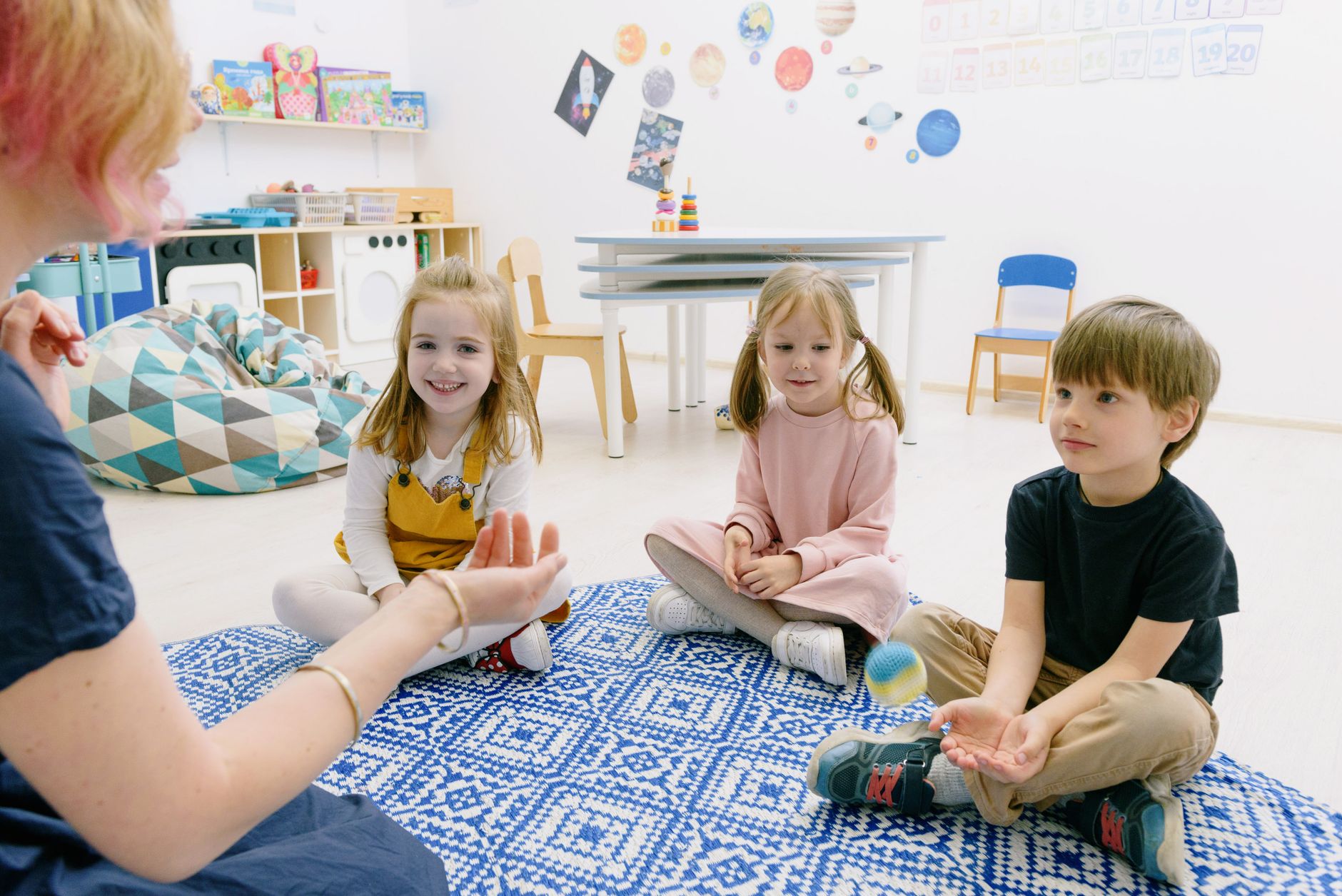
From Duolingo to ChatGPT, AI has been festering itself in the educational field more and more everyday. AI promises a mix of both opportunities and dangers, but whether or not society will be able to properly regulate its use will determine the aptitude of generations to come.

“AI use longterm will be harmful to both student and teacher advancement,” said Kirt Jolly, an elementary school teacher for over 10 years. “The student will continue to lose important critical thinking skills due to its use.”

AI, specifically generative AI (GenAI), has become a prominent issue in schools. AI was first entered schools immediately after the public release of ChatGPT in 2022. By 2023, it was widespread among students to complete their homework, formal implementation and structured guidelines followed shortly after, with institutions officially incorporating GenAI into the curriculum.

“Over reliance on AI tools and platforms can put children and youth’s fundamental learning capacity at risk,” said a yearlong, global study conducted by the Brookings Institution’s Center for Universal Education. The article went on to say that, “with limited safeguards and a risk of inaccurate information, can lead to diminished learning experiences.”

Brookings’ study went on to report a major concern on AI: it doesn’t just harm students’ cognitive development, but actively places them at risk of mental decline. This decline occurs from one of the main risks with AI, as students’ repeated use comes with the threat of developing a strong dependence, creating a vicious cycle to their maturation. As students use AI to “offload” their cognitive tasks, and a “positive feedback loop emerges where they see positive results in terms of grades and in time and effort saved.”

This increased dependency and lack of mental stimulation eventually results in “cognitive atrophy,” which has longterm consequences such as diminished critical inquiry, increased vulnerability to manipulation, decreased creativity and greater risk of internalizing shallow or biased perspectives.

This idea is supported by the National Library of Medicine, which reported that “reducing critical thinking as adolescents rely on AI tools instead of their own thoughts and ideas, which may inhibit young people’s cognitive development.”

But AI does hold some benefits in the education system, according to Brookings’ study, proper use can provide teachers with extra time in their busy days by taking care of menial tasks, “enabling more high-value interactions with students.”

According to the National Public Radio (NPR), AI can utilized to assist students with their reading development, especially for students that are learning a second language. “AI can adjust the complexity of a passage depending on the reader’s skill, and it offers privacy for students who struggle in large-group settings.”

However, AI has proven to be a very dangerous tool, especially to our youth, so society must be cautious about its utilizations if its to properly take advantage of its aid. “If regulated properly, it can be a great teaching tool…” Jolly agrees. “The unfortunate issue is things like this are never regulated with the precautions needed for it to be an effective tool.”

Addison Pendegraft

My name is Addison Pendegraft, I’m 16-years-old and a rising Junior at Johns Creek High School. I was born in a village in New York, but then moved to St. Louis, Missouri, and I’m now living in Georgia. I want to be a journalist, preferably a section editor, and an editor for novels! And I’m a really big reader, usually reading five or six books at a time. I also really like to volunteer, and I’m managing a book drive right now, which is very exciting. I’ve always enjoyed literature since I was little, often I’d rush through my handwriting classes in favor of getting more reading time. Despite that, I’d like to think I’m quite a diligent person in school, with my super stellar grades and nerdy glasses. And I perform aerial silks, which is like airborne gymnastics and very, very tricky. Though, I used to be much more active, playing soccer and horseback riding, before my asthma got worse as I grew older.

I joined my school’s newspaper class as a freshman, so I had to apply during 8th grade, which was a bit intimidating as a middle schooler. I was encouraged by my 9th grade honors English teacher, who was super supportive of me, even going so far as to write me a recommendation letter for my application. I was pretty nervous to join, but it turns out that I thankfully wasn’t the only new member. Apparently, all but one of the staff from the previous year were seniors or had quit, including the teacher. The returning member also didn’t receive any training, so it was a huge learning curve for us. Our class was also super small, with only 11 staff members total, so we each had to write and design two articles and pages per issue, all while figuring out the grammar rules, how to use the website and keeping a pretty strict schedule. A really notable issue for us was learning how to use Indesign, which gave the entire class a lot of trouble and is the vain of my existence along with chemistry. We eventually figured it out though, and if I could give a class an award for “most Improved” that year, I’d think we would be the winners.

My sophomore year went a lot smother, we got more staff members, going from 11 to 17! And I was appointed to the section editor of A&E and News sections in the newspaper, which was really thrilling for me. Editing has always been a passion of mine, so to be able to edit so often has been a real gift. I’ve also been assisting with and managing our newspaper, The Chariot’s website, which has been a cool learning experience for me and will definitely help me in the future. Last year we were able to double the amount of issues printed and heavily improve our writing, design and the overall theming and topic of the newspaper issue. We’ve been able to accomplish a lot more with this bigger staff this year, utilizing all of the trial and error we endured before. And it’s been such an incredible experience getting to witness my friends, who also only joined the class in the previous year, grow in skill and passion as we’ve gotten to know each other.

Now I’m a rising junior, and our staff will have 27 members. I truly can’t express how proud I am of the original staff and friends for how much we’ve grown together, especially during such harrowing times. I’m really happy that I was brave enough in 8th grade to apply. Not only has this class given me a bunch of opportunities, but it’s allowed me to make amazing friends, which I’m so grateful for. Next year, when I’m a junior, I’ll continue my role as a section editor and be promoted to the official manager of the website with a small team to lead. I’ll also be co-managing our social media with a fellow rising junior and probably helping all the new members as they learn to stand on their own. All of this is in preparation to hopefully take the role of EIC as a senior, which has been my ultimate goal since I decided to apply.

I hope when I’m in college, that I’ll be able to use my experience with The Chariot to improve and develop the school’s newspaper to the best of my abilities. Not only working for the newspaper, but in all my life I’ve strived to be the best I can be and work hard to achieve my goals and dreams. I’ve really been putting my all into my work at school and I really hope my diligence and experiences further my opportunities in the future. I’m quite scared for hereafter, but I think I’m already pretty close to my goal, hopefully.