Join the Club?

Youth club team sports have been revered for their rigorous training, specialized coaching and the market for private youth sports have skyrocketed, but are these high-intensity teams worth the pretty penny?
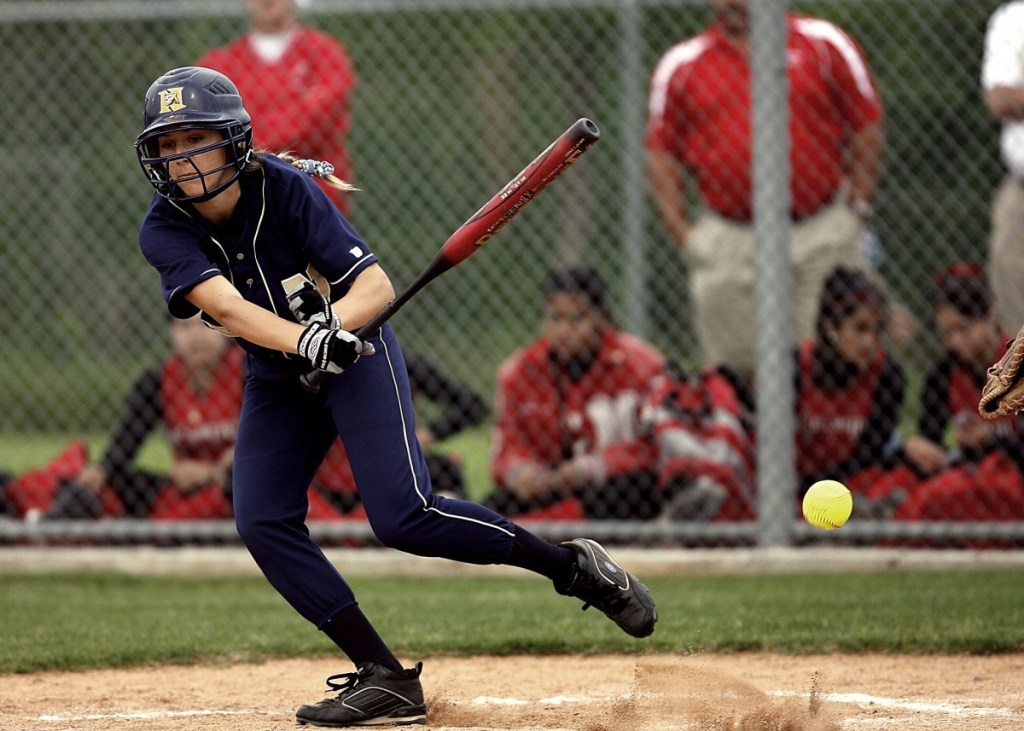
The U.S Youth Sports Market is reported to be worth $19.2 billion, rivaling the NFL at merely $15 billion and it’s projected to reach $77.6 billion by 2026 according to a report from Wintergreen Research. Where did this surge in popularity and worth in youth sports come from? Well, the most likely answer is privatized club sports teams. So what’s the deal with club sports? Why are parents pouring their income into travel teams and private coaching?

Oconee High School rising Freshman Marin Torres has been swimming since she was 5-years-old and went on to swim on OHS’s swim team as an eighth grader. Upon joining a club team in 2019, she finds it to be more intense than her school team.

“It’s more competitive, that’s for sure. And practice (is) every day, so definitely more rigorous than school swim,” Torres said. “And definitely more organized than school swim because school swim, my coach even mentioned that no one else wanted to be the swim coach so that’s the only reason why she’s there.”

Torres also notes how her school team can’t have tailored coaching due to the vast differences in skill level.

“There are only two groups, pretty much split into the ones who can swim already and the ones who need help swimming, and then their practice is not that strenuous,” Torres said. “The coaches don’t really keep an eye on you. They kind of just trust you to swim.”

However, while the coaching is lacking, Torres finds richer experiences with her school team.

“The swim meets are fun because you get to see people from other high schools and you’re with your friends from school,” Torres said. “Also you get swim uniforms and a Letterman jacket, you’re representing your school, but other than that, it’s just kind of like a fun thing to do for me. Not really like a competitive thing.”

Though with club, Torres noticed the divide between athletes due to economic status.

“It’s not a cheap thing. So it kind of feels wrong that club is more expensive, therefore you get better training, but that’s how sports works. So I do notice that the people with money tend to be better because they get the training.”

Despite the costs and benefits of either teams, Torres finds balance in both.

“I feel like if I dropped club and just did high school, it would be more of just a fun (thing) because practices aren’t that hard so you just go and talk to your friends and the coaches don’t really care,” Torres said. “But if I only did club, it’d be a competitive environment. So I think a mix of two is really good because then you get the fun and also the training you need.”

For Jim Peeples’ first 15 years at Piedmont University he coached the baseball team before he stepped away to fulfill his new duties as the Athletic Director for the next seven years. Prior to his professional career however, he was a tri-sport athlete and swam on a club team in his hometown but chose his high school athletic career over the private club experience.

“I transitioned out of swimming because my high school didn’t have a swim team. So for me to continue, I would have missed out on playing the other sports at my high school” Peeples said. “Now, I could have continued swimming at the club but I really wanted the chance to compete for my high school.”

Peeples, similarly to Torres, found more enriching experiences and relationships on his high school team. Making him thankful that he chose high school over his club.

“All these years later, there’s a group of us that get together and we go on a golf trip in the spring,” Peeples said. “So 40 years out of high school, a group of guys that played sports together, we still get together today. So those are lifetime bonds that we built because of our involvement in high school athletics.”

As Athletic Director, when reviewing recruits Peeples has seen fewer ideal athletes as club has become more highly regarded than high school teams.

“There are a lot of talented kids playing travel sports, but there’s a difference between being talented and being a great competitor. I would rather have the young person in my program who’s the great competitor and who competes for the good of their team, then the kid who’s ultra talented and doesn’t compete all that well. And also, that’s really what our coaches are looking for. Who are those great competitors who are going to be those great teammates? Who is going to be the person who puts themselves second and their teammates first? Travel sports has taken away from that a little bit right”

After playing both travel ball and high school sports, Andrew Klein graduated from Piedmont University in 2023 and is slated to be a paraprofessional at a Middle School in Habersham county where he will also coach baseball. As a K-12 student, Klein played travel baseball and continued to play through Piedmont before quitting and transitioning to coach at a private club, but Klein argues that the private youth sports industry has progressed into more of a flashy lifestyle than an industry based in producing athletes.

“It definitely is more of a money grab nowadays,” Klein said. “Parents want to be so fast to spend the money and get the cool jerseys or have the cool walk up music for their kids and just say they play travel sports,” Klein said.

As a coach, Klein attempts to steer his athletes away from the false narrative of promised attention and success just for being in the club and to instead find joy in the game.

“I just try to tell kids that no matter the money, you first got to find the right coach for you, you’ve got to find the right players that you want to play with, how you want to play the game first, and focus a lot less on just your win loss record,” Klein said. “Social media has all these people being able to post their highlights and tag these college coaches and it seems like it’s just a persona that they want to be like other kids that post these things and it’s more about how they look and how people perceive them then what their skills are (and) how much they actually love the game.”


Twirling is a sport .

“Baton twirling is a sport involving the manipulation of a metal rod with the hands and body to co-coordinated routine.” as so says the google definition but in my eyes it’s WAY more than that. Baton twirling is a skill that combines dancing and gymnastics into one with a little twist. The actual baton itself gives the routine more flavor but it’s about who’s holding the baton to show what all it can do.

Learning how to twirl isn’t easy and takes lots of training just like any other sport. It takes time, work, practice, and determination to actually want to learn the sport. Baton twirling is mentally challenging just as it is physically challenging, you’re adjusting to moving your body a certain way adapting to stretching and working out to be able to even participate in the sport. It’s already hard even forcing yourself to throw or baton or try a new trick under it, especially when you know what can happen when you miss. The risk can even get more challenging once you decide to throw in another baton or two.

I experienced some of these dangers firsthand. When I first started baton twirling, I tried to perform a very hard trick in our routine — even though I probably wasn’t ready to do it —  and I twisted my knee. I also have several scratches, bruises and blisters from my years of baton twirling. It’s not an easy sport.

Just like any other sport national baton twirlers do get paid. Once you’ve mastered the skill and get into the big league there are two organization’s that allow all around majorettes to get paid for their talents. Two of the largest U.S associations today are the United States Twirling Association (USTA) and the National Baton Twirling Association (NBTA). They both hold national competitions every year and officiate competitions at local state and regional levels. The salaries of Baton Twirlers in the U.S range from $16,640 to $74,880, with a median salary of $35,360.

Beyond the friendships you’ll forge with other twirlers and members of the band, you may get to travel to other parts of the country, performing for thousands of spectators in support of your school or organization. Some schools also provide financial support and scholarships for collegiate twirlers.

Twirling is a small world round sport that many people don’t know about. Still, a solid group of people, mostly in small U.S towns kept baton twirling alive. Now twirling is experiencing somewhat of a renaissance, appealing to aspiring athletes with its melding of gymnastics and dance. Baton twirlers now compete in national and world competitions instead of marching in parades.

The college admissions lottery

Ajani Salvary was going through the college admissions process last year. He applied to many universities, many out of state, hoping to be admitted to as many as possible. With his future in the balance, Salvary believes whether he got accepted to a school or not revolved around one variable: luck.

“The college admissions process revolves mostly around luck, one must think of it as playing the lottery,” said Salvary. “There are things that can increase your chances such as high GPA and good essays but no matter what you’re not guaranteed to go anywhere.”

The admission process is a four-year long development. It’s based on your high school career and has many factors, from test scores to GPA to extracurricular involvement.

David Graves, interim director of admissions at The University of Georgia, said students should begin thinking about college as soon as they enter high school. Going from being a tiny middle schooler to a big high schooler who has to start worrying about their future is a big development, especially for someone who’s 14-15 years old. 

“The transition from middle to high school is a key time for students as they reach new levels of both academic and personal discovery,” wrote Graves on the UGA Admissions blog. 

Another huge factor is your outside activities from school, whether you do a sport, debate, National Honors Society. However, this can be a lot for a teeanger balancing course load, extracurriculars and their social life. “Colleges want to look at your extracurriculars so they can know you can handle something full time and turn in your work on time,” says Zoi Bascon, a rising senior at Redan High School in Georgia.

SAT/ACT preparation is one of the stressful things a high schooler can study for and it starts as early as middle school. Over time these tests have lost relevance for some universities, and while they’re still important, lots of colleges are integrating to test optional.  According to the Fair tests website, there are 1,843 colleges that are now test optional. 

“While it is admirable for students to receive stellar scores on these exams, we are going to understand that four years of hard work in a classroom tells us more than four hours spent taking a given exam on a Saturday,” says Joshua A. Williams, the admissions officer for access and inclusion at the University of Georgia.

Juggling having a social life and preparing for college during high school is going to be difficult, no matter what changes throughout the years. Graves said that not all college applications are equal, and it’s important for students to take that into consideration.“When dealing with college admissions, my key suggestion is to look at what the admissions office says they value in their review, and focus on that information in your understanding of decisions,” he wrote. “In addition, look at the overall picture of the admissions situation for the individual college and that specific year, as the applicant pool changes every year.”

Is there a link between the mental health epidemic and the COVID-19 epidemic?

Nine out of 10 adults said ​they believed that there is a mental health crisis in the US today.

By Sarah LaFon Buck

June 22, 2023

Credit- Iso-Form LLC

An artistic rendition of a COVID-19 virus particle

____________________________________________________________________________

One of the biggest global crises in this generation was COVID-19. It had severe and long-lasting effects on the economy, society, and many people’s lives. Many people lost their jobs and required financial help, and many businesses went bankrupt. 

As of June 21, 2023, more than 6.9 million people have died from COVID. The pandemic has led to a mental health epidemic. According to Mental Health America, in 2019-20, 20.78% of adults were experiencing mental illness, equivalent to 50 million people in America. 

“The Covid-19 pandemic exacerbated numerous social stressors that we know can increase the risk of both substance use and mental illness,” said Dr. Nora Volkow, director of the National Institute on Drug Abuse.

One cause of this was unemployment. During COVID, many people lost their jobs. When business closures and restrictions happened, unemployment peaked at 23 million in April 2020. Additionally, many people lost loved ones and were experiencing grief alone. During Covid, many adults reported they felt symptoms of anxiety and depression, peaking at 39.35% of adults in Feb. 2021, according to the Kaiser Family Foundation (KFF). 

“As someone who likes to be sociable, it was a challenging time for me,” said Joe Dennis, a professor at Piedmont University. “From being around students all day to being stuck in my home staring at a screen — I definitely struggled with my mental health.

Dennis was not alone. Many people felt isolated and lonely in quarantine because they could not see their friends and family for a long time. Azi Daw, a rising high school student from Virginia, said the pandemic was especially difficult for her since it exacerbated previous health conditions already impacting her family.

“The quarantine, the isolation — I could not really handle it anymore,” she said, adding that she’s thankful she had strong support systems in place with her family to help her get through her struggles. “Going to sleep at night was really hard for me. I just couldn’t slow my brain down. My mind was always racing.” 

Although the KFF showed mental health struggles dropped to 31.5% in Feb. 2022, it has most recently gone up to 32.3% in Feb. 2023. As more people are struggling, getting help has become much harder. Many people could not afford it or were scared to seek help. 

“I myself did not go to the clinic for therapy for an entire year partly because of this fear,” said Esenam Abra Drah in an article published by the World Health Organization in June 2022. 

Drah is from Ghanda and suffers from bipolar disorder, and says that Covid affected her and many of her friends. “I have many friends who had relapses in their mental health because of the increased fear and panic. It was almost as if fear was contagious.” 

Health care workers especially experienced an increase in mental health concerns. There was a lot of fear around the hospital because of how many people had Covid. With increasing workloads and exposure to infected patients, many health care workers became much more stressed during the pandemic. 

A Sept. 2020 survey conducted by MHA found that 93% of healthcare workers were experiencing stress. 76% were worried about exposing their children to COVID-19, and 48.61% were stressed from the increased workload from Covid. 

As society still suffers from the remnants of the pandemic, it’s important to prioritize one’s mental health. “The impact of COVID-19 on mental health cannot be underestimated,” Esenam said. “It cannot be made light of.”

Spanish Dialects and Indigenous Languages in Colombia

By Azi Dau

No one thinks of Spanish beyond learning it in school. Little do they know the language runs deeper than ¿Cómo estás? and ¿Dónde está el baño?

“The language affects the culture,” said Colombian-born Abe Dau. “It’s like the chicken and the egg.”

Colombia is known as the country with the most understandable Spanish in the world. But there are over 70 dialects and indigenous languages. Dialects are regional variations of a language that change common pronunciation, vocabulary, and tone of voice. Two of the most prominent dialects are coastal (costeño) and inland. 

Dialects develop because of geographic location and time. A language can also be influenced by other languages, creating a dialect. Howstuffworks uses a made-up scenario to explain the concept. It says to picture two groups of people who originally spoke the same language, causing a “geographical and social divide, [causing] distinct dialects, or accents, over time.”

Dau was born in Cartagena, a city on the coast. “Life is easier and happier near the beach,” as he recounts his childhood, “making costeño speaking more relaxed and joyful, including jokes and lively vocabulary.” 

“I grew up only knowing combined words that I actually thought were the real thing,” said Jim Dau, son of Abe Dau. “I was an adult before I learned that ‘qué vina’ wasn’t one word.” 

Costeño Spanish is known to speak fast and cut their words together. He was born in Cartagena as well, but only lived there until he was around 3-years-old. He returned to visit family some summers though, re-immersing himself into Colombian culture. 

The other popular dialect is away from the shore. “People inland are known for the most accent-free, cleanest, and most accessible Spanish in the world,” said Jim Dau. 

Because of this, lots of Latinx news anchors, actors and public figures are from Colombia. 

There are around 65 known indigenous languages. One of the families of indigenous languages is Creole, which mixes other indigenous languages with languages from enslaved Africans. Another is named Cariban, which is where the name Caribbean is from. It’s from the areas near the Caribbean Sea.

Many families of these languages aren’t just unique to Colombia, though. Languages from the Tupi-Guaraní family can go all the way to more southern countries like Argentina, while Quechan languages can stretch all of the western coast of South America. 

Modern life depends on communication. 

“Without languages, the world wouldn’t work,” Abraham Dau said.

(My grandfather and father 40+ years ago in Colombia. My father is the younger boy.)

Behind the Judgment: Exploring the Reasons We Judge Others


Human instincts are hard-wired in all of us, whether it is to feel fear, hunger or happiness. We pick up on everything, from what someone is wearing to what someone is doing with their time. When we are observing others, it is common to judge them, whether it is good judgment or bad judgment. Everybody judges someone at some point. But why? And how does this affect human connection?

According to Dr. Janet Frick, an associate professor of behavioral and brain sciences at the University of Georgia, we are always subconsciously perceiving others. It is human nature to pay close attention to the actions and behaviors of others and to perceive how one is acting. 

 “We are all very prone to stereotypes,” Frick said. “These stereotypes can absolutely lead to passing judgment before getting to know them. We all do this — the best thing to do is to be aware of what we are doing.”

The stereotypes are formed and evolve throughout our lives, and essentially result in us judging others, even if it’s subconscious. “The ability to make judgments is rooted in our need to evaluate [a situation],” Frick said. “Judging is an instinct we have just as social animals.”

Mandie Michaels, a high school student from Milton, Georgia, said that she can’t help but judge people sometimes. “Judging is a human instinct, I think everyone does it once in a while. It’s just the way the mind works,” she said.. 

According to Frick, Michaels is right. While we often associate judging others with negative intentions, there are also ways where judgments can have a positive connotation. 

“Judgment isn’t always bad,” Frick said. “If my neighbor gets up and goes for a run every morning, I may make a judgment that that person is very health-conscious and disciplined, which shows that judgment can absolutely have a positive impact.”

Maika Walker, a high school student from Atlanta, said she notices that some people act in a way in which they want attention, and that’s typically when she finds herself judging them. “Judgment isn’t really making me feel better about myself or making them feel worse, I usually judge when someone is doing something that grabs my attention, it’s almost like they want us to judge,” she said. “Sometimes people set themselves up to be judged.”

Additionally, judgment can impact how people build relationships with others. It is common for people to judge others before they really meet, just with one glance in passing by. Judging someone before really getting to know them can be questionable, as it is hard to tell who someone is as a person before speaking to them. However, doing this isn’t really bad or good, it’s an instinct we have to seek out people similar to us, as that makes us feel safe. If we sense someone is different, we can immediately think to judge who they are.

“We have a tendency to seek out people who are similar to us, that helps to reassert our own choices,” Frick said. “It is an inherent bias to seek out people we see ourselves in.” 

Judging others is a natural human behavior that we all experience to some degree. While it can be harmful and unfair in certain situations, it also is a way for us to form opinions and figure out a sense of what is going on around us. By acknowledging that judgment is a part of human nature, we can work towards finding a healthy balance between being critical of others and being more understanding.

Community College should be free

I grew up comfortable, but not everyone did. 

I know I likely will be able to go to college, but not everyone will.

But everybody should.    

Whether or not community college should be free is a controversial topic. However, it really shouldn’t be. Although some argue that free community college would hurt the economy, it’s actually the opposite. It would help it.

In 1947, the GI bill stated that anyone who served in the military would get to go to college for free. These people, unaffected by the stress of student debt, did good in the world. They donated to charities and volunteered when they could. Now, these people have done great things for society, such as being scientists, doctors, dentists or other jobs essential to society. Ultimately, giving people free college formed the backbone of the economy.

Statistics show that those who didn’t attend college have lower employment rates than those who did. These people are rigged against financial stability from the start. They are unable to afford college, so their chances to live even a comfortable life is less than average.

A common argument is that if a person wants to go to college then they should get a scholarship, but that argument forgets two important pieces of information: scholarships are limited and the wealthy, just as intelligent as the poor, don’t deserve school any more. If a person born into money with supportive parents is as smart, or even less so, they get a free ride from their parents, So, why are the poor told they should just get a scholarship, when that is such an unachievable objective for many average students who would flourish as a rich kid?

In the United States, student debt is nearly $1.75 trillion, while 45 million people begin their working lives in debt. Saddled by what could be a lifetime of stress, people are less likely to contribute to the community in a charitable way, and have less money to spend in the economy. 

Imagine if community college were free. Just the students who attended community college would not be in debt and they would be financially free to contribute to the economy in many ways, whether that’s through donating to charities, starting a business or simply spending more. 

The expenses of higher education is a flaw in the United States, and offering free community college would be one way to help offset this problem. 

My father couldn’t afford to go to college, but he got lucky and was able to land a job that led to him giving my family a comfortable life. 

But not everyone got so lucky.

And it shouldn’t come down to luck.

Ownership and its necessity in the MLB

“SELL THE TEAM”, “SELL THE TEAM”, “SELL THE TEAM”

A famous movie called Moneyball has an often quoted line by baseball fans across the globe. Brad Pitt’s character, ironically playing Oakland A’s general manager Billy Beane, says “How can you not be romantic about baseball.” 

Based on the true story of the early 2000s Oakland A’s, Beane saw his team struggle and lose almost everything, yet he remained faithful and worked to save his team from absolute poverty, employing strategies throughout the movie to save his team, and in the end is successful. 

Sadly, it looks like the Athletics won’t get the fairytale hero to save them from relocation this time.  After years of rumors of a move to Las Vegas, it now looks like relocation is definitely on the A’s horizon. How did we get here? How does a professional baseball team get to the point where they aren’t making enough money?

Dr. Joe Dennis, professor and adviser for the sports communication major at Piedmont University, said the A’s situation is unique.  “They’ve adopted a barebone spending model — they are not making a lot of revenue, but they’re not spending a lot, either.”

Dennis is an associate professor at Piedmont University, the only college in Georgia which offers sports communication degree. He is also a lifelong baseball fan, specifically of the Chicago White Sox. Dennis grew up 15 minutes away from the White Sox Stadium and is no stranger to the history of baseball, as he said he has been a fan for nearly all 46 years he has been alive. As a baseball fan, Dennis said he is upset about the way the Athletics front office is handling the relocation option. 

“Baseball is really unique in that it has no salary cap and no salary minimum, and so it’s absurd that teams can get away with spending nothing and just putting a product out there that allows other teams to basically have exhibition games against them.”

He has seen Theo Epstein, former general manager of the Boston Red Sox and Chicago Cubs, employ tanking tactics, but feels what the A’s are doing is completely different.

“Many teams have done this. They will intentionally lose and trade their star player away, but they do that to get really great prospects and build through the draft,” Dennis said, adding that Oakland received very little in return for the trades of top players like Matt Olson and Chris Bassitt. “That message isn’t there, they got nothing for those trades – he’s (John Fischer) basically just tanking to get the team out of Oakland”

Dennis said this cheap attempt of ownership only hurts the fans. 

It isn’t all on the ownership though. Juan Pagan, assistant athletic director at Eagles Landing Christian Academy in McDonough, Georgia, said there’s another group who has to pick up the slack — the front office. “They are pretty much the face of the team from a business aspect.”

In addition to being involved in athletics, Pagan also has a  master’s degree in business administration. Over the course of his lifetime, Pagan said  he has seen various players across various sports blatantly deny a team because of a front office issue. Major athletes like Ken Griffey Jr., John Elway and Eli Manning were all examples of athletes who saw a team with major front office problems and said “no” to being drafted by them. 

“Without a good front office you won’t get any big time free agents, big time players in draft picks, to make your franchise players,” he said. “I believe that’s what is going on with the Oakland Athletics right now.”

At least for one game on a Tuesday evening, deafening chants rained down from the Oakland Coliseum. Chants that overpowered the broadcasting crew’s voices. Chants that caused the pitcher to believe his headset was broken. This rare sight at the Coliseum, where the team typically averages 8,555 fans, was due to a reverse boycott by fans on June 13 against their owner, John Fisher. The often empty stands of the Coliseum were far from it, with game attendance at 27,759 people, as A’s fans wanted to show they can still support a team in Oakland.

Unfortunately, it may be too little, too late. 

Sweet Seduction: Understanding the Science Behind Sugar Addiction

Photo by Lance Reis on Unsplash

As I sat in a cafe, waiting to order, I couldn’t help but eye the decadent pastries displayed in front of me. The tantalizing smell of sweet caramelized sugar reached my nose and suddenly it was my turn to order. Before I even knew it I had ordered a chocolate croissant without hesitation. 

“It’s fine it’s just this once,” I told myself. I knew how sugar made me feel, especially in the morning. Whenever I ate too much sugar I would start to feel lethargic, anxious, irritable, bloated and hungry. It was a constant battle of willpower and addiction that seemed to tighten its grip with every indulgence. 

However, I noticed it wasn’t just me. It seemed like everyone around me was indulging in sugary treats. I observed the man that sat at the table across from me, who looked like he was on his way to work. As he took his first bite of a coffee cake, a subtle moment of satisfaction and delight glimmered across his face. However, it seemed like it was overshadowed by a lingering sense of guilt and helplessness. This serves as a poignant reminder of the widespread effect of sugar addiction and the urgent need to find it.

According to Addiction Center, approximately 75% of Americans consume excess amounts of sugar and many of them could be classified as having a sugar addiction. This is an alarming amount of people whose health could be at risk. Many of which, probably aren’t even aware that they could have an addiction.

Society’s addiction to sugar has become a prevalent and important issue in the modern world. For many, it’s difficult to resist the temptation of sugary treats and drinks present in stores everywhere. In addition, it seems like added sugar is hidden in almost everything we eat. Most people believe that an addiction to sugar is simply the result of a lack of willpower. 

However, there are key psychological and biological factors that drive sugar addiction. The addiction is real and can have an effect on the brain similar to drugs. People claim that they feel compelled to eat sweet foods, similar in the way an alcoholic might feel compelled to drink. Despite what many companies want you to believe, sugar addiction is a big problem that can have detrimental impacts on your health.

When we consume sugar, the brain’s mesolimbic dopamine system (its reward system) is activated. When the sugar reaches our system it triggers the release of a huge surge of dopamine. Dopamine is a type of neurotransmitter that makes us feel pleasure. This feeling of pleasure reinforces the desire for more sugar. This creates a seemingly never ending cycle of consuming sugar in order to experience the pleasure again. 

The emotional and psychological associations with sugar and sugar addiction can vary from person to person. However, our brains are all wired similarly when it comes to dopamine release. The pleasurable sensation that sugar gives can lead people to develop emotional associations with sugar, such as using it to comfort unpleasant emotions. The consumption of sweet foods leads to temporary relief of stress and negative emotions, which can lead to a psychological dependence on sugar to regulate emotions. 

Similar to drug addiction, extended exposure to high amounts of sugar can build a tolerance. When we consume sugar it is broken down into glucose and is then absorbed into the bloodstream. The pancreas responds by releasing insulin which is a hormone that helps transport glucose from the bloodstream into cells that can be used for energy. Overtime, the brain becomes desensitized to the high levels of sugar and insulin which leads to insulin resistance. Therefore, more insulin is needed to have the same function of transporting glucose which leads to elevated blood sugar levels and potential long term health issues, such as type 2 diabetes. 

In addition to type 2 diabetes, sugar can cause a host of other health problems. Obesity is one of the most common and apparent health problems sugar can cause. While weight isn’t a direct reflection of one’s health, consuming excess sugar can lead to weight gain and obesity due to the sugary foods high calorie content. Excess weight from sugar can lead to other life threatening health issues such as heart disease and certain types of cancer. 

Science shows that high sugar intake has been linked to an increased risk in heart disease. Diets high in sugar can raise blood pressure, promote inflammation, and contribute to unhealthy cholesterol levels. The inflammation caused can create stress on the heart and blood vessels which can lead to increased blood pressure. These are factors for heart disease and dramatically increases the risk of it becoming fatal. 

This problem can be solved by increasing awareness and encouraging people to reduce their sugar intake. Making people aware of the negative impact that sugar has on their health can help them begin to battle their addiction. Education on not only the impact but the presence of sugar is important as well. There are many hidden sources of sugar in foods and drinks. Hidden sugars are in many popular snacks and even foods that may be marketed as healthier. Learning how to read food labels can be helpful in avoiding concealed sugars. 

After education, gradually reducing one’s sugar intake and eating a balanced diet rich in fiber and protein can help. Emotional support and stress management are also important strategies to help prevent emotional overeating. If more people don’t make the effort to fight their dependency on sugar, then global health will continue on a steady and dangerous decrease. Starting with awareness, all of these strategies can be used to make a difference in one’s health.

So, the next time you find yourself gazing at a case full of tempting treats, reflect carefully on the unsettling effect that sugar has on your body. While I’m not asking you to never eat sugar again. Simply take a moment to remember that a few mindful choices at a time can bring you closer to breaking free from the firm grasp of sugar. 

Who is Joe Dennis?

One word that could be used to describe Joe Dennis is passionate … especially about his musical tastes.

“If you don’t like Kesha you can leave,” Dennis said to a group of high school students attending the Summer Media Academy at the University of Georgia. 

In an interview with the students, it became clear that Joe is passionate about a multitude of things. From Kesha to fedoras to the White Sox, Joe has many passions. But one of his core passions is journalism. 

On the surface, Joe Dennis is a talented journalist and professor who is currently the chair of the mass communications department at Piedmont University. However, diving deeper, a particular point of interest for Joe is his collection of fedoras. While it may seem silly, his fedora collection actually reflects a piece of cultural identity as a half Filipino. “‘I needed something that defined me,” he said, recalling how became a fedora wearer. “I was walking around the streets of New York City when I saw a woman selling fedoras. Bruno Mars was popular around then, and he rocks the fedora. And he’s Filipino. I thought, That’s it! I’m going to wear a fedora.’”

Although he is comfortable in his career and identity now, he felt challenged when starting out his career. As a budding journalist, he found it difficult to recognize that there was a business end in the field. His first journalism job was at The Walton Tribune in Monroe, Georgia which is a small publication that relies on the community it covers. The people that he would cover — the community leaders and politicians — also often advertised for the paper. Therefore, Joe found it difficult to understand how to balance creating compelling stories while respecting the advertisers. 

Despite this, he says that he wouldn’t do anything different. He believes that he is exactly where he is supposed to be. When asked if he would change anything about his life he simply replied, 

“Nothing. I really think that everything that’s happened has happened for a reason.”