
The Youth Speaks: How Our Minds And Relationships Are Being Reshaped By Technology

By Kirsten Jolly
New Manchester High School

What makes a strong relationship? Perhaps mutual respect, affection or trust? What about whether you have ever met them in person? Or whether they are a person at all?

According to research from the Center for Democracy and Technology (CDT), nearly 1 in 5 high school students either know someone who has, or have themselves been in a relationship with artificial intelligence.

Photo by Uriel Mont on Pexels.com

As it seems, relationships are evolving. Not just in the way that they develop, but also in the way they are perceived and defined.

As technology advances, many are turning towards new avenues for romantic (and platonic) fulfillment. They are instead becoming more interested in exploring relationships through social media or Large Language Models (LLM) rather than pursuing interpersonal connections.

While responses to this information are polarizing, it does raise questions as to why many are feeling the need to turn to alternative solutions. In addition, what long-term effects will be inflicted upon society if these practices become normalized?

This future, filled with the normalization of AI relationships, is not as far away as it seems. Local high school student, Uriana Powell, recognizes differences in behavior in peers after they begin using AI. They consult LLM’s like ChatGPT to solve relationship problems, speak for them conversationally or for emotional support. Powell comments, “I mean, I love all my friends, but I do encourage her to be herself. Humans are way more creative than AI…we are unique in our own way,”.

So, why exactly is the youth being impacted in this way? As reported by The American Psychological Association, “Humans are hardwired to anthropomorphize, or ascribe human traits to nonhuman objects. Digital companions are purposely designed to evoke such a response…”. This outlines the possibility that the emotional bond produced between humans and Large Language Models is largely due to the intentional manufacturing of the AI chatbots, and not the fault of those affected.
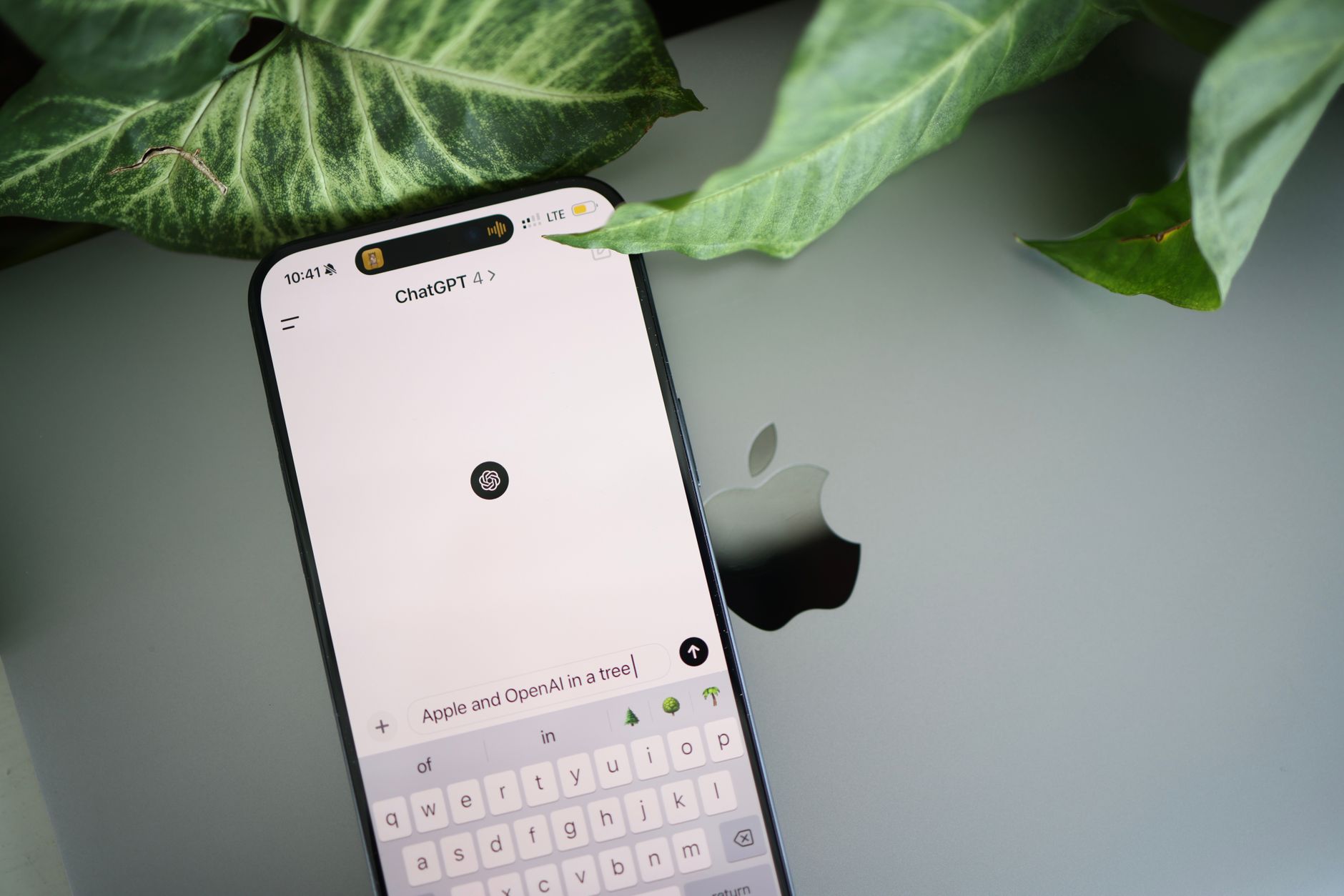
Photo by Solen Feyissa on Pexels.com

Contrary to the development of AI companionship being relatively new, the integration of social media interaction has been around for a few decades, but has increasingly gotten worse. As stated in National Library of Medicine, “Social media, integral to contemporary life, offers significant connectivity and entertainment benefits… [it has] given rise to social media addiction, particularly among teenagers, characterized by excessive screen time, compulsive checking, and detrimental effects on real-life relationships…”

In conversation with high school student, Fiona McGaraghan, she spoke a bit about how she faced real F.O.M.O due to social media, “Fear of missing out is a big one, just seeing posts of other friends doing stuff, and wishing I was there.”

McGaraghan continues, “Social media, both using it, and the culture around it has had a negative impact because it feels like people are centered around it in terms of social behavior.” Later, McGaraghan recounted feeling excluded more often, due to her being able to actively see things she was missing out on online, not just conversations, but entire shared experiences.

While the technological integration of society is not entirely negative, the perception is that the way it negatively impacts others outweighs the way it positively impacts them. Sam Crumly, high school student, stated that he noticed clear differences in his behavior after using tools like social media and generative AI; specifically he noticed that the content he was receiving was largely tuned to him and his opinion so he felt as though he wasn’t being as intellectually challenged.

Photo by Szabu00f3 Viktor on Pexels.com

Crumly stated, “I understand that most of the stuff I am looking at is skewed to the way I would like to hear it, and my perspective…it just kind of numbs my brain a little bit.”

In reference to romantic relationships or situations, Crumly mentions that he felt a bit negatively impacted due to the use of LLM’s. “I think I asked AI for a pickup line, like once…they don’t know what they are doing…” Crumly continues, “I have taken advice from social media on some things, honestly most of the time it’s not really good.”

As the relationships of youth continue to evolve, the integration of technology will likely remain present. Only time will tell if that integration will be focused on prioritizing the mental state and health of the youth rather than their constant gratification, and addiction. Many hope that the direction that relationships take will be more geared towards emotional connection, rather than artificial fulfillment, and ultimately, rewarding those that foster strong human-based relationships.
Morgan Hardy: A Rising Voice on the Stage of Journalism

By Kirsten Jolly
New Manchester High School

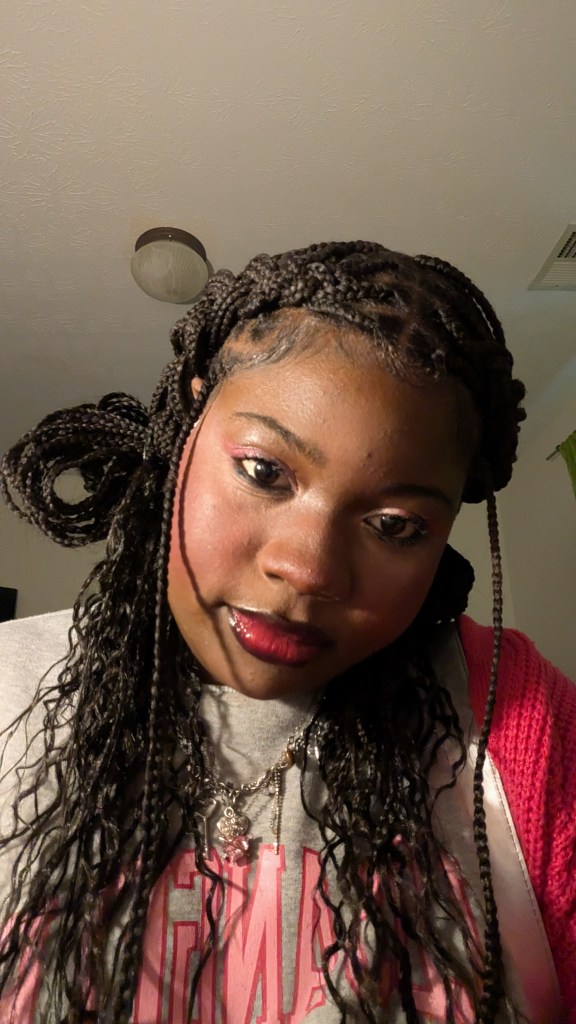
How do you differentiate between artificiality and authentic work, and furthermore how can a line be clearly drawn between the two, if it is impossible to tell where deception began? As a journalist, UGA Graduate Student, Morgan Hardy faces these questions every day, and strives to responds to them with boldness and bravery as she relentlessly pursues truth into the future.

To Hardy, being a journalist is much more than just writing and reporting. It’s understanding, knowing and connecting to the people you are writing about, and representing them in a light that is true to them. “We are real life people,” Hardy declared, while emphasizing the importance of intrapersonal connection as a journalist.

“Put your voice in your writing,”. she stated. Here, she highlights how emotional connection is something that is unique to humans, and can’t be easily replicated by Generative AI, despite implications by some in the journalistic industry.

Hardy’s perspective on this is a breath of fresh air compared to the overwhelming narrative about Generative AI in a contemporary society; as many seem to be disregarding the value of human journalists, and overestimating the capability of artificial intelligence. Hardy continues to discuss struggles she faces while rising in the industry, mainly focusing on the integration of AI into creative fields.

Hardy described how she finds herself to be dissapointed with said integration, as it is being forced upon us, rather than offered as an option. She continues to recognize the danger of that, not only as a journalist, but a youth leader entering the world. Despite the precedent, Hardy drives her own opinion about who (or what) exactly will be leading the next generation of democracy: the talented and inspired youth.

She admires the tenacity and creativity of young journalists, and how they approach tackling difficult topics in unique ways. Hardy specifically recalls her admiration of a certain journalist who captivated her audience by being funny and relatable, before highlighting the deeper issue about the topic she was covering. Hardy explains how she senses a real shift in the industry towards something greater than AI: authentic youth innovation.

As the stakes continue to rise, Morgan Hardy stays set on tackling the tough topics, and approaching them in a sensible, emotional and uniquely human way. Her influence and perspective is something that creates a space where many can feel accommodated for, and understood. As her journey continues to evolve, her voice does as well, stating the things left unsaid, and representing those left unheard.

Kirsten Jolly

Hello! My name is Kirsten Jolly, and I am a rising senior attending New Manchester High School, located in Douglasville, Georgia. In school, I am recognized as a dedicated member, and ambassador of our magnet arts program: F.A.M.E, under the visual arts department, I am President of my school’s Social Media Club, and Debate Team, and Co-Founder/Editor-in-Chief of my school’s digital magazine, The Jaguar Journal.

While my journalistic journey not always been as clear, as it is now my constantly evolving passion for journalism has certainly reshaped avenues of my high school career.

My journalistic journey, like many great things, started quiet, small, and unintimidating. My sophomore year, I joined a club, or two, discovered UGA’s G.S.P.A, learned to combine both of my passions for writing, and art, and found my love for graphic design and visual storytelling. Gradually, and unbeknownst to me, my activities began to shape me into the person I am proud to be today. I learned to hone my skills in a unique light, and discovered the true purpose of my voice: to make a difference.

Moving into my junior year, I expanded my sights towards leadership positions, and with that newfound power, I took the time to contribute towards the things I believed truly mattered. I fought to combat harsh stereotypes that stifled the success of my peers, and I actioned this through founding a digital magazine at my school.

This gave my peers the ability to take control of the narrative that dictated their perception, instead, representing them in a positive light.

Through the majority of my junior year, I worked closely alongside Social Media and Debate Club advisor, Ms.Serena Robertson, who soon grow to be a true inspiration and mentor for my story to come. She emboldened me as a leader to be headstrong and confident in both my academic and personal pursuits. She shaped me, not only as a leader, but person.

As I move into my senior year, I realize that I, as well as most of my peers are beginning to plan the framework for the rest of our lives. Despite intimidation, and sheer fear, of the future, there is one thing, that I remain relentlessly confident in. I am confident that the anchor that has guided me towards so many passions of my life shall remain present. I shall continue to combat the stigmas, hone my skills, and represent confidence in all my future endeavors, allowing journalism to guide my life towards new avenues, and new horizons.