
By Grace O’Rourke
Palos Verdes High School
Loneliness is killing people.
Not slowly, not quietly.
It carries the same heath risks as smoking 15 cigarettes a day.
This epidemic is not affecting the younger generations sitting in their rooms on their phones, but targeting the generation that has been on this Earth much longer, the generation that has lived, laughed and loved. But now they spend their days trapped in facilities. For them the most exciting thing they get to hear is the background noise of a TV, the most exciting thing to see is the outside of a window. They yearn for somebody, anybody to care, to show up, and to just sit with them for even 15 minutes.
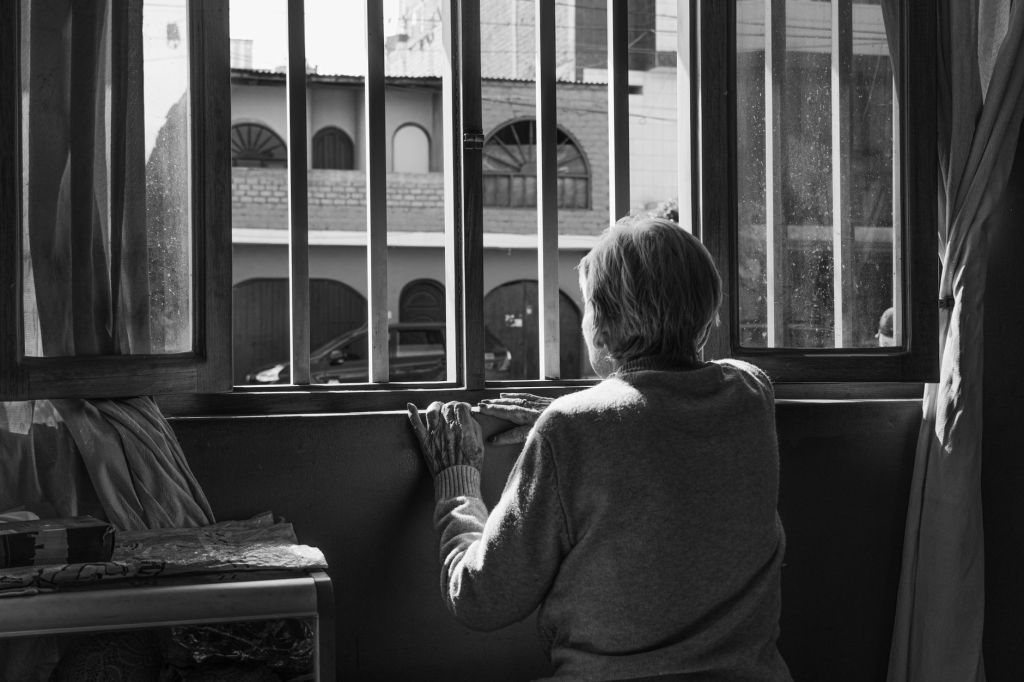
“Some days the loudest thing in my room is the TV, and I’m not even watching it, I just like to leave it on so it feels like someone’s there,” said Dorothy, 82, a resident at a senior care facility. “When someone sits down and actually looks at me, not through me, that’s my everything.”
Senior isolation has become one of the fastest growing public health crises in America. Studies link chronic loneliness to the same health risks as smoking 15 cigarettes a day, yet for many elderly residents, days pass without a single meaningful conversation. As families continue to grow busier and senior living facilities fill up, an entire generation risks being forgotten.
The reality is that these people are at risk of serious health issues, both physically and mentally. “People think loneliness is just sadness. It’s not,” said Marcus, 34, a caregiver. “I watch it affect them physically. They stop eating. They stop wanting to get up. It compounds everything. I have 12 residents on my floor, I wish I could sit with each of them for an hour. But that’s just not possible for me to accomplish alone, there’s not enough hours in the day.”
For Dorothy the isolation deepens after family visits become less frequent. “I have four grandchildren.” She said, “I see them at Christmas if I’m lucky. They’re busy. I understand that. But understanding it doesn’t make the quiet go away.”
Some volunteers are stepping in where staffing falls short. Linda, 58, began visiting residents once a week after retiring and quickly found the relationship went both ways. “I started coming once a week and now I can’t imagine not coming,” she said. “Dorothy saved me as much as I saved her, honestly.”
For Marcus, the solution starts with simply showing up. “Being able to talk to someone outside of these four walls, even for 10 minutes, changes a person’s whole day,” he said. “We just have to decide they’re worth that 10 minutes.”

 Rock Star Writers Blog