
Still here: Seniors face silent epidemic of isolation in care facilities

By Grace O’Rourke
Palos Verdes High School

Loneliness is killing people.

Not slowly, not quietly.

It carries the same heath risks as smoking 15 cigarettes a day.

This epidemic is not affecting the younger generations sitting in their rooms on their phones, but targeting the generation that has been on this Earth much longer, the generation that has lived, laughed and loved. But now they spend their days trapped in facilities. For them the most exciting thing they get to hear is the background noise of a TV, the most exciting thing to see is the outside of a window. They yearn for somebody, anybody to care, to show up, and to just sit with them for even 15 minutes.
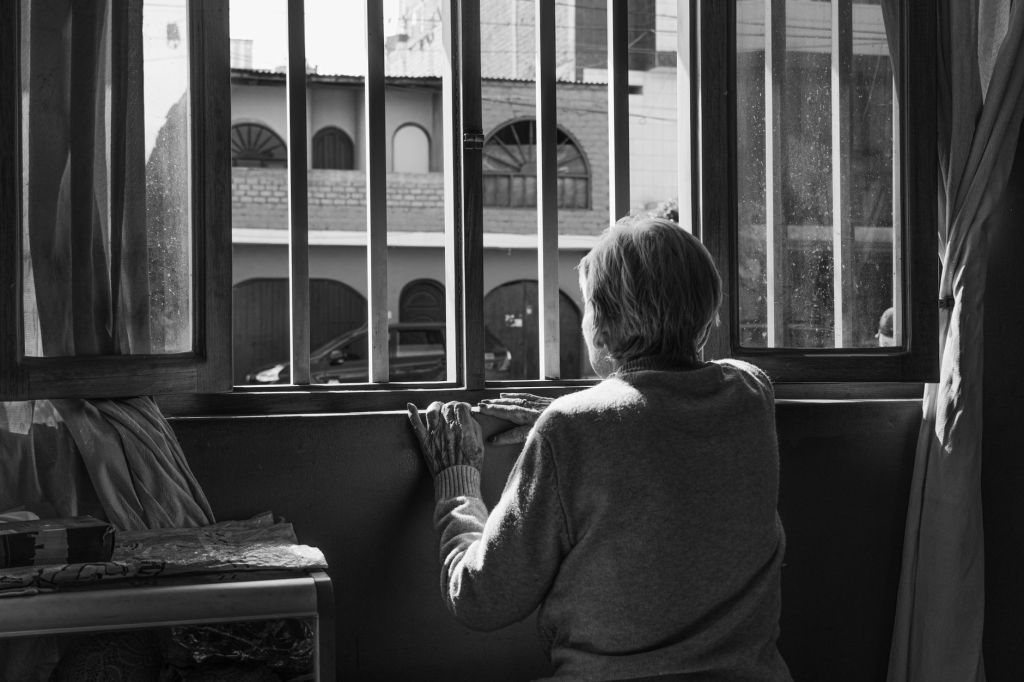
“Some days the loudest thing in my room is the TV, and I’m not even watching it, I just like to leave it on so it feels like someone’s there,” said Dorothy, 82, a resident at a senior care facility. “When someone sits down and actually looks at me, not through me, that’s my everything.”

Senior isolation has become one of the fastest growing public health crises in America. Studies link chronic loneliness to the same health risks as smoking 15 cigarettes a day, yet for many elderly residents, days pass without a single meaningful conversation. As families continue to grow busier and senior living facilities fill up, an entire generation risks being forgotten.

The reality is that these people are at risk of serious health issues, both physically and mentally. “People think loneliness is just sadness. It’s not,” said Marcus, 34, a caregiver. “I watch it affect them physically. They stop eating. They stop wanting to get up. It compounds everything. I have 12 residents on my floor, I wish I could sit with each of them for an hour. But that’s just not possible for me to accomplish alone, there’s not enough hours in the day.”

For Dorothy the isolation deepens after family visits become less frequent. “I have four grandchildren.” She said, “I see them at Christmas if I’m lucky. They’re busy. I understand that. But understanding it doesn’t make the quiet go away.”

Dorothy is not alone. Researchers estimate that more than one-third of adults over 45 report feeling lonely, and nearly one-fourth of adults over 65 are considered socially isolated, numbers that only have grown since the COVID-19 pandemic forced care facilities to restrict visitation for months at a time.

Some volunteers are stepping in where staffing falls short. Linda, 58, began visiting residents once a week after retiring and quickly found the relationship went both ways. “I started coming once a week and now I can’t imagine not coming,” she said. “Dorothy saved me as much as I saved her, honestly.”

For Marcus, the solution starts with simply showing up. “Being able to talk to someone outside of these four walls, even for 10 minutes, changes a person’s whole day,” he said. “We just have to decide they’re worth that 10 minutes.”
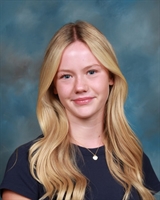
Morgan Hardy

By Grace O’Rourke
Palos Verdes High School

A young girl sitting in front of a camera for her middle school’s morning show broadcast had no idea she would be setting the course for her future and the time to come. Years later, that girl would go on to co-produce a Student Emmy Award-winning documentary about one of the most devastating school shootings in Georgia history, where she would overcome the difficulties of sitting face to face with grieving families, asking the questions that nobody wanted to answer, so that she could tell the story that needed to be told.

“The first thing that drew me to journalism was communications,” said Morgan Hardy, a second-year graduate student at the University of Georgia’s Grady college of Journalism and Mass Communications, “and for me, communication is learning about other people.”

Hardy who earned her bachelor’s degree in journalism and mass communication from Grady, along with a minor is sociology and a certificate in news literacy, has spent years turning that curiosity about people into a career. From broadcasting daily news announcements in high school to launching her school’s newspaper, Hardy has never stopped chasing stories.

At Grady, those instincts were put to the test in the deepest way possible. Hardy served as a producer and social media producer for “We Will Rise: The Story of the Apalachee High School Shooting,” a documentary that earned a Student Production Emmy Award. The project required her to interview grieving families and community members who witnessed the tragedy firsthand, something she describes as one of the hardest things she has worked on.

“Interviewing those families and people in that town was really tough,” Hardy said. “What they saw firsthand was really hard to swallow.”

As someone who feels deeply, Hardy had to find a way to keep going. “I’m an empath so when people are really upset I kind of feel that too, just hearing the graphic details, that was really tough: to set my emotions aside and ask the questions, knowing its gonna hurt.”

She learned quickly that there was only one way through it.

“I really learned you can’t go in head first,” Hardy said. ” My toughest thing was going in small and taking baby steps, making them feel comfortable to even talk about something like that.”

That same patience and willingness to adapt has defined how Hardy approaches journalism as a whole. When asked about figuring out what kind of journalist she wants to be, her answer was simple. “You won’t know until you try,” she said.

That openness to trying led her to UGA, a decision she says changes everything. “If I didn’t go to UGA, I don’t think I would’ve had as many opportunities,” Hardy said. “It’s so incredible that a school has so many connections.”

For someone who simply started wanting to connect with others, the journey has exceeded every expectation.

“So far so good,” Hardy said. “It’s opened so many doors I never knew could be opened.”

Grace O’Rourke

Hi, my name is Grace O’Rourke and I’m from California. In my free time I love to cheer at games, go to the beach, and volunteer at the animal shelter. Prior to taking the multimedia journalism course at UGA, I learned a little about journalism through online courses at Santa Monica city college, I took a broadcast journalism class at my high school, and most recently joined my school’s live news show. All of these experiences have given me knowledge that I hope I can apply to this course.

If you asked me more about what I do in my free time, I would tell you that it involves managing social media for a local barre fitness studio which consists of writing captions, designing graphics and figuring out what actually gets people to engage. This job started as a side gig but honestly taught me a lot about how to grab someone’s attention quickly, which feels pretty relevant to journalism.

I’m also really into local businesses. There’s just something about a small shop with a good owner. This is why I created a club at my school called Local Loop which shines a light on them, and it’s become one of my favorite things I’ve done.

I also enjoy volunteering at local animal shelters, which has genuinely been one of the most meaningful things I’ve done. The main point of it is to show up and helping in any way that I can; you can always support whether that means adopting/fostering or donating used towels/blankets

Outside of that I cheer, which keeps me busy and social in a way that balances out the other things that I do more behind the scenes.

I really got into journalism because I like telling stories about real people and real places, especially the stories that don’t always make the news but honestly probably should. I think I’m specifically most drawn to broadcast, mostly because I love the idea of being in the middle of a story as it’s happening rather than catching up to it later.

I still have a lot to learn and room to grow in all of these areas I’m involved in, but that’s just about a random mix of things I enjoy participating in.