By NaAbena Nyarkowaa-Kusi Gwinnett School of Mathematics, Science, and Technology
Morgan Hardy, though a newcomer to journalism as she still paves her path at UGA, is already making progress as a journalist and at only 24 she has shown that the new generation of journalist are coming in hot.
“We’re not just talking, we’re real people” Hardy says as she explains the different ways that not only she, but her fellow peers are adding character into journalism. “I get a lot of inspiration from new reporters- a lot of new news reporters my age are changing the game.”
Journalism has always been a dream career of Hardys and though she started off in different majors, she still made her way back to the art of communication. Although Hardy may have been born in an era where AI and other new technologies are slowly taking over, she hasn’t let that hold her back and she states that in the future we’ll “go back to the beginning and start over”
“What they saw first hand was very hard to swallow,” Hardy has already impacted her community with her empathy, reaching out to the grieving community of Apalachee High School, where journalism gets emotional. “Having the ability to focus even when interviewing about serious topics is one of the toughest parts.”
“That’s when you lean on your friends and other journalist you’re working with.” The relationship not only with other forms of journalism but also the different creators who may just be right next to you are there to provide you some sort of guidance to produce work that brings communities together. If journalism is a form of communication than the effort that goes into that conversation must be applied “kinda making them feel very important , not just having a camera staring them down.”
Hardy depicts journalism as many different subjects, but the fear or anxiety of switching from one type to another is real. “You won’t know until you try” said Hardy.
There is no true way to stay prepared, every experience is different, but as long as one is willing to apply themselves to the cause anything is possible.
Hardy states that “all forms of journalism are very similar” These contributions, whether big or small, come together to create a positive impact on journalism as a whole. “It helped me a lot learning about journalism as a whole and why it means so much to each other to make one big piece.”
Hailing from the Southside of Chicago, Joe Dennis — a Filipino journalist-turned professor — has a passion for sharing and discovering stories. The Windy City native has worked in the world of journalism for many years, meeting an innumerable amount of people — such as John Mayer and Isiah Thomas — and sharing his enthusiasm with them. Despite being able to meet major personalities and celebrities, Dennis claims he finds the most inspiration from ordinary people.
“What was really impactful for me, was when I was reporting on a judge who needed a liver transplant and was on the waitlist for organ donation,” said Dennis, as he recollected on a past assignment. “I really got to know the family. I would come in and have dinner with them. And every month, I would write an update on how his health was doing.”
Dennis didn’t just write stories, he connected with the people he worked with. After months of engaging with the family and providing monthly updates, the judge passed away while being 12th on the waiting list. “That really was powerful to me,” Dennis reflected. “That day, I went to the driver’s license facility and became an organ donor, because I saw the impact that organ donation can really have on people.”
Dennis takes pride in making connections and taking time to know his subjects. “When you’re working as a journalist, one of the most important things you can do is continue to be very friendly,” Dennis advised. “Take an active interest in other people, not just what you need for journalism. Take an interest in who they are and their families.”
Dennis’ commitment to connection proved to pay off, as he received additional opportunities. One day while out shopping, he received a phone call from a connection at the Georgia Bureau of Investigation (GBI) for a chance to work a substantial story on a drug bust. “The GBI was doing an undercover drug bust that they really wanted the promotion about,” Dennis said. “I’m working at this community newspaper, and they called me as opposed to calling Fox 5 in Atlanta or NBC 11. That’s because I had developed that rapport with them from a previous story.”
Coincidentally, the call from the GBI was also the moment that Dennis realized a change in profession would be in order. “I knew I wanted to go a different path and go into teaching when we were shopping for baby strollers,” said Dennis when describing getting the call. “I’m having some family time now and this is my job and I need to do this. I really wanted to do something that was on more of a regular schedule. That’s what led me into teaching.”
Following his profession change to a college professor, Dennis found pride in teaching successful students. “It is so cool to see where some of my former alumni end up,” said Dennis. “One of my former students is now working with the NBA as a social media coordinator. I have another student who works as the announcer for the Texas Tailgaters.”
Throughout the duration of his career, Dennis has had an immense impact on those he interacts with. He serves as an inspiration to aspiring journalists through his dedication to connection.
Dennis currently serves as the Associate Professor of Mass Communications at Piedmont University in Demorest, Georgia.
Loneliness is a major fear among many groups of people, regardless of age or location. Moving away from home, ending up in an unwelcoming school or workplace, and losing loved ones are some of the hardest experiences people go through, and yet many spend little time thinking about how to connect more with those around them. Journalist Morgan Hardy, however, centers her whole career around connection.
Hardy has worked on a diverse set of projects within the field of journalism, from broadcast script writing to photography to documentaries.
“The first thing that drew me to journalism was communication. And for me communication is learning about other people, and their cultures, and just them as a whole,” said Hardy, who minored in Sociology at UGA. “Sociology kind of opened the door for that and helped me learn more of the intricate details of that and helped me learn how different people communicate socially.”
She brings this perspective into her work in the field, valuing an understanding between her and the interviewee as one of the most powerful tools for a successful story. As part of an emotionally charged documentary Hardy co-directed on the Apalachee High School shooting, she interviewed a Sheriff she didn’t have much built-in common ground with. “Pre-interview we were kinda just like ‘Oh, hey, what’d you do today? How was your day?’ Like, just like making them feel comfortable.”
Looking forward, Hardy sees the connection between journalists and news consumers as the next step in the evolution of journalism. “I love how people my age are really starting to try to change the format, ‘cause we’re not just talking heads, we’re people…I just love to hear different voices within journalism… not just the voices that [journalists are] reporting on, but the reporter’s voices as well.”
With the aftermath of CoViD, the rise of social media, and AI causing all-time high levels of loneliness, Hardy’ vision for the future of journalism–centering a more personal field and product–is one we need more than ever.
When it comes to Hardy’s vision for her own future, it looks like her passion for journalism won’t be going anywhere. “So far, so good. I’ve been surprised by the doors that [journalism] can unlock and what I’ve learned,” she reflects. “I’m so glad I did this.”
Going from earning her Bachelor’s Degree to now getting her Master’s in Journalism and Mass Communications to now helping produce the documentary ” We Will Rise,” Morgan Hardy enjoys all aspects of journalism.
“It takes a great amount of creativity to do the different types of Journalism,” said Morgan Hardy, who launched her high school’s newspaper and later produced a new digital storytelling content. “It’s always been something that I’m drawn to and video and audio have always interested me.”
Hardy has always wanted to be in journalism since she was a kid. She said that “It’s always been something, I’ve always wanted to do, but the news always interested me.”
When she was in middle school she participated in her middle schools morning show broadcast. She then went to UGA and as an undergraduate she had many experiences come her way. While she could not name them all, she did name that she got to experience being an intern as the Digital Producer for the Olgethorpe Echo and she also got to do many other internships and create content.
“The University of Georgia ( UGA) has opened many doors for me and helped my network,” she said, explaining that she believes ” If I hadn’t gone to UGA, I don’t think I would have got the opportunities.”
She originally went to Louisiana State University( LSU) her freshman year of college and got her basic courses done. After her transfer to UGA is when she had all her opportunities open. “I’ve been surprised the doors that can lie and what I have learned and all the opportunities it has opened.”
Hardy has learned that “journalism can be hard and it can be uncomfortable sometimes, but if you get to know your people your interviewing, it makes it easier for them to trust you and makes them feel more comfortable in answering your questions. You lean on your friends and other journalists and find little corners.”
Attempting new things is important for young journalist entering the field. “You won’t know till you try.” said Hardy, who is entering her final year in graduate school. “I’m very blessed and grateful to be here and will be very sad when I have to leave.”
The University of Georgia is located in a small Georgia town named Athens. During the school year this town is a place of packed bars and restaurants, football fans, shopping students and full parking lots. But what happens to the businesses that rely on the busy crowds when the students go home for the summer and football season ends?
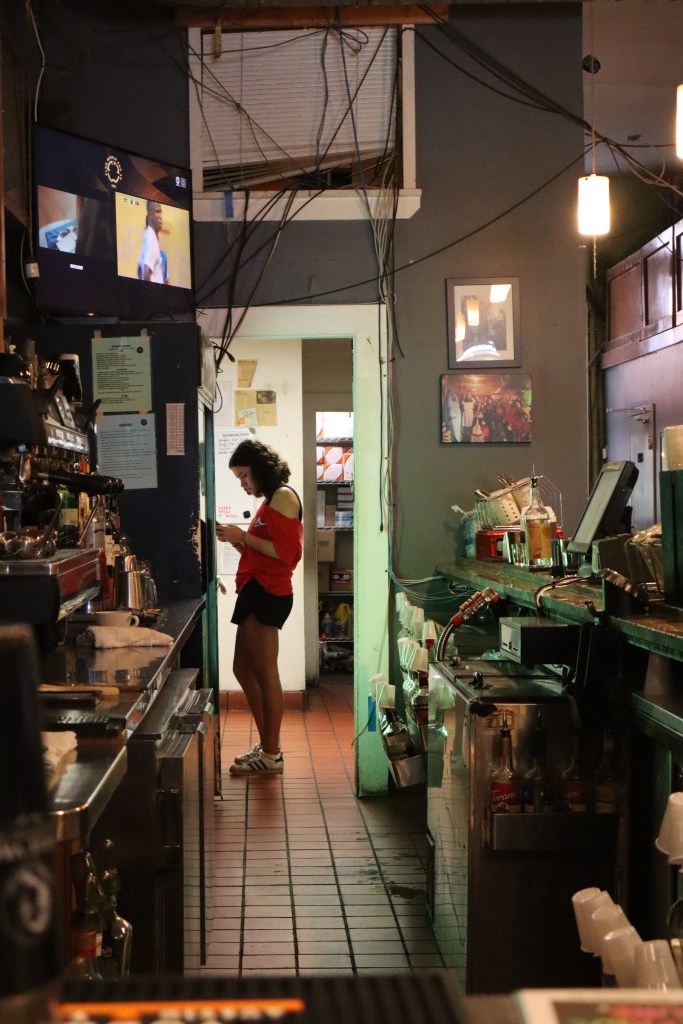
Eric Nelson, who works at Walkers Coffee Shop and Pub, said there is a distinct difference in business once the students leave. “It’s terrible. Summertime is not great because the summer session classes are a lot longer and more intensive, so people want to go home after and not out.”
This is in contrast to fall and spring. “If you were coming here during the school year there would be nowhere to sit.”
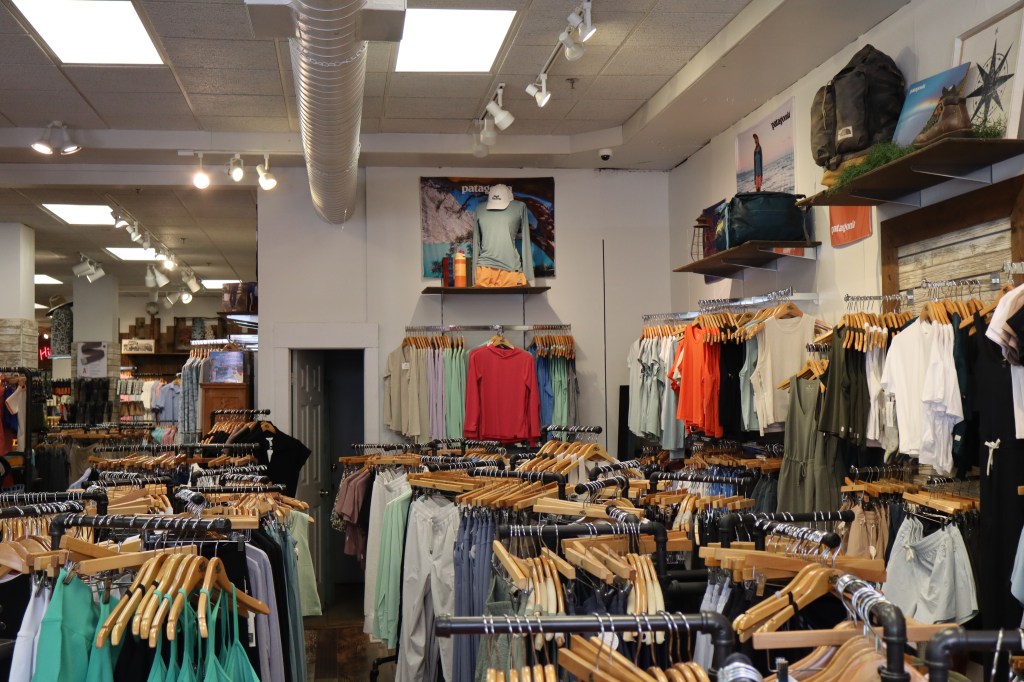
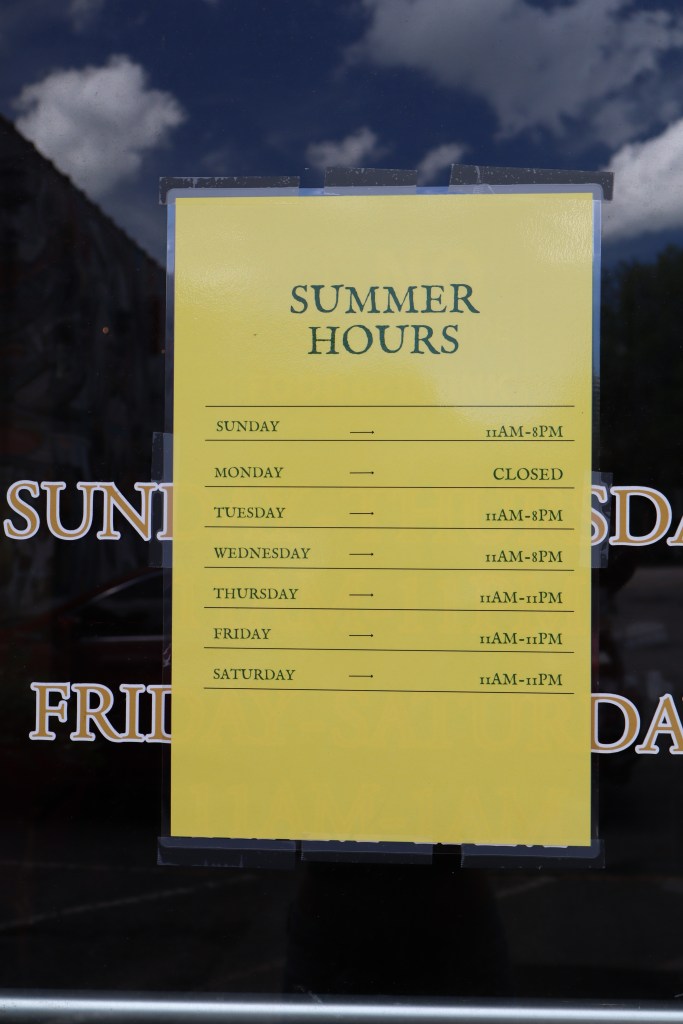
The lack of foot traffic during the summer in Athens significantly slows down business. Stores and restaurants are impacted in different ways by the lack of customers. Some more unique establishments, such as The Rook and Pawn, have to adjust their hours during the summer. Other businesses, such as High Country Outfitters, have to adjust to new staffing due to the loss of student employees during the summer.
With the absence of the major crowds, most businesses rely on local events such as AthFest to bring people in. Tim Kelly, one of the owners of The Rook and Pawn said, “Any sort of downtown festival is a huge boom for us.”
For other businesses like High Country Outfitters, they rely on back to school and student summer events to bring people in.
“Once rush picks up, more people will start to buy shoes, and towards the end of summer more people come in and start to look for things like backpacks for the school year and study abroad,” said High Country Outfitters’ manager Skylar Umstead.
However, some businesses take this off season as an opportunity to renovate and update products. “It’s slower but it’s nice because we get a chance to reset most of the stuff in the store,” Umstead said.
Without students, businesses must adjust to a different audience. “We’ll see more younger kids and families come in during the day looking for something to do which we don’t see a lot of during the school year,” said Kelly.
There are both ups and downs to the summer season, but these businesses are what make Athens such a fun place to live in and visit. There may be some changes in scheduling, customer audiences or new renovations, but the businesses are loved the same by the UGA students when they come back from summer break.
“Overall it’s still our place and still very much the same aesthetic and vibe,” said Kelly.
It is no secret that the teenage years are transformative for adolescents, as they grow into young adults. These years can be especially tumultuous for young musicians, who grapple with the pressures and common problems of the music industry, resulting in mental health concerns. If not addressed early, these young musicians are prone to developing more long-term and serious problems like depression, eating disorders and grappling with bipolar or schizophrenia.
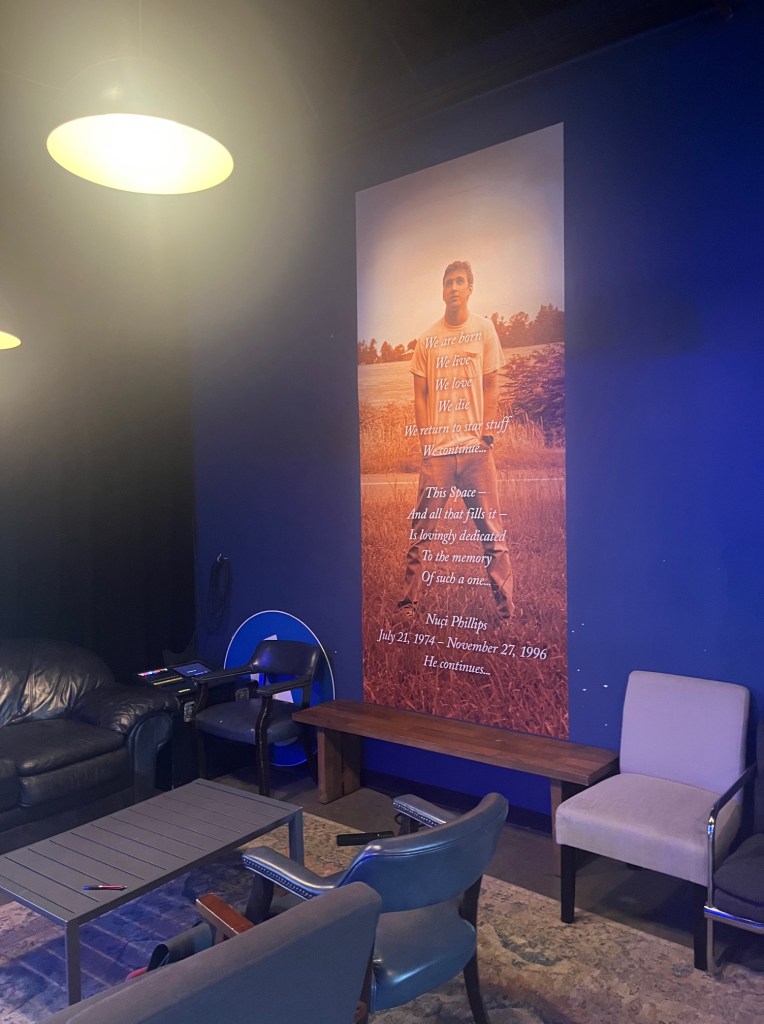
While music is beautiful and expressive, the music industry can be a pressure cooker where musicians are pushed to their limits. Nuçi’s Space is an organization in Athens focused on suicide prevention, specifically for musicians. The space was founded after a UGA student and musician named Nuçi Phillips, took his life in 1996. His mother, Linda Philips, created the organization in 2000 to address the epidemic of suicide that was, and to this day still is, raging across the country. Abby Winograd, the marketing & communications manager at Nuçi’s Space, explained the hardest parts of being a musician.
“Musicians are not put in the best position to access health care and support, especially if people pursue music full time. They’re not getting access to insurance. They’re in late night scenes with exposure to not necessarily healthy conditions,” Winograd said. “Linda wanted to create a center of sorts to provide a safe space for musicians to seek support and help and pursue their music without sacrificing their health.”
The teen years can be anxiety inducing and scary as young people study with their confidence, insecurity and emotion shifts. A rising junior at Athens Academy, and young musician, Evangeline Bina, talked about some of the struggles she has experienced during her teen years and how music has helped her through it all.
“I had a lot of experience in middle school struggling with anxiety, but it kinda all went away. I got really involved in the local orchestra scene, and that helped me build confidence, because, where I wasn’t confident in myself, music helped with that a lot,” Bina said. “Music has gotten me through some of the worst times in my life, times where I kind of felt like I didn’t have anyone, or nobody really understood what was going on.”
Music also pushes you to be more vulnerable, as one captures their emotions in their art. Bina and Winograd both explained how this can be an outlet for young musicians and their emotions, but also open a young person to struggles with their mental health.
“To make music, you have to be very like, in touch with yourself, and sometimes that vulnerability can make you more susceptible to mental health issues, insecurity, emotional problems, which sucks, but it’s also part of making good music,” Bina said.
“Music is a language for people that don’t necessarily have the words or comfort in speaking about how they’re feeling. Music is the language in which they choose to express themselves. It’s how they bond with other people,” Winograd said, adding that mental health needs to be looked at and addressed as a serious health concern, and using the term “brain illness” instead of mental health helps do just that.
“We say brain illness instead of mental illness, because mental health is a real health concern. It’s in the body as much as cancer and really any other physical disease you can think of,” Winograd said.
Music is a beautiful outlet for young musicians as they struggle with life’s many internal and external problems, and for one to paint their emotions into art is something special. It is important for young musicians to have a safe space that sparks their creativity and Nuçi’s Space is the perfect, supportive atmosphere for that. Bina, a participant of Camp Amped at Nuçi’s Space, explained how the space allowed her to pursue and feel more confident in her singing. She was also able to bond with other campers who had experienced similar struggles to her, to create music.
“I don’t usually like lose myself in the music, but sometimes it can be a sacred space, almost where all the hard things about life just don’t really impact me because music isn’t very judgmental. The people in music aren’t judgmental, but music itself isn’t judgmental either. Like, you can kind of, if you allow yourself, be vulnerable. You can be completely free with yourself, and just let it help you. I find safety and security in that.”
“One of the ways that we know that increases dopamine in the brain are extreme feelings,” Joe Dennis, a professor at Piedmont University and a former journalist, says. “So extreme feelings of anger is one of the ways that people keep engaged on platforms.”
As artificial intelligence evolve, the challenge of pulling the truth from online is only getting harder. AI technologies enable individuals to generate images and news that can be difficult to tell apart from factual information. People with large followings with spiteful motives can rapidly produce and spread propaganda across social media platforms. Videos can be altered with realism to make people appear to say or do things they never did. Truth and fiction are even harder to differentiate real and fake.
“Even just regular people who don’t use AI just to tell stories and use pictures of people who aren’t even part of the story to describe it,” Vayda, a rising sophomore at Loganville High School, says. “Most people scrolling will believe it without Googling it.”
“They’ll be like, I’ve read about that and blah, blah, blah. And then you go there and blah, blah, blah is not even a website you know?” Saybel, a rising freshman at Academy for Classical education, says. “It’s like you read these and then you think they’re actual people commenting and being smart, but it’s false information.”
Bots and fake accounts spread information and they also help boost analytics by interacting with posts. When bots flood a post with likes, shares or comments; even if the content isn’t true, it gets pushed into more people’s feeds. The result is that false or misleading posts get more attention, while real information can get buried. It’s not just what the bots say, it’s how they help spread and amplify the lies.
“They’ll comment over posts and they’ll increase the engagement on those posts. And so that’s what pushes it into more people’s algorithms,” Alli, a rising sophomore at Academy for Classical Education, says. “So, even though the bots and themselves don’t seem to be doing anything, they’re pushing out that misinformation.”
Misinformation can spread like wildfire. The truth is still out there, you just have to look a little harder to find it.
Along the streets of downtown Athens, Georgia from June 21-23, crowds mingle on the streets checking out the street vendors, whilst the smell of festival food wafts throughout. Locals and visitors make small talk as bands get ready for their next song.
“While I’m watching a live band, I could be supporting a local barbecue smoker and eating a rib while supporting local artists, I don’t know,” said Gracie Waters, a local of Athens.
Athens is often a place not recognizable without a map. However, despite the town’s humble appearance, Athens has been home to many bands known worldwide including R.E.M, Widespread Panic and the B-52’s. These are all bands that have origins within the Athens community.
There is no better way to celebrate and honor the vibrant art culture in Athens than a three-day festival dedicated to celebrating the local artists, bands and businesses. The AthFest Music & Arts Festival is held in the middle of June, signifying the halfway of summer.
This festival includes an artist market made up of over 70 booths with work from local and non-local artists, sponsor booths, retail vendors, along with food trucks. KidFest is included in AthFest as well which allows for a family-friendly environment.
Arguably, the main attraction at AthFest, however, are the music performances. There are three outdoor stages, with artists performing on all three. At KidFest, the Full Moon School of Music is performing on Friday night. Gracie Waters is one of the performers who will be singing.
“[AthFest] encourages people to look at different kinds of music and stuff and also be able to see the different bands who are local in Athens,” Waters said. “I think it’s gonna be a fun experience to be on stage, and I’ve worked hard for it.”
In addition to the main outdoor stages, AthFest also holds a ClubCrawl, hosted by some of Athens’ most iconic venues. 40 Watt Club, The Georgia Theatre, Hendershots, Cine and the Foundry, are only some of the venues helping to host ClubCrawl. There will be 94 bands being hosted from Friday to Sunday just through ClubCrawl. In all, AthFest will host around 156 bands, both local and not.
Some past artists who have played at AthFest include, John Mayer, Jennifer Nettles, and Kishi Bashi.
AthFest is made possible by the many local sponsors that help this festival take place. One of the sponsors of AthFest, is TheRed & Black, a local student run newspaper in Athens.
“The Red & Black is a fellow nonprofit organization here in Athens, and we adopt a culture of philanthropy, both in our own organization as well as in our community, because we would hope to have the same support from our community as well,” said Charlotte Norsworthy Varnum, executive director of the Red and Black newspaper.
“AthFest is such a pivotal event in Athens, we have covered it for as long as it’s been around, and we really just see it as an opportunity to showcase our support for AthFest educates and the cause and the mission that it serves,” Varnum said. “To get the idea being that if we all support one another, we will all thrive and make our community better.”
Not only is AthFest a way for the community to get together, AthFest also raises money for AthFest Educates.
As of 2024, AthFest has issued over $620,000 in grants throughout Athens, and the Clarke County School District. This includes all of the elementary schools, middle schools and high schools.
The Red & Black sponsor AthFest for the very purpose that it raises money for AthFest educates.
“We are training the future of the free press,” said Varnum. “And so the idea of education in general is incredibly important. We also kind of culturally believe that knowledge is power, right? We provide free, reliable news to our community. And so the overall idea is a mission, alignment for us, music and arts education is just as important as the education that we provide to our community that makes people more civically engaged and able to make decisions and live their lives.”
As the music dies down, and the festivities come to a close on Sunday night, AthFest’s impact does not disappear. Throughout the next year, the money raised will continue to have an impact on students in the Clarke County School district through grants and special projects.
“AthFest is so unique compared to any other music festival that I’ve ever gone to, and I love the idea that it’s all the local conjunctions of what makes Athens culture so unique together in one event,” Varnum said. “It’s just a great thing to pay witness to.”
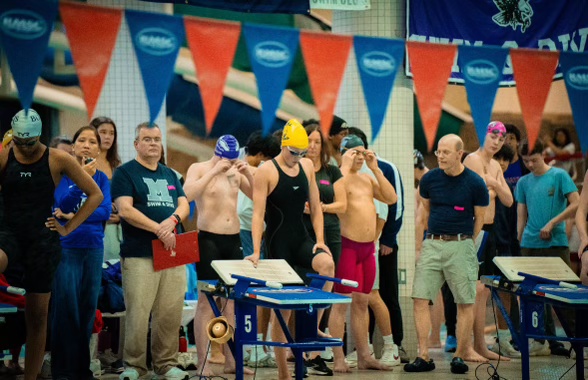
You’re on the starting block, with thousands watching you in person and millions watching you on live TV. One millisecond. That’s what can separate you from the athlete next to you, from giving you a chance to fulfill your dream of competing in the Olympics. The pressure is intense.
Photo by Bradly Steiner
How should you cope with this?
Treat it like any other race.
“The best thing you can do is to not make it a bigger deal than it is,” said Coach Blanken, Bethesda Chevy Chase, ASA and River Falls swim coach. “Because at the end of the day — whether it’s a 50 freestyle or 200 backstroke —, it’s the same [event] that you did, and you know, even if it was two years ago, it’s the same swim from the last time. It’s just a different pool under a different set of lights, but the actual activity is the same. So treat it that way.”
Ranked first in the class of 2026 in Maryland, 16 year-old Virginia Hinds, secured her place in this week’s Olympic trials with a time of 2:13.14 in the 200 backstroke. Hinds swims for the ASA (All Star Aquatics), Bethesda Chevy Chase’s Varsity team, as well as CCRA.
The trials are a big event on the swimming schedule and attract big TV audiences. Despite her young age, Hinds seems to be heeding her coach’s advice and taking the pressure and attention in stride.
“There’s a good amount of pressure sometimes but for me I just try to not think about the pressure and have fun,” Hinds said. “At the end of the day, as long as I’m having fun and happy with my races that’s all that matters to me.”
Hinds is following closely in the footsteps of Olympic gold medalist Katie Ledecky. Both are determined and hard working swimmers who hold many swimming records. Hinds spends the majority of her time in the water, and started swimming because of her older sister, Clara.
“I’ve looked up to my sister mainly because she is the reason I started swimming and is always my biggest supporter,” Hinds said.
Maryland Olympic swimmers Phoebe Bacon and Katie Ledecky swam at the same Stone Ridge Pool where Hinds currently trains. Bacon and Ledecky began their remarkable journeys to Olympic success at the Stone Ridge pool, a hot spot of Maryland talent. The state’s strong swimming community and facilities have provided an essential platform for swimmers to develop their skills and move to competing in the US Olympic trials.
Kristinia Lennox swam for Puerto Rico in the 2008 Olympics. Lennox coached GDS High School, NCAP Gold lll as well as the Somerset Dolphins, coaching many swimmers keeping Maryland swimming strong. She was 23 years old when she swam in the Olympics held in Beijing.
Photo by Bradly Steiner
“[Even though] the people are from different nations, the language is the same,” Lennox said. “We all knew how to get up on blocks, set up and go. That’s universal, but it’s just different and definitely very intimidating.”
A former Spanish swimmer Dario Fuentes agreed the pressure around swimming is very intense. As there is a lot of tension within each swimmer.
“We trained for four years to reach our goal that may be decided in less than a minute race,” Fuentes said.
Although Hinds just missed qualifying for the Olympics in 2024, Blanken is proud of his swimmer. “It’s just an unbelievable accomplishment,” he said of her 5th place finish. “And it’s one that she’ll have with her forever. She is in a very, very small group of people that can say that they got that far, it’s very difficult to make. So it’s really cool to see.”
Imagine this: A new movie that you have been waiting on for months comes out today on both Netflix and the movie theaters. Are you buying a ticket to the cinema, or are you chilling in bed with your dog and watching it at home?
It seems that nowadays, more people are choosing the latter option and it is upsetting those who adore the magic of the cinema.
Because of the effects of the global pandemic, less and less people have been wanting to enjoy new movies in the movie theaters and are instead choosing to save money, and watch movies at home instead.
55 year old Atlanta police officer, Michael Porter, used to go to the movies almost weekly as a young adult, but now he finds himself never compelled enough to drive to the cinema.
“I just don’t think that the movies they make now make me want to go,” Porter says.
Many believe that movies simply aren’t worth it anymore. Given that before the pandemic, there were so many box office hits such as Marvel’s “Avengers: Endgame” and many iconic Star Wars movies. Now, it is hard to feel excitement for movies now in comparison.
Not only are people not going for this reason, but there is the aspect of money involved too. People are no longer willing to spend money on overpriced movie tickets.
“After Covid, the thought of paying almost $20 to go to the movies when I could just watch it at home is incredibly unappealing,” Porter says.
Even with the many downsides of going to the cinema nowadays, the experience of watching a film in HD on a 50 foot screen is incomparable.
“The crowd, the atmosphere and the experience will turn a film into an experience,” says Daniel McCall, a 17 year old film lover advocating for the importance of cinemas.
Many of the most iconic movies to ever grace a screen have been so special to many people because of the experience they had with it in the cinema.
Christopher Nolan’s 2023 box office hit, “Oppenheimer” for example, is a film that many have fond experiences with in the cinema. The film contains incredible shots and a captivating score that can only be fully experienced on the big screen, according to Nolan.
McCall recollects many movies that he watched at home during the pandemic that he wishes he had the privilege to watch at his local cinema.
“The magic of film stopped when the world did,” McCall says, referring to the global pandemic.
Even though movie theaters are notoriously overpriced and the quality of movies are seemingly at a decline in the past decade, the experience of the cinema is something that should be forever cherished.
“The experience of the cinema is priceless,” McCall says.