
By NaAbena Nyarkowaa-Kusi
Gwinnett School of Mathematics, Science, and Technology
Chattel slavery, which consisted of the violent capture and enslavement of Africans, commenced the dehumanization of black people around the world. 161 years later, what seems like a distant memory of tragic events continues to affect the black community.
“We may be five to six generations removed from the horrors of slavery, but the trauma of enslavement has been carried by African Americans through the ages” says therapist Dr. Erica Wilkins. “The system of slavery was predicted on the belief that African Americans are inferior, and that systematic inequality still persists today.”
Psychologist also note that that black patients are more prone to schizophrenia and depression but due to misdiagnoses these patients are less likely to get the help they need and their cases go untreated . Yvonne Owusu, a psych nurse partitioner at Northern Virginia mental health institute, states that these mental illnesses are commonly seen in the black community due to “Racism, bullying, etc. are situational factors that contribute to depression”
But how does this tie into slavery? CapitalBnews writes in an article that “Enslavers went to great lengths to prevent physicians from treating enslaved africans ailments, frequently accusing them of “malingering.” It’s nothing new that black patients pain is ignored. That same article later states “It’s estimated that around 8.8 million black Americans died prematurely between 1900 and 2015 because of the racial health gap,” the same racial gap that had already deemed black people as “genetically different” for 100s of years.
The discrimination doesn’t stop at America, thousands of miles away in the continent of Africa, black africans continue to suffer due to slavery’s affects. The brutal capturing of 12 million young African men and women took away the possibility of development in Africa and replaced it with damaging systems put in place by colonizers. A Fairplanet article says “The most pronounced impact of slavery on contemporary Africa is racism and skewed value judgements that created class, social status and respect based on colour.” Another paragraph states that “Researchers argue that there would have been 112 million more africans if there was no slave trade.” This population would have increased Africas development but without it the continent fell behind.
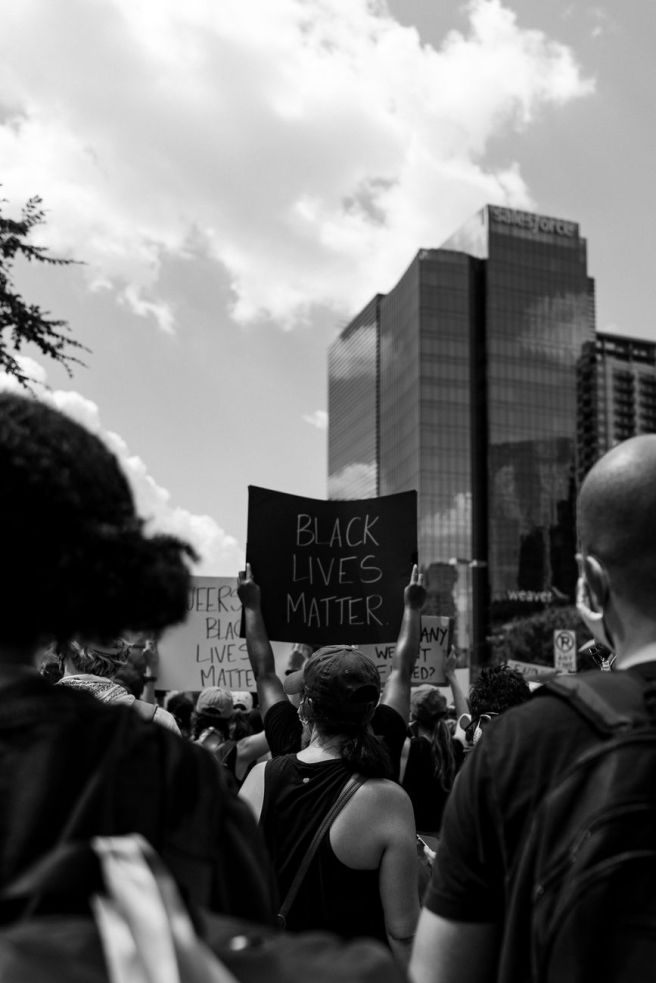
400 years ago, the transatlantic slave trade began and with it came racism. Although this racism is still prevalent in today’s society, the black community continues to work toward healing. In 1964 Malcolm X said that “we declare our right on this earth, to be a man, to be a human being, to be respected as a human being, in this society, on this earth, in this day and night, which we intend to bring into existence by any means necessary.” 62 years later the black community is still fighting for the respect Malcolm X spoke of, the peace black children dream of, and the end of a racist era black people still suffer from.


