Education Shouldn’t Come With a Lifetime of Debt…

Photo by Pixabay on Pexels.com

By Jeremiah McKinney
North Cobb High School

Ever since I was a kid, college was never presented as an option. It was presented as the next step. Work hard, get good grades and get accepted into a university that helps build a successful future. That was the message I heard from teachers, parents and society for years. It wasn’t until I started looking at tuition costs, housing fees and student loan statistics that I realized pursuing an education could also mean taking on a financial burden that follows students long after they walk across the graduation stage.

The more I researched colleges, the more overwhelming the process became. What once seemed like an exciting milestone quickly turned into a series of questions about affordability. How much debt is too much debt? Is a degree worth tens of thousands of dollars? How many years will it take to pay off students loans after graduation? These are questions that many students are forced to consider before ever stepping foot on a college campus, and they highlight a growing problem with the cost of higher education in the United States.

College is no longer just about paying for classes. Students are expected to cover tuition, housing and meal plans. None of that even helps cover the cost for supplies which can quickly drive up the total cost of attendance. For many families, these expenses are unrealistic to pay out of pocket. As a result, student loans have become the norm rather than the expectation. Instead of graduating with a sense of financial freedom and opportunity, many students leave college carrying debt that can take years or even decades to repay.


Photo by Tara Winstead on Pexels.com

The impact of student debt does not end at graduation. Many graduates enter the workforce already owing thousands of dollars, forcing them to make major life decisions based on their financial situation. Buying a home, starting a family or saving for retirement can become far more difficult when a significant portion of a paycheck goes toward loan payments. Rather than beginning adulthood with a strong financial foundation, many graduates spend years trying to recover from the cost earning their degree.

The impact of student debt extends far beyond graduation. According to Forbes Advisor, Americans collectively owe approximately $1.75 trillion in student loan debt, making it one of the largest forms of consumer debt in the country. Forbes advisor also reports that the average federal student loan borrower owes more than $35,000. These numbers highlight how common it has become for students to take on significant financial burdens in order to earn a degree. Rather than entering the workforce with financial freedom and opportunity, many graduates begin their adult lives focused on repaying loans that can take years or decades to eliminate. As college costs continue to rise, the question becomes not whether students will face debt, but how much debt they will be forced to carry.

Photo by Nicola Barts on Pexels.com

Perhaps the most concerning aspect of rising college costs is that they discourage students from pursuing higher education altogether. According to the Nation Center for Education Statistics (NCES), concerns about affordability are among the most common reasons students choose not to attend a four-year institution. Many students are forced to settle for school they did not originally want to attend, while others delay college or avoid it completely because of the financial burden. Education should be an opportunity available to anyone willing to work for it, not a privilege reserved for those who can afford increasingly expensive tuition bills.

Higher education has long been viewed as a pathway to opportunity, personal grown and career success. However, as tuition and other college expenses continue to rise, that opportunity is becoming increasingly difficult for many students to access. While earning a degree remains important, students should not have to sacrifice their financial future in order to receive an education. Colleges, lawmakers and educational institutions must work toward making higher education more affordable so that future generations can focus on learning and building successful careers rather than worrying about years of debt. Education should open doors, not create financial barriers that prevent students from reaching their full potential.


Georgia baseball paving their way to Omaha after years of championship drought

By Reese Johnson
Tombs County High School

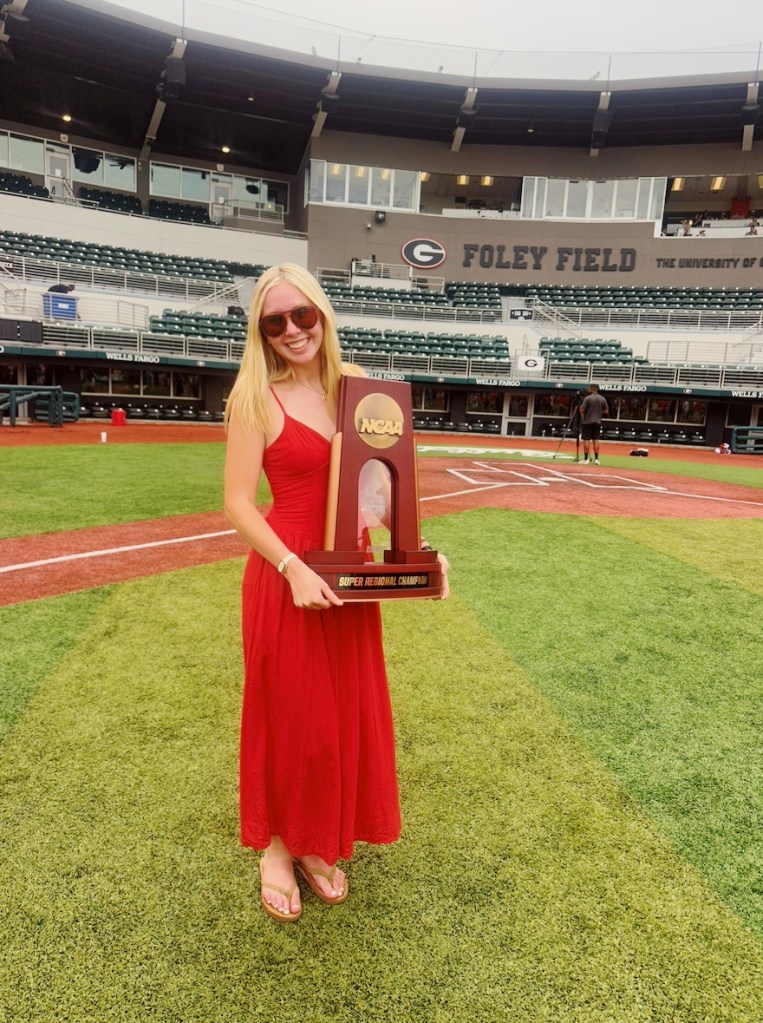
For the first time in almost two decades, Georgia punches their ticket to Omaha. The 3rd seeded Bulldogs beat 14th-ranked Mississippi State in a two game thriller in front of sold out Foley field.

Photo by Christopher Gaines on Pexels.com

“I tell our guys all the time, I think toughness gets a bad rap. People think it’s some kind of physical element, and it’s not. You have to learn to be capable of great endurance and understand that our game is really long,” said head coach Wes Johnson after two close ball games. “And you just saw a bunch of resilient guys, and you saw the fruition of all that work come through.”

Game one was held on Saturday, ending in a close win for the Georgia Bulldogs. Mississippi State came out swinging, earning them a 7-0 lead. In the fifth inning, Georgia started climbing back to earn a 2-run lead. State and Georgia battle back and forth for the next 4 innings. In the bottom of the 8th, Micheal O’Shaughnessy – filing in for suspended third baseman Tre Phelps- hit a 3-run homer, sending it over the scoreboard. To end the game, closing pitcher Justin Byrd held the Mississippi State Bulldogs scoreless in the ninth inning, helping Georgia take game one of the Athens Super Regional.

Going into game two, Georgia just needed one more victory to punch their ticket to Omaha. The UGA Bulldogs quickly asserted dominance, keeping a steady lead for most of the game. With pitcher Caden Aoki setting the tone, pitching 5.2 innings, striking out 9 batters. State had a furious comeback attempt, which led to the game going into extra innings. Georgia star catcher Daniel Jackson blasted a go-ahead 2-run homer in the tenth. Justin Byrd took the mound yet again to secure the Bulldogs trip to Omaha.

“I remember going to bed that night knowing we were going to Omaha, we are going to win this game, and it just didn’t work out,” said Senior Kolby Branch. “And now we are on to Omaha, it’s kind of a full circle moment.”

Veterans, like Branch, having experienced heartbreaking endings the last two seasons, say the trip to Omaha is proof of their hard work paying off.

Head Coach Wes Johnson got emotional in the post-game interview, talking about the former players who helped the team get to where they are today and how the current team’s resilience is how they fought until the end to score their spot in the College World Series.

National Player of the Year finalist, Daniel Jackson, stated how seemingly little things as the “sour power” can unite their team like it has. The sour power trend started out as a simple celebration after scoring a run and it has turned into a fan wide tradition.

He ends his interview saying, “The chemistry on our team, it’s hard to talk about. I mean, it’s just incredible. I think a big factor of that is, as silly as it sounds to say, winning. When you’re winning together, it’s fun, and it’s true. The locker room is a much happier place after a win.”

Creative Writing is a Core Skill, and Should be Taught As Such

By Fiona McGaraghan
Menlo-Atherton High School

“Ships at a distance have every man’s wish on board.” 

Almost every high schooler recognizes this iconic opening line from the novel “Their Eyes Were Watching God,” and many could write a great essay incorporating it. However, few could write a line like it. For how much school systems emphasize the analysis of creative works, they are remarkably apathetic towards actually teaching creative writing. Creative writing is equally as important as traditional writing and requiring creative writing would add considerable value to students’ education.

Photo by Houssam benamara on Pexels.com

 While many schools offer creative writing courses, they are elective courses–treated like a fun add-on to education and not a core discipline. This attitude ignores the fact that creative writing is an integral skill for many jobs, including ones where writing is primarily fact-based.

“Every writer, even if you’re a nonfiction writer, you have some elements within you that want to be creative,” says Piedmont Mass Communications Chair Joe Dennis. “I think creative writing has a strong impact in journalistic writing and nonfiction writing… When I was in college I was really close friends with a very excellent creative writer and she ended up taking a journalism class with me. Her influence in that class was so important because she helped people be more visual in their words and painting a better picture for people who were really well trained in writing facts… [she] really did a great job of embellishing the stories to make them come to life.”

The immersion in literature that a creative writing class offers gives students a new perspective on writing. “It’s experiential learning, and that’s something that I feel like a lot of people would benefit from,” says Madeline Willcocks-Hodlick, who took creative writing as a sophomore at The New School of Atlanta. 

Rose Klingsporn, a rising sophomore at Berklee College of Music who took creative writing in her senior year of high school, adds: “you’re doing a lot of reading of creative writing, and therefore you’re doing a lot of interpretation of creative writing. And that really helps in terms of general media literacy… a lot of English class is, like: these are the characters’ motivations. This is the character’s feelings. This is why they’re doing these things in the universe of the story. Creative writing is more [from] a technical perspective: why does this work? What technique are they using to make this poem good?” 

Photo by RDNE Stock project on Pexels.com

Getting hands-on experiences is valuable for students’ academic growth as well as their confidence in applying their skills outside the classroom. Klingsporn explains, “I go to music school. I’m talking about art all the time, and it helps to have those tools where I’m able to engage with art on a critical and technical level.” 

While not everyone has the opportunity to directly apply creative writing skills to their jobs, they can still apply in everyday life. Klingsporn says, “Going into that class, I was like, I don’t really like poetry… Now I write poems for fun sometimes, which I never used to do.” 

Writing in free time can boost vocabulary, critical thinking and empathy. An English class that encourages students to write outside of class is valuable to students’ personal and professional life, but also to their academic success. While discussing the idea of creative writing as a core class, Willcocks-Hodlick predicted that, in addition to promoting success in English,  “Work for other classes would be higher quality, too, because people would fall into the norm of kind of forging their own path and being creative with every process.”

Creative writing class gives students the chance to see academia from a new perspective. At the prospect of adding Creative Writing as a core English class, Klingsporn lights up: “[It would give] students a different way to engage with writing,” she says, “and hopefully foster some creative spirits in kids, because we need more of that.”

The Hidden Costs of Social Media

By Evelyn Jeffords
Whitfield Academy

Social media has changed the way people shop and discover products, but it has also made it harder to identify trustworthy information and easier to buy unthinkingly. Influencers, trends and targeted advertising often encourage overconsumption and impulsive spending while hiding concerns about product quality and company ethics. As a result, consumers must be more aware of how social media influences their purchasing decisions.

Photo by greenwish _ on Pexels.com

A common problem many people have in this social media centered time is how to determine false information from the truth. When deciding what brand to make a purchase from, many social media users are not properly informed on how to find reliable information about the brand and their credibility. Once a micro trend emerges from the internet, all companies move fast to take advantage of it and hop on the boat. Some companies don’t just take advantage of the trend but also take advantage of the consumers, “greenwashing” and falsely advertising the quality of their goods and how they treat their workers. 

According to an article from Medium: How Much Is Too Much? Overconsumption in Social Media, “When talking about ethical practice, companies like Temu and Shein may come to mind. They sell poorly made, cheap products. Both have a reputation for unfair labor practices and a significantly poor impact on the environment.”

When it comes to making purchases some consumers prefer to pay less for lesser quality products rather than invest in a sustainable product that will last long term, making these companies increasingly popular. Some other social media platforms, like TikTok have come up with new strategies to make making purchases more convenient, encouraging shoppers to spend more impulsively. 

TikTok shop was founded in 2023 and has strongly outsold some of its competitors. It gained 47 million shoppers to the site, and had an estimated 11.9 million U.S. purchasers in 2024, according to an article from CNBC. By using the strategy of convenience, shoppers on TikTok shop don’t even have to leave the app to make a purchase, leading consumers to be able to quickly make purchases, leaving them with less time to contemplate their decision. This leads to more impulse buying and buying in bulk. Influencers can also post videos on TikTok of them using a product and get paid for it, making it easier for potential customers to have exposure to the product.

Online it’s been normalized to have 10 versions of the same blush, 12 different scents of the same shampoo and 30 colors of the same water bottle. When people post videos of their morning routines onto the internet and show how they own 100 different products from one brand, it’s often because they receive PR from that brand and sponsor them, which isn’t always disclosed in videos. After watching these videos, people get the wrong idea that it’s a normal lifestyle to have an excess amount of products. Then they spend on products they’ll only use once a month, quickly go out of style, or expire before they get the opportunity to fully use everything they purchased. It also portrays an unrealistic lifestyle that can make other users who may not be able to afford that lifestyle feel less than, unless they have those items.

In an article from Medium: How Much Is Too Much? Overconsumption in Social Media,  “This desire to have what everyone else has affects people beyond the screen. It promotes unhealthy spending habits, unrealistic expectations of others, and substandard goods created to meet demand.” 

The internet has made overconsumption more common by promoting impulse buying, unrealistic lifestyles and fast-fashion focused companies with questionable practices. By researching brands, recognizing advertising strategies and making informed decisions, consumers can avoid being influenced by misleading trends and spend more responsibly.

Powered by sour candy, Georgia baseball keeps sights set forward

By Grady Leatherwood
Calhoun High School

Every team begins the college baseball season with the same goal: to advance to the Men’s College World Series (CWS) in Omaha, Nebraska, and win the national championship. On Sunday, the Georgia Bulldogs took the next step in advancing towards the national championship, clinching a spot in the CWS after sweeping Mississippi State in a high-scoring two game series. In front of 3,633 fans packed inside Foley Field on Sunday, the Diamond Dawgs mashed four home runs — none bigger than junior catcher Daniel Jackson’s go-ahead two run home run in the 10th inning — en route to an 11–9 extra innings victory.

“It’s everything we’ve been working for the last ten months,” Jackson said during an interview with ESPN discussing the win. “As soon as I saw that it would stay fair, I knew it’d be lights out from there.”

Jackson’s tie-breaking home run was his 31st of the year, the second most in Georgia baseball history, behind Charlie Condon’s 38 home run season in 2024. “He’s the best player in the country,” Bulldogs head coach Wes Johnson said. “He’s one of the best I’ve ever coached.”

With the win, Georgia advanced to the CWS for the first time since 2008 and for just the seventh time in program history. In their previous six trips to Omaha, the Bulldogs have only won the tournament once, in 1990, led by late coach Steve Webber. The latest trip to the CWS for Georgia ended with a second place finish, as they lost the championship series to Fresno State.

The 2026 campaign has already been one of the most storied in program history, with the Bulldogs winning their first conference tournament in the club’s 140 year history. Additionally, the Super Regional clinching win on Sunday was the Bulldogs’ 51st of the season, second only to the 1990 team that won 52 games and the CWS. The team also leads the nation in home runs with 174, a school record.

The Bulldogs success this season can be attributed to a variety of factors, including their high-powered offense led by Jackson, Tre Phelps and Brennan Hudson, and a solid pitching staff headlined by junior and top Major League Baseball draft prospect Joey Volchko. However, the players claim that Buc-ee’s candy is the secret to the team’s winning ways.

Quattro Sour Power Candy Belts from the Texas-based gas station chain Buc-ee’s have established themselves into the mythos of Bulldog baseball. Georgia players claim the rainbow-colored candy gives them powers on the diamond.

“This is sour power right here. Every time you score, you get some of it,” Jackson explained during a post game interview. “It’s actually one of the things that brings us together. A part of our offensive identity is sour power.”

“Sour power” has become a rallying cry of sorts for the team. The fans have also embraced the sweet tradition, with a large “sour power” sign adorning the lawn of Kudzu Hill during Sunday’s game.

With a trip to Omaha secured, the Bulldogs know they can’t afford to become complacent. “We”ll soak it in for about 12 to 24 hours and then get right back to the grind,” Jackson said in a post game press conference. “Take each day of practice and get better. That”ll set us up for a good time in Omaha.”

Senior shortstop and clubhouse leader Kolby Branch also weighed in on the team’s need for focus. “We just want to get there and go from there and start playing and competing like we’ve done all year. Just like the SEC tournament, the Regional, and the Super Regional,” Branch said. “You just got to get to the next step and go from there. But we’re confident and ready to go and ready to get after it.”

Georgia’s third-year head coach Wes Johnson emphasized his lack of relaxation and his full concentration on the CWS. “We didn’t get to sit back and soak it in,” Johnson said when the media asked how he celebrated the Bulldogs win. “It was business as usual. We’re getting ready for Texas. Sitting back and taking it in will hopefully happen July 4th weekend.”

The Bulldogs are listed as the best team in the field of the CWS according to USA Today, having won 19 of their last 20 contests. Georgia’s first game in Omaha will commence at 7 p.m. EST on Saturday against the Texas Longhorns and will be broadcast on ESPN.

Are We Pulling Another Icarus? An Analysis on the Risks of Space Travel

By Addison Pendegraft
Johns Creek High School

Space — frequently described in religious, historical and mythological contexts as physical extension of heaven and the divine — is something humanity has always sought out to reach. But that trip comes with many perils and dangers, so much so that you might question if it’s reasonable to make that journey at all.

“Risk! Risk is our business. That’s what this starship is all about. That’s why we’re aboard her,” said Gene Roddenberry from Star Trek.

In terms of scale, the dangers of space travels are, quite literally, out of this world. NASA has categorized these lethal risks into five core hazards: space radiation, the physical distance from earth, microgravity and gravity changes, isolation and confinement, and hostile closed environments. Astronauts are exposed to high doses of ionizing radiation from galactic cosmic rays and solar particle events, drastically increases the long-term risk of cancer. Astronauts also experience accelerated muscle atrophy and bone loss, cardiovascular deconditioning and vestibular disruptions that cause motion sickness and balance issues upon returning to a gravitational field. They also are prone to sleep deprivation, anxiety, depression and interpersonal friction with their crew mates due to being in such a confined spaced for long periods of time.

Not to mention, the training and preparation the crew does before launch is grueling. The crew will spend hundreds of hours in exact vehicle mockups learning to operate all onboard systems and executing mission procedures. Instructors routinely introduce emergency malfunctions. In preparation for spacewalks (EVAs), astronauts spend roughly 10 hours underwater in massive facilities like the Neutral Buoyancy Laboratory (NBL) wearing weighted, pressurized spacesuits to stimulate microgravity.

However, one might say that not traveling would be a missed opportunity for humanity. Not only due to the educational value space travel provides, but also to its tendency to surmount social hurdles and restrictions. Spaceflight has historically shattered gender barriers in STEM, inspiring diversity and leadership at a global scale by shifting public perception of female capabilities. Like when Soviet cosmonaut and doctor Valentina Tereshkova flew in 1963 and Sally Ride became the first American woman in space in 1983, dismantling the pervasive social narrative of the time that physically and mentally demanding careers were exclusive to men. “A bird cannot fly with one wing only.” Dr. Tereshkova said. “Human space flight cannot develop any further without the active participation of women.”

Another example of space travel enabling social progression is NASA’s “hidden figures,” which were brilliant African-American female mathematicians and engineers that worked for NASA during the Jim Crow era. The intense pressure NASA faced to beat the Soviet Union during the “Space Race” forced the agency to leverage underutilized talent, enabling these “hidden figures” to transition into pioneering roles in computing, management and engineering. And this shared effort required to win the “Space Race” led to further equally, with black and white women being permitted to work together in the same integrated offices.

“To be the first to enter the cosmos, to engage, single-handed, in an unprecedented duel with nature—could one dream of anything more?” Said Soviet cosmonaut Yuri Gagarin, the first human to orbit Earth.

The most recent major spaceflight taken place was NASA’s Artemis II crew to the moon. This flight successfully launched on April 1, 2026, sending four astronauts around the Moon and returning them safely to Earth by April 11, 2026. It was a very significant historical moment, as it the first crewed flight to leave low Earth orbit since Apollo 17 in 1972 and marked the first woman, Mission Specialist Christina Koch, to travel into deep space and journey around the moon.

Space travel serves as an inspiration to the entire world, As the crew witnessed the far side of the moon, the entire world was watching them from below. What’s most captivated viewers was the humility and emotion spoken by four astronauts speak about their experience. This flight marks a historical and inspiring moment for us all, as their words remind society that this otherworldly and remarkable mission was accomplished by people like you and me. “I found it really refreshing to see how people have followed the mission,” says Mission Specialist Jeremy Hansen of NASA and the Canadian Space Agency. “What I have seen has brought me more joy and more hope for our future.”

So while space travel might not be the safest thing in the world (haha), its merit to society is undeniably potent, both for social progress and inspiration. “If you can’t take love to the stars, then what are we even doing?” Said Amit Kshatriya, NASA Associate Administrator.

The Impact of the Transfer Portal In College Football

By Anthony J.T. West
Natchez Early College

College football used to be about staying loyal to one school. Players would commit, grow, and finish their careers in the same place. Now with NCAA Transfer Portal, things have changed. Players can leave and join new teams much easier, and that has had a big impact on the game.

On a college football team, a jersey used to mean everything. When a player chose a school, it felt like a promise something that would last for years. However, that promise isn’t staying the same. With the transfer portal, players now have the chance to leave one team and join another whenever they feel it’s the right move. The transfer portal created by the NCAA, allows college athletes to enter their name into a system where other schools can recruit them. “This means that we are now living in a world where more than 25 percent of all the scholarship football players in FBS are entering the portal annually!” This phenomenon has given players more freedom than ever before. If they are not getting playing time or feel like they don’t fit, they can find a better opportunity somewhere else.

This change has helped many players. Some athletes who were once overlooked have transferred to new schools and become stars. It gives them a second chance to succeed and shows what they can really do. However, the transfer portal has also changed how teams are built. Instead of only recruiting high school players, coaches now look for experienced players in the portal. Teams can improve quickly but adding new talent, sometimes rebuilding their whole roster in just one season.

Photo by Steve DiMatteo on Pexels.com

At the same time, this can hurt smaller schools. They may develop a great player, only to lose them to a bigger program. This creates an unequal system where stronger teams can keep getting stronger. When I interviewed a person he says that he feels like “the transfer portal has improved and helped college football.” He also goes on to say that “bigger schools can build their teams easily and be more competitive against other teams.” The last thing he said was that “this can help the fans be able to be more engaged with the team and the players that are on the field on Saturdays.”

Another impact is the loss of team chemistry. When players are constantly coming and going, it can be harder for teams to build strong connections. Fans also find it harder to follow players when they don’t stay at one school for long. Now with players transferring from different school have less time to adjust, which can lead towards miscommunication and inconsistency on the field. It also affects leadership, since experienced players may leave and new ones may not be ready to step up right away. While the transfer portal creates more opportunities, it can make teams feel less stable and connected.

The transfer portal has completely changed college football in ways we never thought it would. It has given players more control over their future, allowing them to leave situations that don’t benefit them and find better opportunities in other places. At the same time, it has made the game faster and more competitive, with teams able to improve quickly by adding experienced players. However, this constant movement can also make college football fell less stable, as rosters change often and teams have less time to build chemistry. While the transfer portal creates new chances for success, it also brings challenges that continue to reshape the way the game is played and experienced.

The Attention economy and the death of curiosity

By Sam Crumly
Stonehaven Upper School

Photo by Garrison Gao on Pexels.com

Have you ever walked into a cafeteria and seen so many good options for food that you just pick whatever food is the most familiar to you? If I’m being honest I don’t really like burgers and that kind of thing. If I’m in a massive food court with a bunch of cool options, I’m going to what is most familiar to me, even if I don’t like it that much. This phenomena can also be seen in day to day life with the way that people, particularly Gen Z, takes in information. Everyday you scroll on your phone, but how many of those reels can you remember? Seven? Five? Two? One? None? No one learns anything new, they simply reset to how they were before.

When asked multiple students said that they looked at around 200 short form videos per day. Only remembering 10 from that long scroll, and looking into none of those short form videos. They admitted that they found those videos interesting or worth looking into, but when asked one person said that she, “just didn’t see the point when I’m already seeing so much other stuff when I just scroll.” But people who only looked at 100 short form videos or less stated that they were more interested in the videos that they saw.

On average most people remembered around 12 to 13 videos, if they watched around 100 per day. Looking into two to three of those videos which they remembered. In my research those who were asked said they only watched around 100 reels, remembering significantly more than those who watch 200+, some even remembering 30 of the videos they watched. Out of the 30 videos they watched, they remembered only 10. The final person asked about this said that she only watched about 50 short form videos and remembered half of that, of the half remembered they looked into 15 of those stories told in those videos.

The more information that people consume the less, and less they can process. This concept is called information overload. When we consume lots of stimuli, like short form videos, and we process none of it, we learn absolutely nothing. It’s not that you can’t process that information, it is simply that you’re not giving yourself the time to think about what you learned. Lots of people will simply forget about all of the things that they saw, it is like spring cleaning for your brain. But nobody really wants to process information that much, because it’s not as stimulating to think about the cool stuff you’ve seen, it is stimulating, however, to see more videos which you will forget about in five minutes.

The professor for mass communications at Piedmont University, Joe G. Dennis. “Some people are overwhelmed, they just tune it out, retaining nothing.” he states, “The human mind is only ment comprehend so much. That is why a phone number is limited to ten numbers, because those are the ones we can call to memory instinctively. Because we have been processing those numbers for so long.” As we can clearly saw earlier, the more you consume the less you retain, and the less you care. The death of curiosity is when people think they know everything. Dennis also addresses this saying quote, “curiosity is human, however, just trying to get information told to them which they agree with, is not.” This is also a problem which has a made people generally more apathetic about the things they see around them.

They see so much and then when they look it up, they get a fluffy feel good answer. It makes people not care, because why would they? The answer they found on Google AI agreed entirely with their previous sensibilities, so they can just “trust their gut.” Dennis states that, “You will stop pursuing a difficult truth when ai or your for you page says exactly what you want to hear.” Causing people to become numb and not think critically, the death of curiosity is when no one cares, and when everyone thinks they are smarter than they are.

Reese Johnson

Hey y’all, my name is Reese Johnson! Growing up, life has taught me many valuable lessons which have shaped the person I am today. The lesson I still carry today is to focus on the ones who clap so loud for me that I don’t notice the ones who do not. I can become easily discouraged by the ones who willingly choose to walk out on me, but I have learned the importance of the ones who choose to support me.

Throughout my life, I have faced family problems that taught me resilience and independence . While I would never wish for anybody to go through what I did, I am thankful for the person I became due to my circumstances. I learned the importance of the people who show up for me, even when they have their own struggles.

Another major change that I am going through is my decision to transfer to a different school. It is nerve-wracking to leave the only place I have ever known to move with new people, new places and new experiences. This is pushing me to branch out from my normal. I have had the opportunity to make the cheer team, and once I transfer, I hope to join the media and journalism programs that they offer to help benefit my future. In the spring I plan to intern for my local news paper.

Looking to my future, I have a goal of attending the University of Georgia and pursue a career in sports reporting. Anybody who knows me, knows how big of a Georgia fan I am. Over the past six years, I have developed a passion for sports, which has led to many doors being opened to the broadcasting world. I have been blessed to shadow a sports reporter in Savannah and that connection landed me an interview with the news to talk about Georgia baseball going to the College World Series. I have a deep love for people and sports, which has led me to the dream of reporting on the most important part of the game-the athletes on the field.

Through every failure and every success, the one thing that has carried me through is my faith in Jesus. My faith has brought me out of the darkest of time., I truly believe if it weren’t for Jesus I would not be here today. He gives me purpose and brings light to any situation. Through every trial, I am reminded to trust Him in the season that I am in, even if I don’t know the next step. He leads me to peace and teaches me the stillness of sitting in His presence. Whether it be a win or a loss, I choose to praise the Lord for where I am, because my worth is not in an outcome, it is in Him.

Is College in the U.S Really the American Dream?

By Kaya Collins
Forsyth Central High School

College tuition, student loans, piles of money for average education, and…wait – free education across seas?

Graduating students in America already have so much to worry about when making the transition from high school to higher education. Tuition is just one more stress factor that gets thrown into the mix. People from all over the world make the move to the U.S. for college. It’s the “American dream” to come study, live and thrive in the U.S. But what if it turns out that university in Europe is actually more cost effective, simpler and just happens to be outstanding education?

Hearing something like “low cost” may sound like low funded schools and poor education, but universities in Europe are actually found to have simpler yet more effective learning structures while remaining cost efficient and affordable. According to GBSB GLOBAL, bachelor’s and master’s programs are shorter in Europe while maintaining low-cost or free tuition. This allows students to focus more on their education and then entering the workforce much sooner than average American students, as well as sustain a higher quality of life throughout their college years.

Photo by George Pak on Pexels.com

European universities are more often built into their cities in contrast to American colleges which commonly have their own “college town” and communities. Students in Europe are able to live, work, study and socialize in these major cities which allows them to be more independent and thrive as young adults. Students can view this as a positive or negative and that entirely depends on the individual’s personality and skills.

Trigger warning: Admissions.

One large stress factor for students in America is the admissions process in their senior year of high school.

Essay this. GPA that. Clubs and sports and test scores this.

It can quickly get suffocating. Universities across seas still have an admissions process of course, but schools tend to focus more on grades and test scores of classes related to the intended major of the student compared to the complex route the U.S. takes. This way, students are able to focus on their specialized interests and skills and truly prepare for higher education before they even graduate high school.

American universities have great pieces to offer and provide incredible opportunities for students, but may not be worth the heavy costs that come attached with exceptional, cost effective schools in Europe.

Forget the “American dream” for a moment. Instead, switch to the mindset “when in Rome” and head on over.