
I was always told that my diagnosis for ADHD should not affect my performance. I disagree.
I had always had trouble focusing on my schoolwork, listening to others and frequently fidgeting. I did not go to a psychiatrist until junior year, where he told me I was in the 90th percentile for ADHD. He did give me medications, but I was denied specific plans to aid me in my performance at school.
Ever since COVID-19, mental health diagnoses have been increasingly persistent. According to The National Institutes of Health, “Rates of anxiety, depression, and substance use disorder have increased since the beginning of the pandemic.”
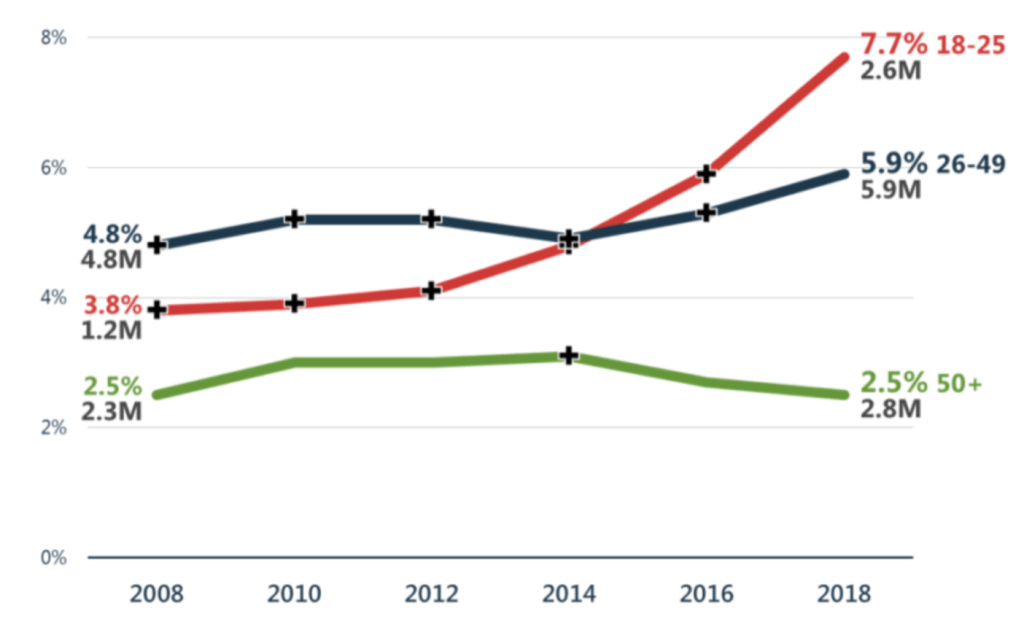
Whether it is anxiety, depression, ADHD or other severe forms of disorders, many students have found it hard to perform at school, work and sports. Little accommodations and leeway are provided for students, even with a real diagnosis from a psychiatrist.
Students absorb the pressure of school constantly, including all of the assignments, tests, papers and finals that are thrown their way. But students experiencing mental disorders, even at a lower level, explode with the persistent demand for excellence. According to the Suicide Prevention Resource Center, “Many college students report that mental health difficulties interfere with their studies.”
With countless students feeling the same way, it is hard to ignore the necessity for change. Also, with limited amounts of plans to distribute for aid, many students who do experience mental troubles aren’t given the support and resources they need.
It’s also difficult to express mental disorders to teachers, because some do not take them seriously, as it wasn’t prominent in their lives as students. Many professors and teachers believe students are utilizing the opportunity to gain advantages over other students, when they aren’t the ones who actually need help.
To accommodate for the situation at hand, teachers and students should be well educated on what mental illnesses and health actually entail. Many could be uneducated about the real impacts these illnesses have on others, and could further expand the amount of support these students with the illnesses require. Although teachers cannot give weeks worth of leeway to students, they can work with students to make sure they understand the information and feel more comfortable and confident. This would also strengthen teacher and student relationships, advocating for a good relationship with a teacher that the student can trust.
Mental health is not a joke. While many may not believe in it, or make fun of someone who experiences it, it is extremely fundamental to understand the importance of mental health. Those who seem well may not always be, and increasing support for people in need might just save a life.

 Rock Star Writers Blog