
The room is too brightly lit. It’s too early in the morning. There are too many terms swirling through my mind, none staying long enough to make an impression.
The test proctor is reading from her paper, a long, droning speech that I’ve heard before. The only difference is the Chromebook that lies flat on my desk, waiting.
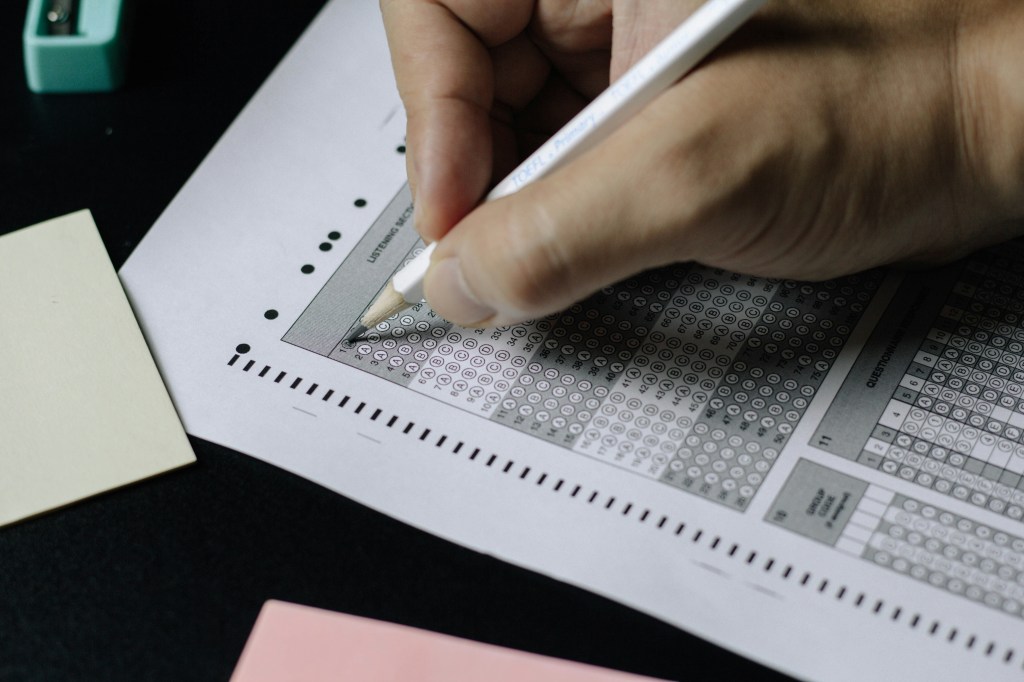
Ever since the Covid-19 pandemic in 2020, online exams have been growing rapidly in prevalence throughout the country. Covid-19’s forceful isolation and online schooling proved that virtual testing is possible. Whether it is a good idea is a very different question.
In February of 2024, the American College Testing (ACT) exam was first offered in a digital format. The SAT followed along, making the switch in March 2024. The next May, most Advanced Placement (AP) exams were administered at least partially digitally for the first time.
For the first hour of the exam, words swim across the harsh light of the screen, multiple choice options blur into endless paragraphs. But for the two hours after that, my hands fly across the keyboard writing essays faster than I ever could by hand. I finish early, but my head aches after three hours of reading from a glowing surface.
These changes were not unexpected, but they also were not always welcome.
My freshman year, I took the AP Human Geography exam the old-fashioned way: with pen and paper. Answering 14 short answer questions, my hand ached beyond belief, and I barely finished in time. Yet, I received an excellent score.
This year, I took the AP English Language and Composition exam in the modern way: with a keyboard and a computer screen. After three essays, my mind hurt, but my hand didn’t.
When I talked to my friends, I found that we each had different opinions on the usefulness of online exams.
My friend with dyslexia had been able to read even less than usual. My friend with ADHD hadn’t been able to concentrate. Others weren’t able to type, so they were slower in the written portions. Contrarily, some loved the new way of doing things. I heard praise for fewer testing materials, quicker essays and easier work-checking.
This is why online testing is a double-edged sword. There are aspects of exams that work better online, and there are aspects that work better on paper. The problem is, what those aspects are depends on the person.

 Rock Star Writers Blog