
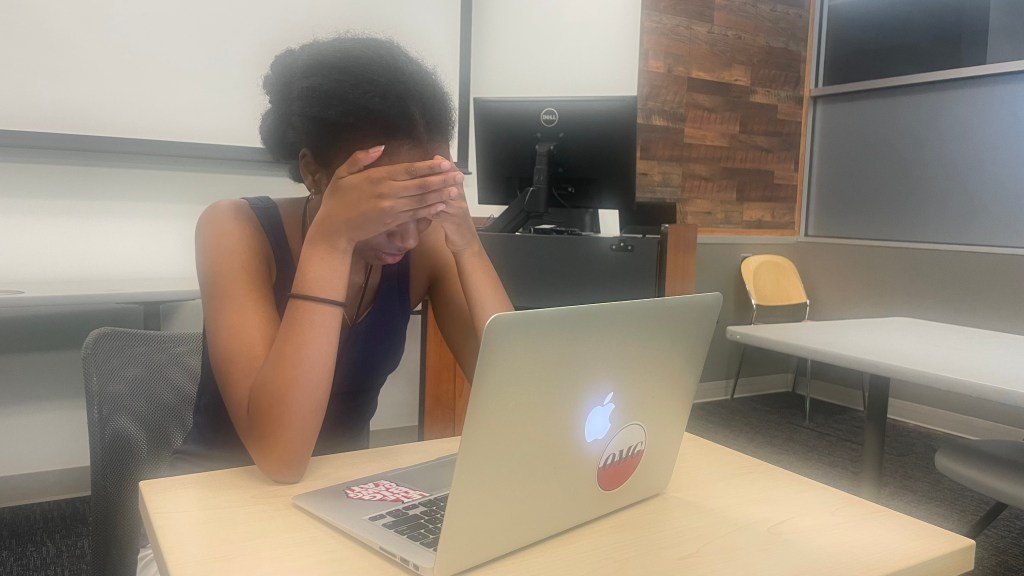
Succeeding and doing well is a goal of many students. But, are they willing to feel the flame of academic burnout?
May 23 was my last day of school. Instead of spending it with end of the year parties or watching movies in class, I was spending it taking my geometry final. After taking my final and leaving the school building with my classmates, I felt stress free. During the school year I had many focuses, but school was most important. Since it was my first year of high school, I wanted to make sure I started it off with a 4.0. All of the late nights studying and working on projects paid off. I earned my 4.0. Although I earned straight A’s, I wasn’t aware of the price that I would have to pay. The excitement of the end of school was temporary. But the feeling of burnout and exhaustion feels permanent and continues to follow into my summer.
At the beginning of the summer, although I slept in a lot, I felt exhausted throughout the day. Sometimes I would even take long naps, which I don’t ever do. Also, getting started with my summer work felt impossible. I would constantly sit around, lacking energy, procrastinating starting my work. I felt so tired, yet so guilty for sitting around. I felt lazy.
Even during the school year I would be greeted with muscle aches. These aches possibly formed because of how tense I was studying for the tests that would trickle in one by one during the week. My sleep schedule was messed up and I would be exhausted the following day. I would hardly give myself breaks because I was so nervous that I was going to fail a test, so I kept studying.
The “Polygence” reported on a 2017 study which concluded that academic burnout shows cognitive, affective and physical symptoms. An example of a cognitive symptom is not engaging in work. An affective symptom is feeling tense and irritable. A physical symptom is decreased energy and chronic tiredness. Another study talked about how experiencing academic burnout causes students to earn lower gpa and perform not as well in school.
A survey that was recorded by the student president of the William McKinley High School in Hawaii school in 2022, they found that 71% of students reported going facing burnout at least once in their life and 57.3% reported that they experienced it more than once and it’s described as “the main stressor.”
There are many different causes of academic burnout. For many, it’s the immense pressure of perfection. For me, since I usually perform well in school, I didn’t want to slip up and potentially mess up my gpa.
In 2023, Junior Monica Velasquez was given the title gifted at a young age and that brought on the perfectionist mindset.
“Being labeled as “gifted” at a young age planted the thought that everything I do should be perfect,” said Velaquez. “I thought of myself as a failure if I did not perform better than everyone else. My worth solely depended on my grades and achievements.”
As students and as humans we tend to put a lot of pressure on ourselves until we are over the edge. It’s possible for opponents to say that recognizing academic burnout is just recognizing weakness. But the struggles of students deserve to be heard. We shouldn’t just be on the sidelines watching students’ mental wellbeing plummet.
A lot of schools don’t tend to cover academic burnout and its importance in how it impacts students during the school year. I feel like schools should cover how to recognize and prevent it. I also feel like it would be beneficial for parents to talk to their children about how perfection isn’t everything.
As a society we should strive for excellence, being the best we can be, not perfection.

 Rock Star Writers Blog