
As Georgians face the challenge of a new invasive species, retired wildlife biologist Jeff Jackson recalls dealing with a different disruptive species — cereal grain eating birds, the Quelea. These birds caused disruptions for farmers.
“They eat any kind of cereal grain, some of the ones in Africa that we saw ate pearl millet, sorghum, and rice,” Jackson said, adding that he and his wife, Phyllis, studied the bird for roughly six years in Chad and the Sudan,
Their task was to find a solution to the cereal grain eating birds, as local farmers took drastic measures to get rid of these birds in order to maintain a successful harvest.
“They come in swarms of locusts, thousands of birds will come and decimate a cereal crop,” Phyllis Jackson said.
In desperation, the local crop growers needed to find a solution. “They would keep the kids out of school, and they would have them in the field, scaring off the Quelea with noise makers,” Jeff Jackson said.
Since the kids needed to be in school or doing other tasks, this method did not suffice.
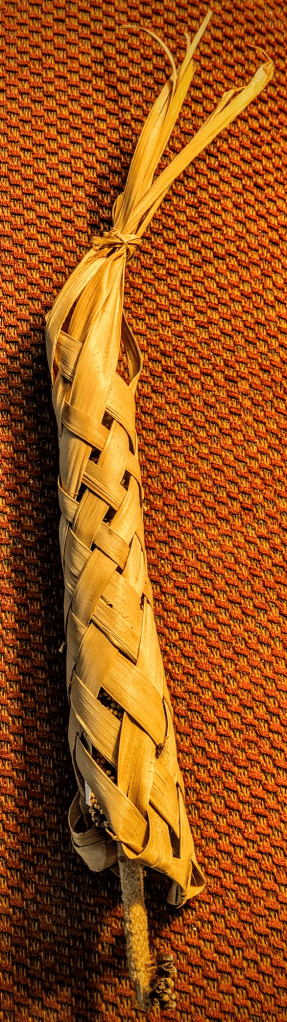
“The local people made a cover to go over the crops out of dune palm,” Phyllis Jackson said. “It’s pretty labor intensive, since they had to make one for every crop.”
Sadly, these were too time-intensive to make one for each of the thousands of the crops, and since they had to be hand-woven, this was another strike in the war against the Quelea.
“One of the things that was commonly done was use dangerous pesticides, and they would spray these by aircrafts over these colonies containing thousands of nests in a single trees,” Jeff Jackson said.

Although effective, this was extremely dangerous to humans and other mammals, like lions, who frequently were killed by these chemicals. “There was a pilot, of one of these spray planes. He got one of those pesticides on his arm, and he wiped it off not thinking about it,” Jeff Jackson said. “That evening he went to a local bar, to socialize with his friends, and he randomly keeled over and died.”
Over the years, the couple learned that the most effective way to deal with the birds was to harvest the crops before the birds came through and destroyed them. This was where Jeff and Phyllis came into play.
“There, some of the work Jeff did, was to figure out a type of rice, or sorghum, that the people liked, that tasted good, looked good, that would mature when the birds weren’t coming through,” Phyllis Jackson said. “They would harvest it quicker than the typical crop.”
These variations of crops did not not produce as much grain per as the typical ones.
Jeff and Phyllis’ work helped provide aid and neccesary knowledge to the people of Sudan and Chad.

 Rock Star Writers Blog