
Centuries ago, a theatre in London showcased the many plays of one man, unknowingly reshaping English language and culture. In the 21st century, Shakespeare’s plays are still performed, read and studied. According to Oxford Scholastica Academy, modern audiences relate to these stories with the same vigor as those in the 16th century, despite the many years between them.
Early modern British literature professor Sujata Iyengar teaches the intricacies of Shakespeare at the University of Georgia, a topic that continues to warrant deep discussion.
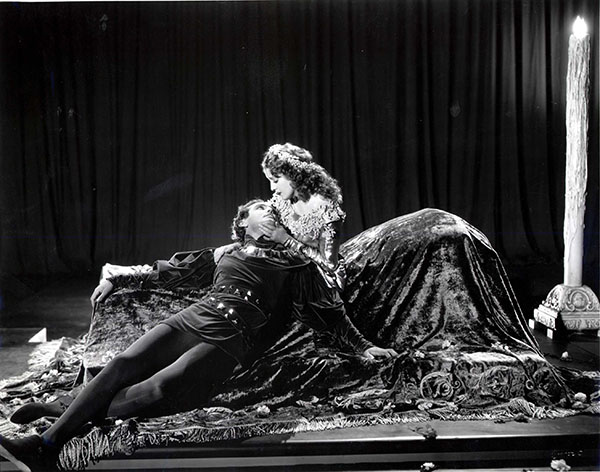
“Reading classic literature is important to students, and general readers and citizens today, because literary texts and dramatic texts that have stood the test of time can usually offer us access—in heightened language—to heightened experience and a space to reflect upon those experiences and the challenges of living among other people and in a complex civilization,” Iyengar said. “And the difficulty of classic texts is what allows us that time and space to reflect.”
David Daniel, a Core Company member and Education Director at American Players Theatre, echoes this sentiment of the timelessness of classics.
“At the end of ‘Oedipus [Rex]’, the chorus says, we all suffer. Suffering comes to us all. And, you know, you’re thinking that’s written in 300, 400 BCE,” Daniel said. “Or there’s another poet about 300 AD in Japan. She wrote this great poem that says, ‘people tell me I should brush my hair, but I leave it messy, just like you left it’. Not only is it like, oh, that’s just a good poem, because someone today could have written that. But the fact that it was written so long ago, or in my case, in a different culture so long ago, it just connects me to something bigger than just me now. Shakespeare connects me to something bigger than me now.”
Despite these connections to humanity, many are reluctant to experience the complex world of Shakespearean literature.
“People don’t really find love poetry until they’re in love,” Daniel said. “Or people don’t listen to a breakup song until after they’ve broken up, and then they listen to the same song a hundred million times. It’s not that you are ready for everything at all times. But when something happens in your life, for good, for bad, for anything, there is stuff there that other humans have gone through. And when you connect with that, then your world opens up. It makes you bigger.”
Additionally, Shakespeare is a performance. It is meant to be watched, which makes reading the multi-layered plays more difficult than other classic texts.
“If you go see a play and you don’t understand what’s going on, that’s 110% our fault as actors,” Daniel said. “We’re bad actors. It’s not, you’re dumb because you don’t understand it, but because you’re watching bad actors. Because the job of the actor is to make it easier for you to understand and also pull you in so you’re connected with what’s going on.”
Actors attempt to convey the themes found within the works of Shakespeare and other classic artists.
“Why human beings fight with each other, so war and peace,” Iyengar said. “How and why we fall in love. Who we fall in love with, which is the greatest and most beautiful mystery, in many ways, of all. What we find sacred. How parents relate to children and how siblings relate to each other. How societies can progress to greater levels of happiness and fulfillment for everyone.”
When it comes to modern retellings of these stories, there are certain things that the adapters must keep in mind.
“How far can you adapt it without changing what you think is the essence of the original?” Iyengar said. “So what is it that that person has to do in order to keep it the same story? And do you care? Because it’s quite possible as an adapter that you decide, I don’t actually care about this from the original, but what I’m interested in is a different kind of, a different aspect of it… You’re going to pick a storyline to follow and things to streamline, characters to cut out. And you might choose to elaborate on certain things.”
After being performed thousands of times over hundreds of years, the heart of Shakespeare’s works remains the same. Even so, each performance brings a new vision to a new audience.
“When David Warner was doing Hamlet in the early 80s, it was the Falkland War,” Daniel said. “And there’s a passage in ‘Hamlet’ where Hamlet walks out and he talks to somebody called the Captain. And he asked the Captain, he says, ‘where are these troops going?’… and the Captain says, ‘they’re going to go fight for a little piece of earth that is not big enough to hold the bodies of the men who died fighting for it’… during the Falkland Wars, he said it to an audience whose sons and daughters, husbands and wives, mothers and fathers were in the Falkland War fighting and dying for some sheep islands.”
Even a single play could be interpreted a million different ways by a million different people.
“When Ben Kingsley did ‘Hamlet’, to be or not to be, there was a young female [Buzz Goodbody], she was… absolutely going to shake up the Shakespearean world, had all these great ideas of what Shakespeare could be… and a week before they opened, she took her own life,” Daniel said. “And so Ben Kingsley, playing Hamlet, walks out and he says, ‘to be or not to be’. And it was completely different. Not because the play was different, but because what had happened to those people was different. And that your audience had been united and hear these words from hundreds of years ago, and all of a sudden they make absolute sense.”
Shakespeare’s works are narratives that allow actors to convey true human emotion, something that continues to appeal to audiences today.
“There is something more that human beings strive for than just the obvious,” Daniel said. “There is a connection that we look for. Poetry, dance, music, that’s art… it reminds us that those things that we’re feeling right now are not just about today, but are absolutely positively human because they show up in every generation, every era, every century, every millennium.”

 Rock Star Writers Blog