How the pitch clock saved baseball

By: Caroline Conner
Walter M. Williams High School
Burlington, NC

Yankee Stadium, 2024. Photo by Caroline Conner

My favorite memories are playing catch with my dad in the backyard, watching my beloved Chicago Cubs win the World Series and cheering for my Tar Heels on their road to the College World Series. The common denominator? Baseball.

The “national pastime,” baseball is a huge part of American culture and history. However, some, particularly the younger generation, find it about as exciting as their history class. Claiming that the game “takes too long” or is “boring,” many have concluded that baseball moves too slowly and that the 3+ hours it takes to get through all nine innings isn’t worth it. Lucky for them, Major League Baseball (MLB) came up with a solution. The new pitch clock, which was established in 2023, made for shorter games, less theatrics from players, and more action.

In an attempt to attract a larger audience, specifically the younger generation, the pitch clock has dramatically shortened the average MLB game length. According to ESPN, the average game time in 2022 was 3:04 (hours: minutes). After the implementation of the pitch clock in 2023, the average game length for that season was 2:40. According to Forbes Magazine, that 24-minute decrease in average game length led to a 9.6% increase in attendance from 2022 to 2023.

The pitch clock has also resulted in fewer theatrics and lengthy routines by players, which speeds the game up substantially. Batters are cutting down their time spent doing things like adjusting batting gloves, calling time to take a lap around the batter’s box and fastening elbow guards. They have done so due to the resulting penalty for taking too much time to get set up in box. The rule is if the batter isn’t set up and ready to hit before the pitch clock reaches 8 seconds, they are given a strike. Likewise, pitchers have had to shorten their pre-pitch routines to accommodate the new pitch clock. They must start their motion towards the plate within 15 seconds of when the ball was returned to him by the catcher. This time extends to 20 seconds with runners on base, or 30 seconds in between batters. A ball is added to their count if they fail to do this. These rules and penalties have allowed the game to move quicker, and therefore more action to occur, which has helped beat the narrative that the game is “boring,” increasing both interest and attendance.

The pitch clock and its new rules have also created more action by mandating that there be two players on each side of second base at all times, preventing infield shifting. When the infield can’t shift to cover the spots a batter is likely to hit the ball to, more hits will get through the infield. This creates more runners on base, resulting in more action and potentially more scoring. This is proven by the difference in batting average before and after the new rules on shifting were implemented. In 2022, the league batting average was .243, which was the worst in 54 years according to the LA Times. After the pitch clock and shifting rules were established, the league-wide batting average immediately rose 5 points to .248 according to the Society for American Baseball Research.

“These approval numbers for the rule changes seemingly verify that MLB made the right call.” said Seton Hall Professor Charles Grantham, who conducted a study that involved collecting polling data regarding the new pitch clock rules.

With MLB attendance and interest increasing as a result of the pitch clock, more kids will get to experience the thrill of baseball the way I did. Listening to Cubs games on the radio or watching the College World Series are some of my most treasured memories, and I’m excited that the pitch clock will allow more children to experience that same love for the game.
How NIL has taken over the transfer portal

By: Caroline Conner
Walter M. Williams High School
Burlington, NC

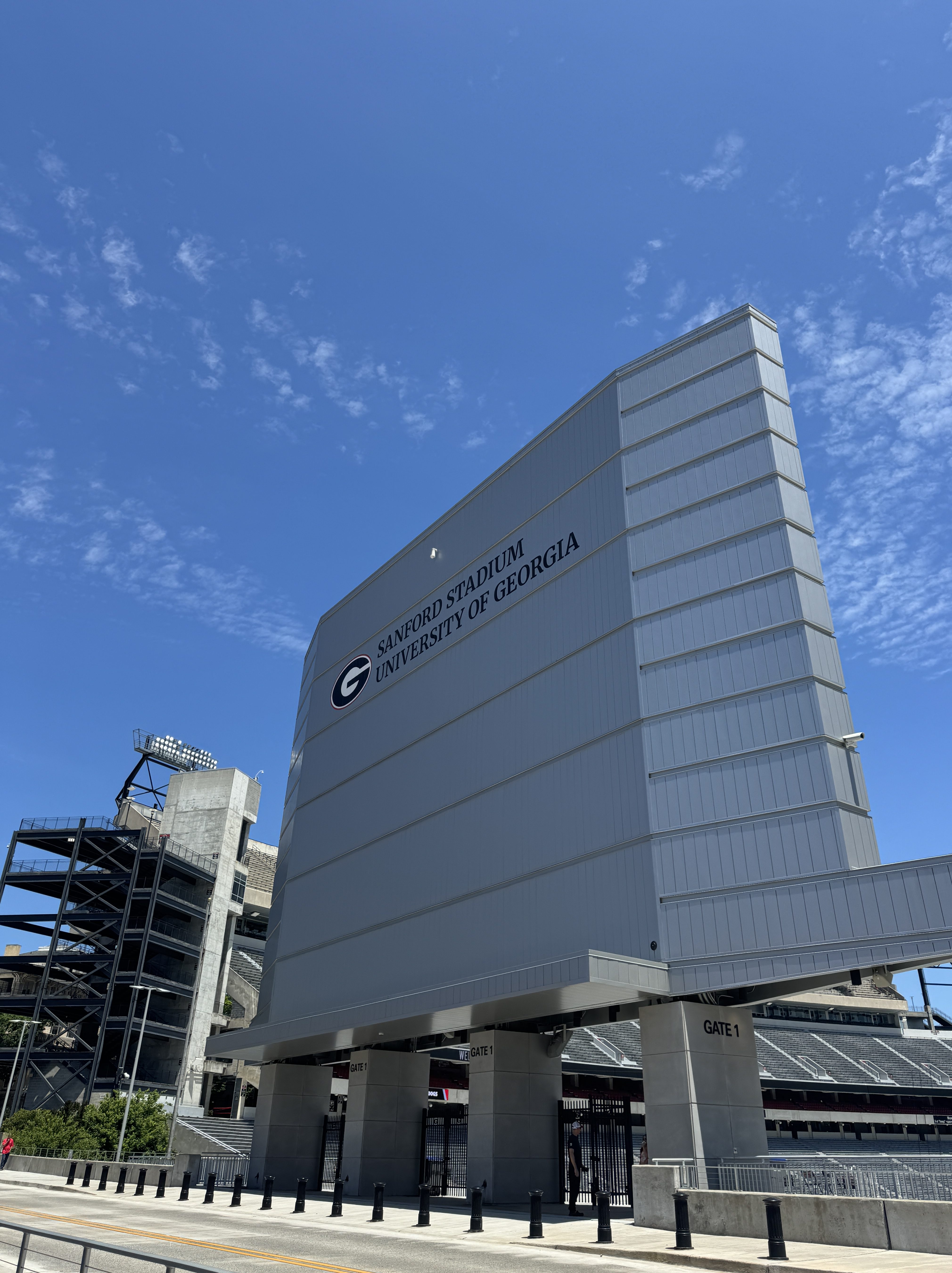
Sanford Stadium, UGA, 2025. Photo by Caroline Conner

“The first question out of their mouth is ‘How much money am I going to get?’,” Todd Berry, executive director of the American Football Coaches Association in Texas, told CBS News.

He was describing the new reality coaches are facing when recruiting college athletes. With the creation of Name, Image and Likeness (NIL), student athletes have the opportunity to profit off of their profile and performance. Many are receiving direct payments from established donor collectives at their respective university, while also partnering with different local and national brands. These opportunities have become what most coaches consider the most important aspect of recruiting and acquiring players in the transfer portal. A Big East basketball coach told On3, a network that primarily covers high school and college athlete recruitment, that “NIL is the single biggest factor in the criteria prospects now use to pick a college. Playing time, style of play, conference affiliation are now clearly second tier criteria.”

Athletic departments are shifting their financial approach to focus on this new aspect of recruiting and roster construction. “It’s part of everything we’re doing in the department. It’s just a new way of operating that everybody’s trying to get used to,” said Kris Pierce, Chief Operating Officer for the University of South Florida’s athletic department. She shared that USF has created a new NIL strategy unit that is responsible for finding NIL deals for their athletes and creating a strategy for revenue sharing across different sports. This is a model used by hundreds of athletic departments across the country due to the growing importance of NIL to athletic success.

“Five years ago, I wasn’t in conversation saying, ‘How much do you want to be paid?’ I never thought that would happen in college basketball,” Steve Alford, the head coach of Nevada men’s basketball, told Nevada Sports Net.

“NIL plays a huge role in transfer portal recruiting,” an SEC coach told On3. “Unfortunately, too much in my opinion.” An ACC coach added, “You cannot have enough money to compete in the portal.”

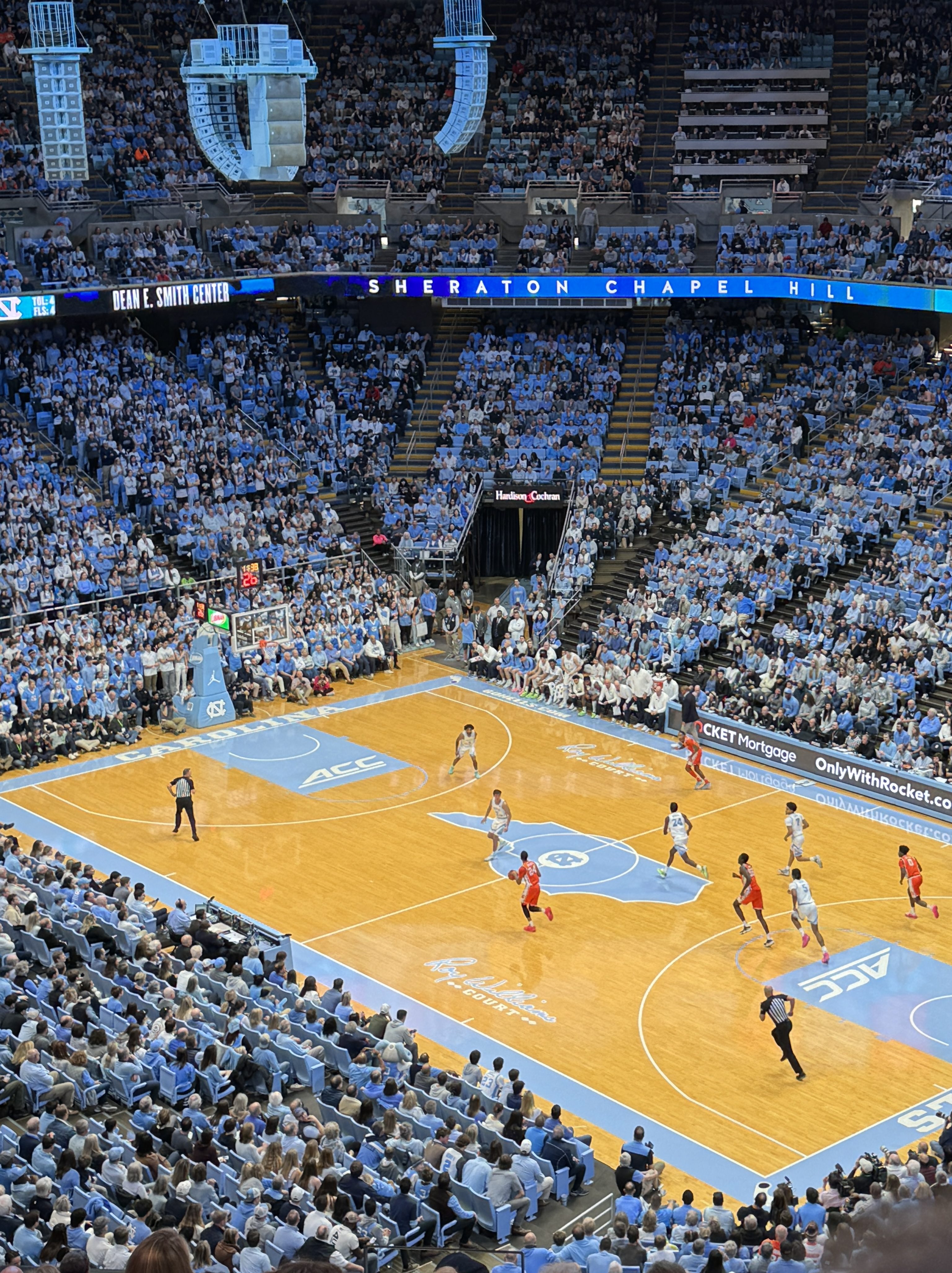
Dean E. Smith Center, UNC, 2023. Photo by Caroline Conner

Many, including former Alabama head coach Nick Saban, believe this new era of NIL is putting schools at a competitive disadvantage and they are highlighting the need for rules that establish a level playing field. Saban told “NIL Daily” on Sports Illustrated that, “It [NIL] has to be done in a way where you have some kind of competitive balance. Every school must have the same thing. One school can’t spend $30 million for players while another school is spending $3 million.”

In an attempt to provide a solution to this issue, the House v. NCAA case settlement was approved in June. This landmark agreement changed college sports forever. It allows for schools to directly pay athletes for the first time in history. This new revenue sharing model, according to The Athletic, allows athletic departments to “distribute roughly $20.5 million in name, image and likeness (NIL) revenue to athletes over the 2025-26 season.”

Previously athletes could only receive NIL compensation via outside organizations, such as local businesses, large brands like Nike or school donor collectives. The new House settlement also places a limit on team roster sizes, which has forced schools to adjust their scholarship distribution approach.

“We’ve already adjusted our scholarship limits for our sports going into the 25-26 year.” She added that USF is focused on “implementing it [House settlement] in a way that the student athletes are benefiting from it as they were intended to do so,” Pierce said.

Another aspect of the House settlement that is affecting college coaches and NIL donors alike is the establishment of a new NIL rule enforcement committee, known as the “College Sports Commission.” This entity is responsible for reviewing all NIL deals worth over $600 and determining whether they are “for a valid business purpose and reflect fair market value,” according to The Athletic. Many coaches seem optimistic and grateful for the creation of this committee, as it will aim to thwart any attempts to overcompensate athletes for minimal to no contribution to NIL providers.

Washington Huskies athletic director Pat Chun told Sports Illustrated, “We all recognize that nobody wants to exist in an unregulated, unsustainable environment. Relative to enforcement, I’m probably optimistic because, knowing what’s been done in the past, this is backed by a court-approved settlement.”

According to Yahoo Sports, some schools had been “hurriedly signing current players and transfers to new contracts before the approval of the settlement in deals that frontload a majority of the compensation.” The rush was driven by the fact that any contracts signed before the settlement approval and paid out before July 1 were not subject to the clearinghouse (College Sports Commission) or cap.

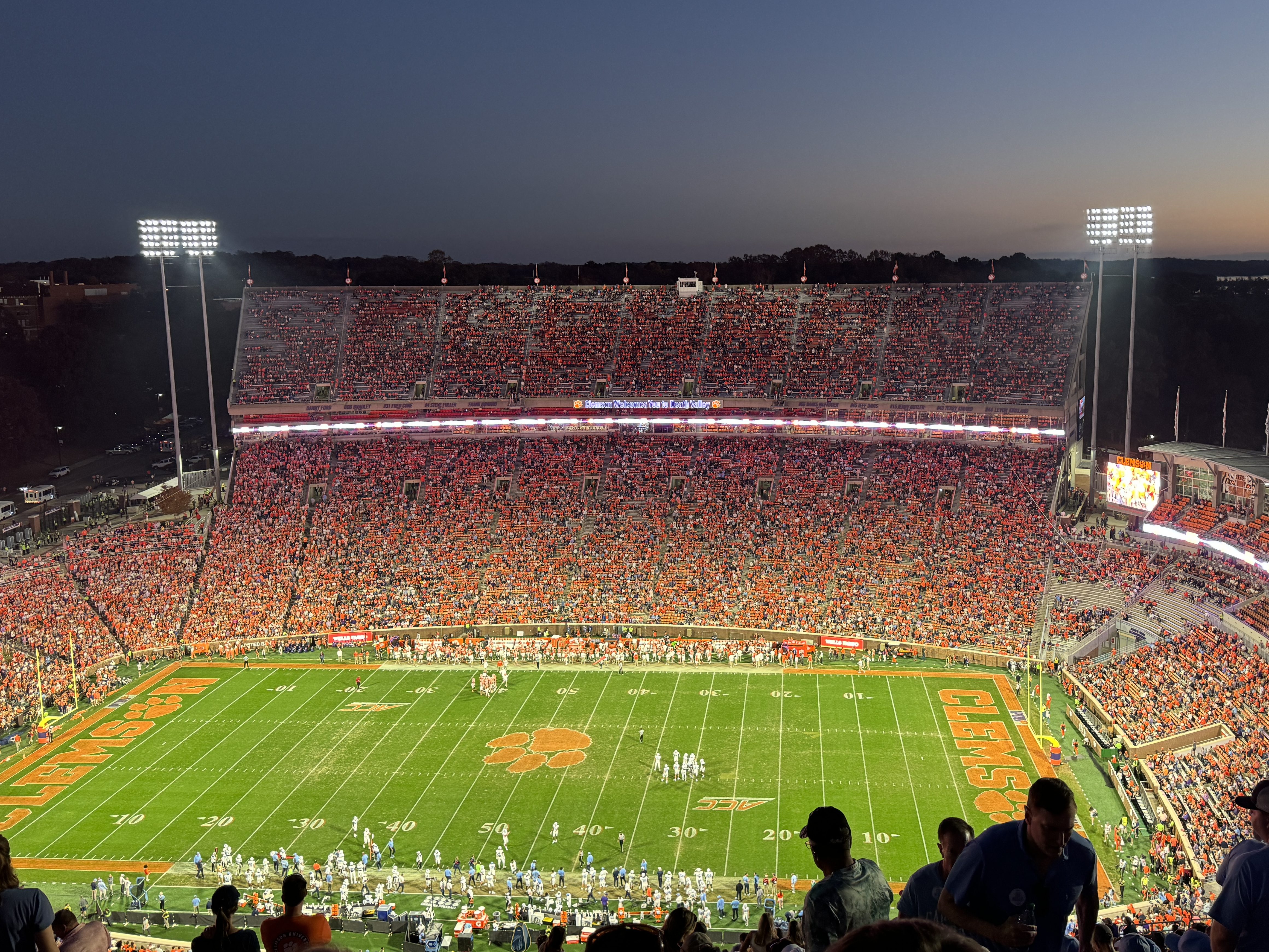
“Death Valley”, Clemson, 2023. Photo by Caroline Conner

For many fans, the biggest impact of NIL is its tendency to result in players transferring. Logically, if a different school offers a player more NIL money or resources, they are likely to transfer. Kris Pierce, a UNC Chapel Hill alumna, says, “I think I grew up in a golden era of college athletics. Being a Tar Heel, I know the value of folks staying around four years.”

Before the addition of NIL and the era of paying athletes, most players stayed at their respective schools for the duration of their college careers. This began to change in 2021, following the COVID-19 pandemic, when the NCAA granted every active student athlete one penalty-free transfer. With the introduction of NIL in 2021 as well, the floodgates were opened, sending a wave of student athletes into the transfer portal. These waves have continued to grow over the last four years with the increase in financial support of NIL.

That begs the question: will college athletics ever return to its “golden era” that so many miss? Only time will tell. For now, the introduction of the College Sports Commission and NIL spending cap, in an effort to control the transfer portal, is a step in that direction.

Karmen Morrison: How an introduction to media and journalism led to a passion for advocacy

By: Caroline Conner

Karmen Morrison is using her voice and background in sports to make a difference. A Jacksonville, Florida native, Karmen is passionate about women’s sports and advocating for the next generation of female athletes.

“I’m all things women’s sports”

Karmen began her academic and athletic journey at Riverside High School in Jacksonville, Florida, where she completed the school’s “Early College” program. She was a standout athlete, playing basketball, volleyball and flag football. She was her city’s “Female Athlete of the Year” her senior year, which prompted her to be interviewed by several local news outlets. She says she, “liked the environment,” of these interviews and that she “felt like I could do the same thing,” which is how she discovered her passion for media and journalism.

Now, she has earned her bachelor’s degree from Florida State University in media communications and master’s in journalism from UGA. She has built her media/journalism resume throughout her college experience through unique opportunities, such as when she got to interview Florida State’s softball coach, Lonni Alameda, during which they discussed the future of the Women’s College World Series. Karmen said that that interview was, “one of my favorite interviews I’ve done.” Now she says interviews are “for sure” her favorite part of journalism.

She just graduated from UGA in May and is currently serving as an assistant teacher at their journalism/multimedia summer academy for high school students. “I think for me, if I had had the opportunity to go to a camp like this, I would’ve.” She also explains that her purpose revolves around, “sharing what I know with you guys [summer academy campers].” Her passion for journalism/media has helped her on her journey to advocate for women’s sports.

“I think it’s all about equality,” she said. “For me, representation matters.”

She explained how her experience on her high school’s women’s basketball team helped inspire her passion for this issue, when she saw favoritism being given to the football players.

“They were always getting free shirts, and we were district champs year after year after year, and I’m like, ‘why don’t we get any free shirts?’ “You see the disparity.”

Now, she works hard to support and advocate for women’s sports, citing an important need for “equality” and “representation.” She speaks out via her social media platforms and stories she has written. She explained how important representation of minorities is in sports, which she says hits close to home given she is an African American.

Her discovery of journalism and media has helped her speak out on issues she cares about, and she hopes to be a strong force for change in the world of female athletics.

Caroline Conner

By: Caroline Conner

If you were to ask someone, “Who is Caroline Conner?” They would most likely reply with one of the following: she’s the biggest Carolina Tar Heel fan I know, she spends way too much time studying, or she is always travelling to a new side quest somewhere.

Hello, I’m Caroline Conner. I am from Burlington, North Carolina, a medium-sized town in between Greensboro and Durham. I am a rising junior at Walter M. Williams High School. I spend most of my time there competing on the golf and softball teams, taking tests and completing assignments in my classes, and participating in various student organizations like student council. I am looking forward to getting more involved in my school’s new journalism club this school year, which will publish several school-related stories each month.

The other thing about me is that my mood is very dependent on how well the Tar Heel basketball season is going. My parents are both UNC Chapel Hill alums, so we spend lots of time in Chapel Hill cheering on the Heels. A lot of my favorite memories revolve around UNC athletics. For example, if you were to ask me, what was the best night of your life? I would say April 2, 2022. That was the night my dad and I celebrated Carolina’s win over Duke at the Final Four in New Orleans. I also enjoy cheering for the Dallas Cowboys, Dallas Mavericks and Chicago Cubs. Therefore, I firmly believe the Cowboys will win the Super Bowl this year, the Mavs will recover from the devastating Luka trade with the acquisition of Cooper Flagg, and the Cubs will make the playoffs this season for the first time since 2020.

In addition to playing and watching sports, I really enjoy traveling with my family. My favorite trip I’ve taken this year was to Boston with my dad, where I attended Harvard Model Congress. My favorite place to visit is definitely Disney World, specifically the Hollywood Studios theme park. Recently, I’ve enjoyed traveling to tour different colleges. Some of my favorites we’ve seen are Harvard and Northwestern.

In summary, I’m a huge sports fan, I love to travel, and school is a big priority for me. This year I’m looking forward to further exploring my interest in journalism and spending more time on the golf course!