The appeal of the Bard, 500 years later

Centuries ago, a theatre in London showcased the many plays of one man, unknowingly reshaping English language and culture. In the 21st century, Shakespeare’s plays are still performed, read and studied. According to Oxford Scholastica Academy, modern audiences relate to these stories with the same vigor as those in the 16th century, despite the many years between them.

Early modern British literature professor Sujata Iyengar teaches the intricacies of Shakespeare at the University of Georgia, a topic that continues to warrant deep discussion.
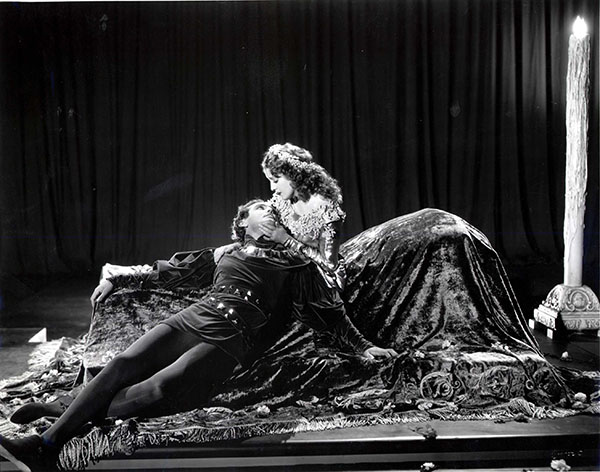
Leslie Howard and Norma Shearer in “Romeo and Juliet”, 1936.

“Reading classic literature is important to students, and general readers and citizens today, because literary texts and dramatic texts that have stood the test of time can usually offer us access—in heightened language—to heightened experience and a space to reflect upon those experiences and the challenges of living among other people and in a complex civilization,” Iyengar said. “And the difficulty of classic texts is what allows us that time and space to reflect.”

David Daniel, a Core Company member and Education Director at American Players Theatre, echoes this sentiment of the timelessness of classics.

“At the end of ‘Oedipus [Rex]’, the chorus says, we all suffer. Suffering comes to us all. And, you know, you’re thinking that’s written in 300, 400 BCE,” Daniel said. “Or there’s another poet about 300 AD in Japan. She wrote this great poem that says, ‘people tell me I should brush my hair, but I leave it messy, just like you left it’. Not only is it like, oh, that’s just a good poem, because someone today could have written that. But the fact that it was written so long ago, or in my case, in a different culture so long ago, it just connects me to something bigger than just me now. Shakespeare connects me to something bigger than me now.”

Despite these connections to humanity, many are reluctant to experience the complex world of Shakespearean literature.

“People don’t really find love poetry until they’re in love,” Daniel said. “Or people don’t listen to a breakup song until after they’ve broken up, and then they listen to the same song a hundred million times. It’s not that you are ready for everything at all times. But when something happens in your life, for good, for bad, for anything, there is stuff there that other humans have gone through. And when you connect with that, then your world opens up. It makes you bigger.”

Additionally, Shakespeare is a performance. It is meant to be watched, which makes reading the multi-layered plays more difficult than other classic texts.

“If you go see a play and you don’t understand what’s going on, that’s 110% our fault as actors,” Daniel said. “We’re bad actors. It’s not, you’re dumb because you don’t understand it, but because you’re watching bad actors. Because the job of the actor is to make it easier for you to understand and also pull you in so you’re connected with what’s going on.”

Actors attempt to convey the themes found within the works of Shakespeare and other classic artists.

“Why human beings fight with each other, so war and peace,” Iyengar said. “How and why we fall in love. Who we fall in love with, which is the greatest and most beautiful mystery, in many ways, of all. What we find sacred. How parents relate to children and how siblings relate to each other. How societies can progress to greater levels of happiness and fulfillment for everyone.”

When it comes to modern retellings of these stories, there are certain things that the adapters must keep in mind.

“How far can you adapt it without changing what you think is the essence of the original?” Iyengar said. “So what is it that that person has to do in order to keep it the same story? And do you care? Because it’s quite possible as an adapter that you decide, I don’t actually care about this from the original, but what I’m interested in is a different kind of, a different aspect of it… You’re going to pick a storyline to follow and things to streamline, characters to cut out. And you might choose to elaborate on certain things.”

After being performed thousands of times over hundreds of years, the heart of Shakespeare’s works remains the same. Even so, each performance brings a new vision to a new audience.

“When David Warner was doing Hamlet in the early 80s, it was the Falkland War,” Daniel said. “And there’s a passage in ‘Hamlet’ where Hamlet walks out and he talks to somebody called the Captain. And he asked the Captain, he says, ‘where are these troops going?’… and the Captain says, ‘they’re going to go fight for a little piece of earth that is not big enough to hold the bodies of the men who died fighting for it’… during the Falkland Wars, he said it to an audience whose sons and daughters, husbands and wives, mothers and fathers were in the Falkland War fighting and dying for some sheep islands.”

Even a single play could be interpreted a million different ways by a million different people.

“When Ben Kingsley did ‘Hamlet’, to be or not to be, there was a young female [Buzz Goodbody], she was… absolutely going to shake up the Shakespearean world, had all these great ideas of what Shakespeare could be… and a week before they opened, she took her own life,” Daniel said. “And so Ben Kingsley, playing Hamlet, walks out and he says, ‘to be or not to be’. And it was completely different. Not because the play was different, but because what had happened to those people was different. And that your audience had been united and hear these words from hundreds of years ago, and all of a sudden they make absolute sense.”

Shakespeare’s works are narratives that allow actors to convey true human emotion, something that continues to appeal to audiences today.

“There is something more that human beings strive for than just the obvious,” Daniel said. “There is a connection that we look for. Poetry, dance, music, that’s art… it reminds us that those things that we’re feeling right now are not just about today, but are absolutely positively human because they show up in every generation, every era, every century, every millennium.” 
Online testing: a double-edged sword

The room is too brightly lit. It’s too early in the morning. There are too many terms swirling through my mind, none staying long enough to make an impression.

The test proctor is reading from her paper, a long, droning speech that I’ve heard before. The only difference is the Chromebook that lies flat on my desk, waiting.

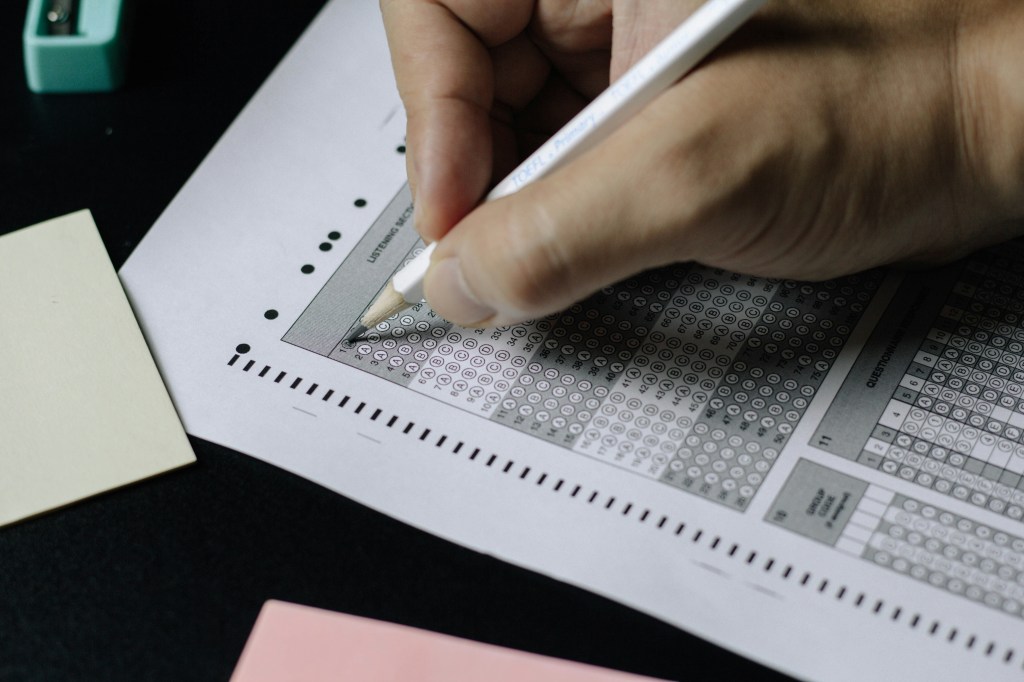
Ever since the Covid-19 pandemic in 2020, online exams have been growing rapidly in prevalence throughout the country. Covid-19’s forceful isolation and online schooling proved that virtual testing is possible. Whether it is a good idea is a very different question.

In February of 2024, the American College Testing (ACT) exam was first offered in a digital format. The SAT followed along, making the switch in March 2024. The next May, most Advanced Placement (AP) exams were administered at least partially digitally for the first time.

For the first hour of the exam, words swim across the harsh light of the screen, multiple choice options blur into endless paragraphs. But for the two hours after that, my hands fly across the keyboard writing essays faster than I ever could by hand. I finish early, but my head aches after three hours of reading from a glowing surface.

These changes were not unexpected, but they also were not always welcome.

My freshman year, I took the AP Human Geography exam the old-fashioned way: with pen and paper. Answering 14 short answer questions, my hand ached beyond belief, and I barely finished in time. Yet, I received an excellent score.

This year, I took the AP English Language and Composition exam in the modern way: with a keyboard and a computer screen. After three essays, my mind hurt, but my hand didn’t.

When I talked to my friends, I found that we each had different opinions on the usefulness of online exams. 

My friend with dyslexia had been able to read even less than usual. My friend with ADHD hadn’t been able to concentrate. Others weren’t able to type, so they were slower in the written portions. Contrarily, some loved the new way of doing things. I heard praise for fewer testing materials, quicker essays and easier work-checking.

This is why online testing is a double-edged sword. There are aspects of exams that work better online, and there are aspects that work better on paper. The problem is, what those aspects are depends on the person.

Athlete to advocate (Karmen Morrison profile)

Former high school basketball star Karmen Morrison is now an active advocate for the rights of women in sports. With a background in athletics and a master’s degree in mass communication and journalism, Morrison has used her experiences to elevate the issues she is passionate about.

“We had a pretty good football team when I was [in high school] and they would always get free shirts… [Girls’ basketball was] district champs year after year after year. And I’m like, ‘why aren’t we getting free shirts? What’s going on?’,” Morrison said. “So I think that’s one thing that irritated me and… you see the disparity.”

Morrison’s advocacy covers a wide range of equality-based topics, including the gender wage gap in professional sports.

“Tennis is one of the only sports that the men and women’s professional players get equal payments, at least in the majors… they get paid the same amount of money. So I think that’s important for starters,” Morrison said.

In recent years, social media has emerged as a primary source of information, expression and advocacy. Morrison is among the many to create a loud presence within this virtual world.

“I’m on social media, so I share my opinions,” Morrison said. 

Other impacts on Morrison have come from the very women that she is advocating for.

“I went to Florida State, and I did this one story, it was about women in coaching, and I got to talk to Lonni Alameda. She’s their head softball coach, very, very renowned women’s softball coach,” Morrison said. “And she was very open and honest, blunt about it. It’s probably one of my favorite interviews I’ve done, and she spoke about a lot of the things that could change with the Women’s College World Series… so I think that that’s the kind of route that I’ve been going so far.”

As gender discrepancies continue to decrease little by little in most professions, professional sports leagues are following along. It is with the advocacy of people like Morrison that gender equality in sports may eventually be fully achieved.

“I think it’s all about equality… and then I think for me, representation matters,” Morrison said. “Obviously I’m a Black woman, so you got to be able to reach back and show little girls… that it’s possible. I think it’s just really about representation at the end of the day.”

Aly Dewey (autobiography)

Who am I? I do not think that anyone could truly put the person that they are into concrete sentences. It is nearly impossible to encapsulate a daughter, sister, student, friend and so much more into a few hundred simple words. Above anything else, I am made of the experiences in my life, and the people who have brought them to me. I do not have the capacity to describe every impactful instance in my life that has shaped me into the girl I am now. Even so, I will do my best.

My dad is from rural Michigan. It is a place of rednecks and green trees, loons calling from the lakes in the dewy mornings. When I visit there, I remember the history of people before me, living among the secluded natural parts of the world.

My mom is from a small town in Wisconsin. It is a place of culture and theatre, community united despite many differences. When I visit there, I remember that the most natural part of humanity is caring for one another, attempting to ensure that, together, we all thrive.

I have grown up in a bursting suburban town in coastal South Carolina, mere miles away from historic Charleston. It is a place of opportunities and lethargic summer heat waves, revolutionary ghosts rising from the downtown streets that have been walked upon since before the days of American independence.

My school contains around 2,500 students, with about 650 in my class alone. Within this melting pot of athletes, artists and academics, I found my place in a dimly lit downstairs classroom that once belonged to the welding class. Now, banners hang from the pipes. Stickers (and “do not touch” signs) cover the heavy machinery. The garage door only opens to distribute the representative voice of our student body. We are the Student Media of Wando High School.

I am a writer and copy editor for the Tribal Tribune newsmagazine, entering my third year of high school and my second year on the staff. I have been published in four newsmagazines and 16 online stories. Yet, every single time that I see my name on a page or a screen, an indescribable thrill races through me. The privilege and responsibility of informing my peers is not lost on me, and it has shaped my high school years.

When I sit down to write, I bring with me the people and places of my past. When I write about the importance of environmental sustainability, I call upon a lakeside cabin in Michigan. When I write about a school play, I reach for that nonprofit amphitheater in Wisconsin. In every single thing I write, I feel the pressure of the history that echoes from downtown, and the expectations of the future of the boomtown outside my doorstep.

If I am writing, then so are the people, places, and experiences that have shaped me.