Mental health’s affects on young musicians

It is no secret that the teenage years are transformative for adolescents, as they grow into young adults. These years can be especially tumultuous for young musicians, who grapple with the pressures and common problems of the music industry, resulting in mental health concerns. If not addressed early, these young musicians are prone to developing more long-term and serious problems like depression, eating disorders and grappling with bipolar or schizophrenia.
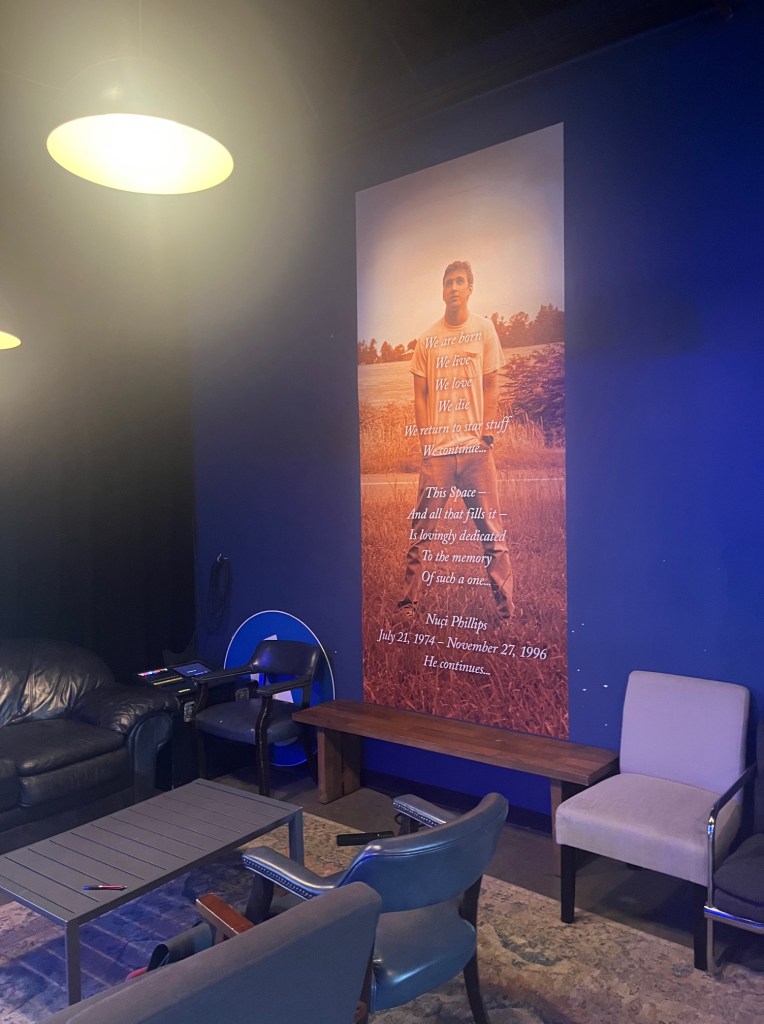
While music is beautiful and expressive, the music industry can be a pressure cooker where musicians are pushed to their limits. Nuçi’s Space is an organization in Athens focused on suicide prevention, specifically for musicians. The space was founded after a UGA student and musician named Nuçi Phillips, took his life in 1996. His mother, Linda Philips, created the organization in 2000 to address the epidemic of suicide that was, and to this day still is, raging across the country. Abby Winograd, the marketing & communications manager at Nuçi’s Space, explained the hardest parts of being a musician.  

“Musicians are not put in the best position to access health care and support, especially if people pursue music full time. They’re not getting access to insurance. They’re in late night scenes with exposure to not necessarily healthy conditions,” Winograd said. “Linda wanted to create a center of sorts to provide a safe space for musicians to seek support and help and pursue their music without sacrificing their health.”

The teen years can be anxiety inducing and scary as young people study with their confidence, insecurity and emotion shifts. A rising junior at Athens Academy, and young musician, Evangeline Bina, talked about some of the struggles she has experienced during her teen years and how music has helped her through it all.

“I had a lot of experience in middle school struggling with anxiety, but it kinda all went away. I got really involved in the local orchestra scene, and that helped me build confidence, because, where I wasn’t confident in myself, music helped with that a lot,” Bina said. “Music has gotten me through some of the worst times in my life, times where I kind of felt like I didn’t have anyone, or nobody really understood what was going on.”

Music also pushes you to be more vulnerable, as one captures their emotions in their art. Bina and Winograd both explained how this can be an outlet for young musicians and their emotions, but also open a young person to struggles with their mental health.

“To make music, you have to be very like, in touch with yourself, and sometimes that vulnerability can make you more susceptible to mental health issues, insecurity, emotional problems, which sucks, but it’s also part of making good music,” Bina said.

“Music is a language for people that don’t necessarily have the words or comfort in speaking about how they’re feeling. Music is the language in which they choose to express themselves. It’s how they bond with other people,” Winograd said, adding that mental health needs to be looked at and addressed as a serious health concern, and using the term “brain illness” instead of mental health helps do just that.

“We say brain illness instead of mental illness, because mental health is a real health concern. It’s in the body as much as cancer and really any other physical disease you can think of,” Winograd said. 

Music is a beautiful outlet for young musicians as they struggle with life’s many internal and external problems, and for one to paint their emotions into art is something special. It is important for young musicians to have a safe space that sparks their creativity and Nuçi’s Space is the perfect, supportive atmosphere for that. Bina, a participant of Camp Amped at Nuçi’s Space, explained how the space allowed her to pursue and feel more confident in her singing. She was also able to bond with other campers who had experienced similar struggles to her, to create music.

“I don’t usually like lose myself in the music, but sometimes it can be a sacred space, almost where all the hard things about life just don’t really impact me because music isn’t very judgmental. The people in music aren’t judgmental, but music itself isn’t judgmental either. Like, you can kind of, if you allow yourself, be vulnerable. You can be completely free with yourself, and just let it help you. I find safety and security in that.”

If you ever feel like you need to reach out to someone or need help, you can call the suicide and crisis hotline at 988. This is the link to the hotline’s website.

The Nuçi’s Space website also has a crisis page with lots of helpful information linked here.
Flawed and cruel: the true identity of the death penalty

The death penalty is many things, but for starters, it is flawed, expensive and defined by bias. Besides this, there is also the essential question of whether human beings deserve to kill. 

In 1989, Bryan Stevenson, a lawyer and bestselling author of “Just Mercy” created the Equal Justice Initiative (EJI) to provide “legal representation to people who have been illegally convicted, unfairly sentenced, or abused in state jails and prisons.” Part of their mission is to challenge the death penalty and excessive punishment as well. 

“Just Mercy” follows the true story of Walter McMillian and how he was wrongly convicted of murdering a white woman in Alabama and sentenced to capital punishment. With the help of Bryan Stevenson and the EJI, McMillian’s innocence was proved with clear and frank evidence, but the book also follows the stories of other incarcerated individuals.

One of these individuals was Joe Sullivan, who was sentenced to die for a non-homicide crime he committed as a 13-year-old. Sullivan was finally released in 2017, 25 years after he was sentenced. The book also shed light to the issue of botched executions, especially with the use of lethal injections. According to a study conducted in 2024, 73 lethal injection executions were botched, which is just over 5% of those conducted since 1982. There is no doubt that the instances and statistics listed are painted in bias, as majority of the botched executions and unjust sentences are carried out on Black men. 

American society as a whole must look at the problem as it is and draw attention to the truth — the death penalty is unjust, cruel and adds no benefit to the safety of our country. How do we as human beings grant ourselves the right to end another person’s life? How do we allow retributive principles — a life for a life — to govern our justice system? This is not a justice system dedicated to justice. 

At the root of the problem is how little attention is given to this problem. It takes a significant accident to spark empty conversations dealing with the issues of mass incarceration. The leading thought is that these people truly did commit their crimes, so they deserve their punishment. 

The world discusses human rights concerns with civilians around the world, so shouldn’t the same rights apply to these prisoners? Let’s start with the most basic right, the right to life. 

Karmen Morrison: Under the Glasses

From a young age, Karmen Morrison was not set on what she wanted her career to look like. From athletics to advocacy to journalism, and now to a mix of all three, there is a lot to Morrison. Her advocacy for gender equality started in high school when her school’s football team would receive free shirts, but her successful women’s basketball team did not.

“So we had a pretty good football team when I was there, and they would always get free shirts,” Morrison said. “We were district champs year after year after year, and I’m like, why we don’t get free shirts? What’s going on?” 

Morrison grew up in Jacksonville, Florida. Throughout high school, she played a number of sports. Specifically, she played basketball, volleyball and flag football, but found her passion for journalism through experiences with interviews. She then went to college at FSU where she acquired a bachelor’s in communications and media studies. Later, she came to UGA for her master’s, where she acquired an arts degree in mass communication and journalism. 

Morrison’s time playing high school sports influenced her desire to advocate for women’s sports and today she uses social media as a platform for her advocacy. 

“When I say advocating, that’s what I’m sort of speaking to, collegiate and professional,” Morrison said. “Regardless of gender, there are younger people and obviously you can advocate for them too. I don’t think there’s a difference, really.”

During her time in high school, Morrison was interviewed for her success in athletics, and her enjoyment for these interviews led her to finding the career path of choice. 

“Well, when I was in high school, I was asked to do a lot of interviews about school and sports. I was in an early college program, so people were asking me a lot about that,” Morrison said. “I was the interviewee, obviously, but I enjoyed it. It was a couple radio station interviews, things like that. And I was like, I think I could do this. So that’s probably where I got my start.”

After high school, Morrison went to FSU for her bachelor’s degree. As part of her sports media journey, she interviewed Lonnie Alameda about a late game the team had, which gave her some insight about advocacy.

“I got to talk to Lonnie Alameda. She’s their head softball coach, very, very renowned women’s softball coach, ” Morrison said. “They had a really late game. I think the game ended at like two in the morning or something like that, and she was very open, honest, blunt about it. It’s probably one of my favorite interviews I’ve done, and she spoke about a lot of the things that could change with the Women’s College World Series.”

Morrison explained that this is the route she sees herself going on right now, using her sports media expertise to draw attention to women’s sports at the collegiate and professional level, but also for younger girls. She talked about how tennis was the only sport where both the men’s and women’s divisions get paid the same in Grand Slams like the US Open, so advocating for equal pay is a good starting point. 

In her love for journalism, Morrison highlighted her interest for multimedia journalism because she did not have a specific favorite style in high school.  “I was being asked to do a lot of different interviews for my education and for sports at the time, and some were print, some were video, some were radio. It didn’t matter what it was, I kind of just liked it. I liked the environment, and I just felt like I could do the same thing.”

Morrison liked interviews and video more, compared to her colleague and the other Summer Academy camp instructor, Joe Dennis, who is “a print guy.”

“This is a print guy over here, but I like video. So definitely the interviews,” Morrison said. “I just like talking, like I’m not going to write a story if I’m not interested in it. So I just like talking to whoever it is I’m interviewing at the time.”

Morrison is now back at Grady helping with the Summer Academy, Multimedia Journalism Camp. This is her second year teaching, and she helps out because she wishes she had a camp like this while she was growing up.

“Last year was my first time helping out with this camp, but I think for me, if I had the opportunity to go to a camp like this, I would have. I’m a rookie, but obviously I have a little bit more knowledge than you guys. So for me, it’s just like sharing what I know to you guys, because y’all should want to be better than we are.”

Eva Saraf

There are many things that make me, me. I have my titles or roles, like student, friend, sister, athlete and more, but here are the details of who I am. I am a rising junior at Athens Academy in Athens, Georgia. I have a little sister named Ria who is 13. One of the most common things she and I get told is that we look like each other, which makes us laugh because in our minds we could not be any more different.

I have a number of passions or hobbies but the big three for me are definitely tennis, music and journalism. I have played tennis since I was 11-years-old and now play for my school’s varisty tennis team. I love playing competitively, but I also love the social aspects of tennis and how I can hit with a friend while talking and catching up. Secondly, music is a core part of who I am. I have played the violin and piano for more than 10 years, performing with multiple orchestras too. Last year I started songwriting, which acts as an outlet for me to process my emotions while also embracing my creativity. Listening to music and new artists is one thing I love to do, and I will never miss the opportunity to discuss an album with someone.

Lastly, one of my more recent but more significant passions is journalism. During my freshman year, I took the writing for publication course that my school offered. This was because it was the only elective that worked with my schedule, and I loved the teacher who taught it. Besides that, I had no interest in journalism or writing. I had actually always been more of a math person, but my teacher pushed me out of my comfort zone and looking back, I could not thank her enough.

I began to write for my school newspaper, and during my freshman year mainly wrote for the news section. Sophomore year, I was the sports section editor and taught writing workshops to younger students on the side. I started my capstone research project, centered around the societal effects of journalism. Through my capstone work, I am striving to learn more about the editorial process and how journalism is a tool to spark change while embracing diversity. I jumped at the opportunity for an internship at the Red & Black and am currently in the recruitment process. I’m not decided on what I want to major in in college but for now, I’ve been thinking about double majoring in journalism and international-affairs. In the journalism field, my dream job would be reporting internationally, allowing me to travel and explore different cultures while meeting new people.