BBL Bodies: The New Normal?

by Tiffany Harris
Pebblebrook High School

Brazilian Butt Lifts are the new service in the industry that lots are raving for, but what image is this creating for the world on body types. Are we normalizing going under the knife rather than going on the treadmill? Is the look worth the risk?

A Brazilian Butt Lift is a procedure that is a few surgeries in one. You go under anesthesia and then liposuction (suctioning out fat cells) is done on areas like the stomach, thighs, or lower back. Next, your fat is essentially “purified” to ensure it’s safe to go back into your body. After your fat is prepped and ready, it gets inserted in the needed areas to get the “lifted” shape. Lastly, they drain your body from any fluid build-up and close the incisions. 

Now the hard part is done– or is it? The next step is the healing process which can take up to a year, with two weeks not sitting down on your bottom. Imagine that? You can’t even sit down for two weeks just to look a certain way. Several celebrities have done this surgery and openly talk about it, which isn’t a bad thing; However this is sending out a message to young women all around that this look is the only accepted look by the world. In our day to day lives, we hear in songs rappers and pop artists talk about women’s bodies and how they want them to look. 

“All I would hear them talking about is big butts, and I didn’t feel complete or good enough, good as those girls because I’m like, ‘Oh My God, you know, this is what you’re supposed to look like in the rap culture, and I don’t look like that,” Famous female rapper Nicki Minaj spoke in an interview with Joe Budden about her struggles with her body image.

In the interview, Minaj opened up about why she felt insecure about her body at such a young age and revealed it was due to her male friends commenting about other women’s bodies. She talks about her struggle with her body image and the pressure to conform to certain beauty standards. However, she also blames herself for slightly creating the standard. 

“Superstars inadvertently become role models,” said Minaj.

The BBL body type is so serious to some, we ignore the risks sometimes. According to Los Angeles Times, Television personality & actress,  Jacklyn Smith or better known as Jacky Oh, underwent surgery in May 2023 for a “mommy makeover.” The surgery went well, until the next day when she started to complain of an ongoing, intensifying headache. As her headache turned into a burning sensation, her mom rushed her to the emergency room. Unfortunately after being rushed to the hospital, she was pronounced dead shortly before midnight. If society was accepting of natural bodies and didn’t bash new mothers into snapping back into shape, maybe women wouldn’t have to risk their life just to feel normal.

On the other hand, some celebrities are openly expressive and appreciative of their surgery. Lots of women like JT, Saweetie and even Kim Kardashian openly talk about their enhancements and how it has boosted their confidence. As stated in Guardian Life Archives, Nigerian Celebrity, Tonto Dikeh says she “see’s surgery as a form of self-care and urges women to do what makes them happy.” 

While we shouldn’t bash women for getting surgery, we shouldn’t put down women for not having it. Without appreciation for natural bodies, all young women will lose self-esteem and confidence. Looking perfect all the time isn’t the goal of life, so we shouldn’t have to permanently alter ourselves to fit into unrealistic standards. 
College athletes strive to keep mental health in check

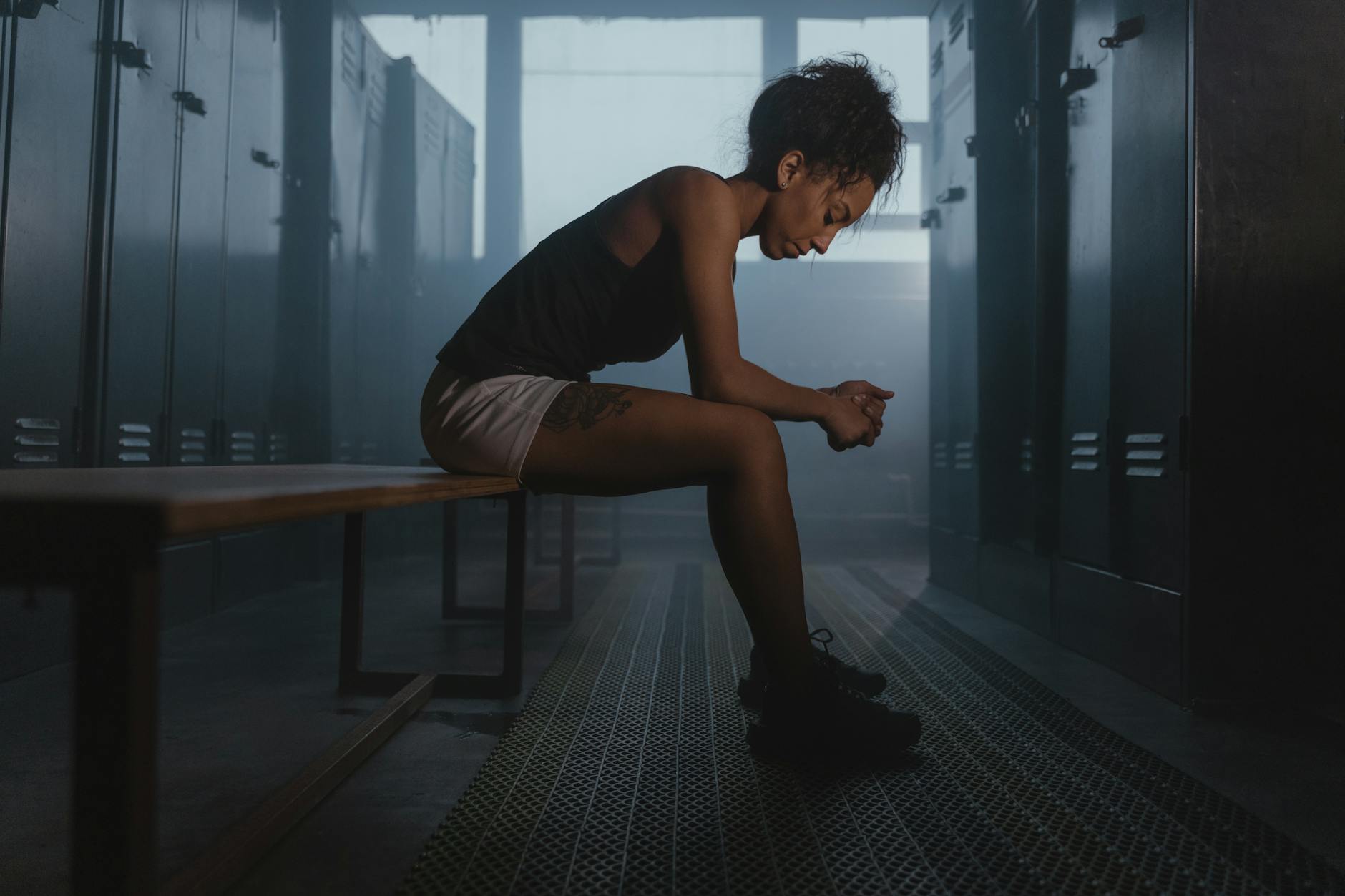
Photo by Tima Miroshnichenko on Pexels.com

by Tiffany Harris
Pebblebrook High School

Many college athletes will be seen on the big screen with a bright smile on their face, yet under all the sweat and success, there is still one more opponent to defeat– the one in their mind.

College basketball games are the highlight of the winter/spring season of college. On the outside looking in, what could be better for the athletes? They have packed out arenas, fancy facilities, and constant praise from fans. What we don’t realize is that some athletes struggle with the student athlete lifestyle. Rising sophomore forward on the Georgia State basketball team, Clash Peters talks about the expectation put on college athletes.

“I feel like a lot of people like to undermine athletes, especially ones that are on scholarship because they feel like things are just given to them,” Peters said. “It’s easier to hear something and have an opinion on it compared to actually live through it day to day.”

Not only do you have to battle the daily tasks of a student athlete, but it’s way more difficult to take those emotions on game day. Clash says that leaving the emotions off the court is the not only good for game play but good for problem resolution.

“You want to win? You gotta put it aside.” Peters adds.

Even though putting your feelings aside can help game-play, bottling up your emotions is not a good habit to pick up. According to VeryWellMind, bottling up your emotions can compromise your physical health, impedes social relationships, and puts a strain on your mental health.

Most freshman don’t know what to expect for their first season of college sports and once the pressure is put on them, things can get difficult fast. Peters had his first season with the panthers and spoke on the jump from high school ball to college.

“It was a major flip strictly because you’re going from high school where you were giving a blueprint and someone is holding your hand whereas college, it’s really all on you” said Peters.

Peters wasn’t alone on this difficult transition, another rising sophomore track & field athlete, Amari Ned revealed that freshman aren’t used to the intensity of college work-outs and are more prone to injuries.

“We (freshman) get injured really easy because of the volume of training,” said Ned “It’s a lot”

Amari spent his first year of track & field at Queens University of Charlotte. Ned speaks about how during his first ever indoor track season, he had thoughts of contemplations about continuing his season. As a freshman, he had never experienced a true indoor season and had a difficult time transitioning to the heat of college. Luckily, with the support of his teammates, he was able to get over that plateau and create the needed change.

Another point of view that gives great insight is a coach who sees the players at their lowest moments. One of Philadelphia’s newest assistant coaches, Kevin Norris gives us insight on a different perspective of the athletes. As a coach, Norris believes in forming a relation ship with the players. The benefits of getting to truly know your players is to fully understand where they are coming from and to know when something is off.

“You just never know, and if you don’t have genuine dialogue with the kids, you know, maybe they lost a parent, became financially unstable,” Norris said. “All that stuff can build up and be too much for a young man or woman.”

Norris speaks about the importance of the sports psychologist on campus and how his team has constant interventions with the players and their mental health. Peters and Ned both said that they have easy access to therapist and other resources. According to NCAA, 63% of male athletes say they know where to go if they have mental health struggles, however only 48%-46% said they would actually feel comfortable seeking support.

As fans, as much as we show up to support our favorite teams or players, we have to support not only the games they play but the battles they fight silently.

Joe Dennis: More Than Regular Inspiration

Joe Dennis is a professor at Piedmont University. He is a former journalist who writes when he isn’t busy attending to his students. Additionally, he has a new found love for cooking and a big Kesha fan. On days where he wants to “dominate the day” he’ll play “Blow’. If he is in his “feels” he will listen to “Praying’ due to the heartfelt touch it leaves on him. He last mentions a song he really likes called “Raising Hell”, which is a song about standing up for your rights.

“She’s someone who I feel is very inspiring because of her history.” He says “She has really overcome a lot in her life, and she’s persevered.”

Joe takes pride in his Filipino culture by cooking some of his favorite cultural dishes. During the pandemic as all of our bored minds did, Dennis wanted to resurrect some of the Filipino dishes he cherished growing up. He’s made dishes like coconut adobo (a stew or braise of meat), lumpia(fried spring rolls), and pancit (a variety of noodle dishes). Joe’s background being Filipino is not only an inspiration to him but his kids, specifically his eldest son, Jaydon.

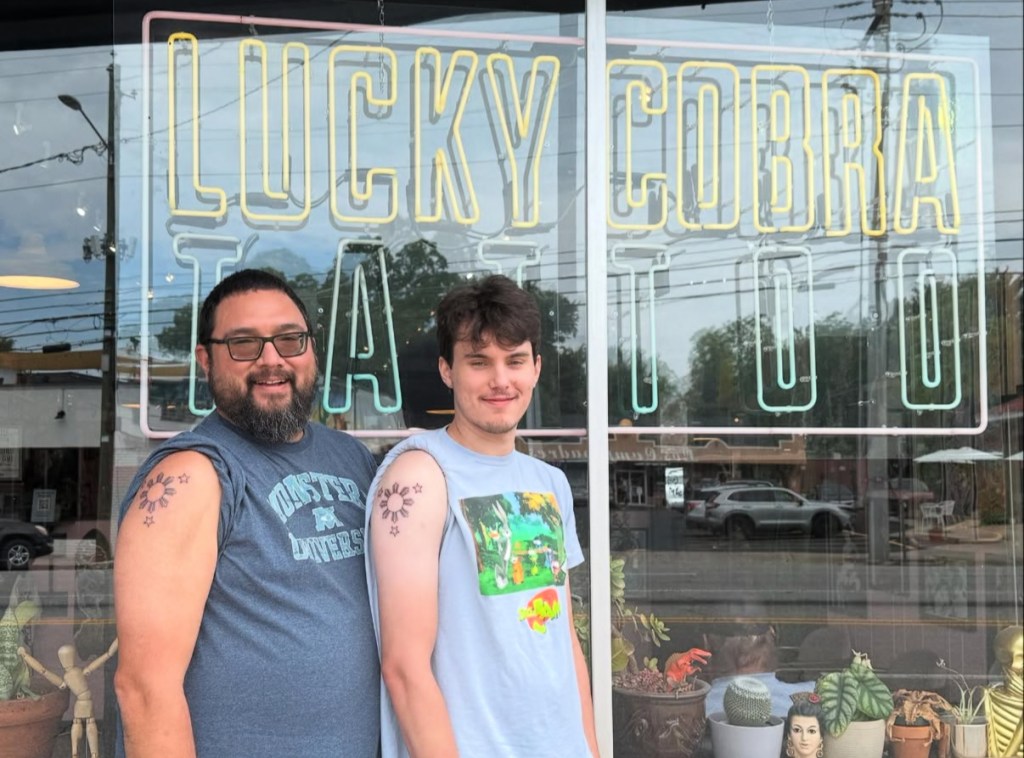
“I’ve gone 48 years in my life without a tattoo, and on my son’s 21st birthday, we got matching tattoos” Joe said.”That was maybe one of the most meaningful things my kids have ever done”.

Joe’s kids aren’t the only children he inspires. Being a teacher at Piedmont University for 10 years, he has been a supportive professor to all of his students, even a safe space.

“When students are struggling I want them to know that there’s someone there for them.”

With the vastly diverse students Joe teaches, his students come to him for comfort during tough times. Joe speaks on the morning after the election and how his students reacted.

“I had students in my office, I had an openly bi-sexual student, illegal immigrant, a feminist, African American, and they were all just devastated.” He says. “And they were waiting for… me.”

Joe speaks on not really having a safe space during his years in k-12. Catholic schooling wasn’t very inviting to mental health as Joe would describe it. Dennis reveals that he grew up with severe depression that was not diagnosed because it wasn’t believe in by his parents or teachers.

Someone who is such an inspiration to others must have inspiration on their own. The knowledge that Joe does never leaves his mind as soon as it hits the paper (or the keyboard). Joe has written many stories, but one important one was a local judge he interviewed who needed a liver transplant. He was able to complete five stories on the judge and update the decline of him. Unfortunately, he died before he could get a transplant.

“I’ll never forget the day he died and I actually went and became an organ donor myself. It was no reason for this man to die.”

Regular journalist don’t change their lifestyles due to the people they met, and Joe is far from regular. We need more people like Joe, a father, a empath, a man of culture, and an educator.

Tiffany Harris

Getting to know an only child is very easy because you are asking them about their most favorite topic ever — themselves! While I could be very detailed and tell you that I’m a Leo, in a STEAM program, Georgia Merit student, or how the time I fell off of my bike and smashed my bacon burger created one of my most cherished friendships ever, I can just give you a little insight.

I am from a city right on the edge of Los Angeles — Inglewood, California. After my parents split, my mom decided to move us across country, which was the end of the world to 7-year-old me. My mom promised me a bike to ease the pain. That same bike is the one to blame for the smashed burger incident, but that gave me a best friend so it wasn’t to bad (minus the huge scar and a missing chunk of my left elbow).

With that same best friend, we both tried out for a volleyball club, and that started one of my favorite hobbies. I’ve been a middle blocker ever since that day and wouldn’t change it. Outside of volleyball you can find me reading outside on a hot day because I love the feeling of sun on my skin, or inside my own world listening to music through my Beats. I’m a huge sports fan, especially football. I absolutely adore Friday night lights, every little thing about it. From the theme-matching outfits, constant screaming for joy, the majestical sounds from the band, to the post-game debriefs at Waffle House with your friends. My mom told me to find a job in doing what I love and what’s more cooler than getting to cover athletes and sports all over the world, which is why I fell in love with sports journalism. I knew I wouldn’t play volleyball in college but I still wanted to stay connected to the athletic lifestyle — or at least get first-hand info about it.

Being on my own does have some draw-backs from time to time but it also leaves me with time to figure out what to say when I’m asked “Who are you?” . The fun part is that being so young, you can never have a finished answer to that question, which means I can do what I do best — always talk about myself!