Going into the second semester of school, I often feel jarred choosing between one of the many sports being offered. The question comes to mind, “Why can’t some of these be moved into the fall semester.” Well, being in the south that answer is always football, the most popular sport. This is understandable because it brings in the revenue and all, but shouldn’t there be a way to not make multi sport athletes have to choose between Track and Field, Baseball, Soccer, Tennis, Softball or Golf?
All of these sports are able to be played in the fall semester except for soccer which would invade Football since they play on the same field.
The window to play multiple enjoyable sports for many athletes is thrown out the window by most sports being crowded into the spring season. Since less than 1% of young athletes will make a career out of playing sports, the focus should be on opportunity to enjoy and play sports. Expanding on that topic, we should allow for multiple spring sports to be played in the fall season.
I obviously understand that football will always be a priority, but restricting athletic potential and forcing kids to play one sport and making them make the hard choice of which sport they need to cut out of their high school life is not worth it just to keep the spotlight focused on football, even when most students don’t play it.
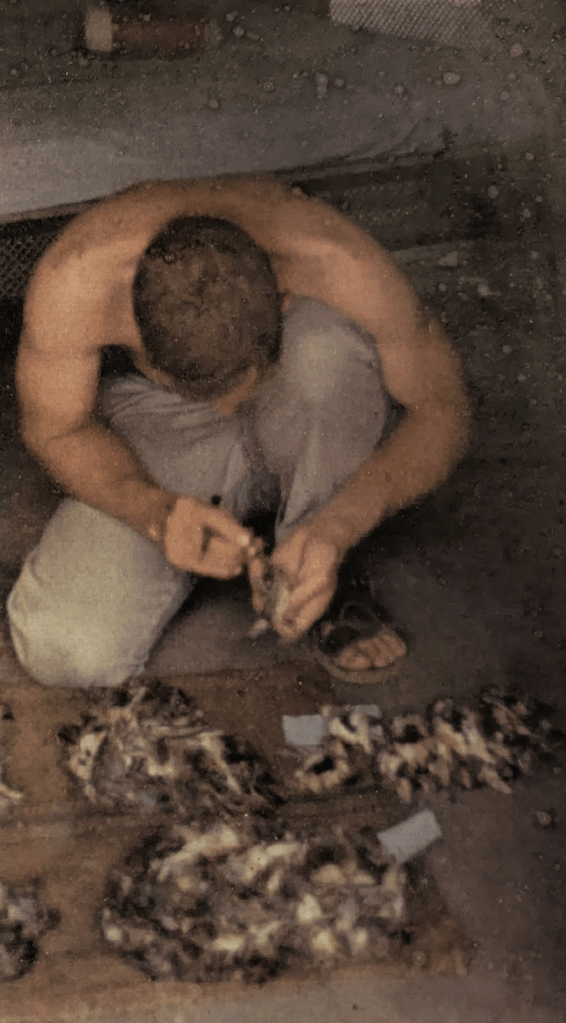
As Georgians face the challenge of a new invasive species, retired wildlife biologist Jeff Jackson recalls dealing with a different disruptive species — cereal grain eating birds, the Quelea. These birds caused disruptions for farmers.
“They eat any kind of cereal grain, some of the ones in Africa that we saw ate pearl millet, sorghum, and rice,” Jackson said, adding that he and his wife, Phyllis, studied the bird for roughly six years in Chad and the Sudan,
Their task was to find a solution to the cereal grain eating birds, as local farmers took drastic measures to get rid of these birds in order to maintain a successful harvest.
“They come in swarms of locusts, thousands of birds will come and decimate a cereal crop,” Phyllis Jackson said.
In desperation, the local crop growers needed to find a solution. “They would keep the kids out of school, and they would have them in the field, scaring off the Quelea with noise makers,” Jeff Jackson said.
Since the kids needed to be in school or doing other tasks, this method did not suffice.
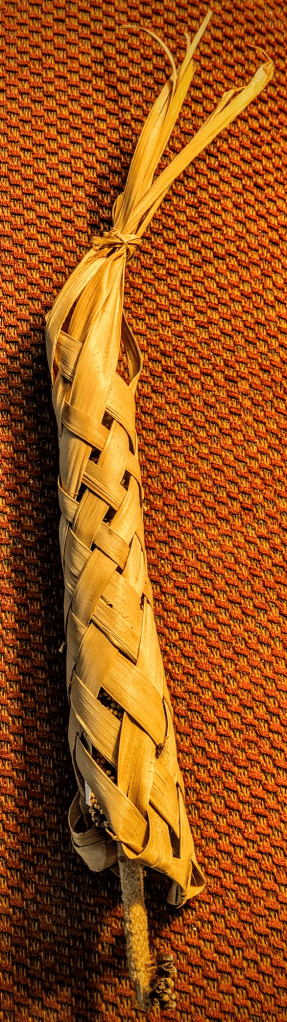
“The local people made a cover to go over the crops out of dune palm,” Phyllis Jackson said. “It’s pretty labor intensive, since they had to make one for every crop.”
Sadly, these were too time-intensive to make one for each of the thousands of the crops, and since they had to be hand-woven, this was another strike in the war against the Quelea.
“One of the things that was commonly done was use dangerous pesticides, and they would spray these by aircrafts over these colonies containing thousands of nests in a single trees,” Jeff Jackson said.
Although effective, this was extremely dangerous to humans and other mammals, like lions, who frequently were killed by these chemicals. “There was a pilot, of one of these spray planes. He got one of those pesticides on his arm, and he wiped it off not thinking about it,” Jeff Jackson said. “That evening he went to a local bar, to socialize with his friends, and he randomly keeled over and died.”
Over the years, the couple learned that the most effective way to deal with the birds was to harvest the crops before the birds came through and destroyed them. This was where Jeff and Phyllis came into play.
“There, some of the work Jeff did, was to figure out a type of rice, or sorghum, that the people liked, that tasted good, looked good, that would mature when the birds weren’t coming through,” Phyllis Jackson said. “They would harvest it quicker than the typical crop.”
These variations of crops did not not produce as much grain per as the typical ones.
Jeff and Phyllis’ work helped provide aid and neccesary knowledge to the people of Sudan and Chad.
Joe Dennis grew up on south side of Chicago in a Filipino household, where he was discriminated on because he was believed to be Mexican by his white neighbors.
“People thinking I’m Mexican, how do you deal with people yelling slurs at you without them even being applicable to you?” Dennis says while speaking about the prejudice.
Joe is now the department chair at Piedmont University where he teaches his students podcasting and necessary journalism strategies to have a successful career. One of the main reasons he continued pursuing his passion for writing and journalism is due to his former mentor Conrad Fink.
“He was a hardcore military veteran type of guy.” Joe recalls. “He believed in me, he believed in my writing like no other had. If this guy believes in me, than I really should believe in myself.”
When Joe felt doubt about his capability to be a good writer, he could always count on encouragement from Conrad. He still tries to live up to Conrad to this day.
Although he loves journalism, there is always critique that comes with the profession.
Dennis said that his most critiqued article was a column he wrote about the difficulty to hide the truth about the legitimacy of Santa. He received a lot of backlash that his son was too old to believe in Saint Nick, or that he shouldn’t be living in a fairy tale world.
“You never know what’s gonna click with people.” Joe said in response to the critics on what is supposed to be a comedic article.
Finding Joe in a crowd is as simple as finding the man wearing a fedora. This fashion statement originated from a work trip in New York city.
“I was with a friend, and I had kind of been looking for my thing, fashion wise, and this person goes at a fedora stand, ‘hey you would look great in a fedora,’ and I’m like right, they’re just trying to sell me something, and I tried it on, and my friend who was with me goes, you actually look good in a fedora, you could rock the fedora Joe and I’m like, well I trust you. So I went and I got the fedora, like this is Joe’s thing now.”
Joe Dennis now owns six fedoras, mainly tending to the hot Georgia weather, wearing fedoras with the style of a straw hat.
Although he isn’t an active writer Joe still makes a large impact teaching at Piedmont University.
“The day after the election, I had students in my office, I had an openly bisexual student, an illegal immigrant, and a self-identified feminist, a student dealing with anxiety and an African-American student, and they were all devastated, and they were waiting for me, like ‘Joe what are we going to do’ and they needed someone to talk to, someone to vent and make them feel like they’re not alone.”
I am Paul Chandler, a current student, and I am lucky to have two loving parents and an older brother. I have been given a front seat ride to multiple different experiences and cultures. I was born near Baltimore, and I moved down to Oglethorpe when I was two, not having any real memories of my past. We moved into a house in a rural neighborhood, with access to the woods and a river behind our house. I loved when my parents would take me back into the forest on hikes with me and my brother wearing our superhero costumes. I remember when I would get tired, my parents would convince me to keep going by saying that Joker was up ahead the next bend.
I started school at a small montessori school, which I went to until I was in third grade. There I made my best friends which I still am connected with today. I was taught how to garden and have a somewhat free childhood. We stayed in the same class with 1st through 3rd graders for three years, allowing to form deep connection with those kids in our class.
In 3rd grade, I switched schools to Whit Davis, a public elementary on the East Side. At first I somewhat held onto my brother because he had gone to that school the previous year, where he accidently pulled the fire alarm during his tour with the principle. I ended up getting used to the transition, and I met a lot of people with different personalities and stories. I enjoyed it a lot and it got me a good grip on the larger school. That summer in 5th grade I went to a YMCA Christian sleep away camp in Tullulah, where I won Camper of the Year and enjoyed it a lot. I did remember feeling out of place jumping around singing Christian music in a circle, being punished if we weren’t screaming but whatever.
I went to Hilsman for middle school, which is the school everyone went to after graduating Whit Davis. It was way bigger than my last two years of school, because all 4 elementary schools joined as one, so 4 times the people. A few of my old friends from 3rd grade came to this school from the other elementarys that led to that school. I really enjoyed the experience, and I had a lot of fun in classes and making new friends. 6th grade went well. I returned to the same camp in the summer, this time for two weeks. This ended up somehow becoming miles less joyful, and one time we were sleeping in a bungalow type place by a lake, when a neighboring house burned down, giving me severe Bronchiectasis.
In 7th grade, I had an even better semester at school, and made a lot more new friends than the previous year. That November, we moved into my grandpas condo for two months and rented out our house, for 7 months while we went to Switzerland, which was such a special trip that we got to take because my dad had a job opportunity over there for the semester. I was sad to leave, because I was enjoying school so much, but the homesickness wore off after two months of being over there. I went to the public school on the german speaking side of Switzerland. Most people were welcoming and spoke slow German to me allowing me to become semi-fluent after my trip concluded. I was very into basketball then, unlike the majority of the country, who played soccer and tennis. Thanks to the amazing public transportation, I was able to take a free bus to the train station, ride to the closest city, Lucerne, take another bus to the town Kriens, then walk a bit to the basketball gym, where I practiced with kids from around the city. My coach was very nice, and although I couldn’t play in the games, I was able to improve a lot and learn more Swiss casual German. We went to multiple countries using the train system since we didn’t have a car.
We came home late that June since that’s when school ends there. I had a fun summer revisiting friends, and sharing my experiences. Cedar Shoals, the school my mom taught at didn’t hire her back after our trip, so she got a job at my middle school which led into Cedar. I helped my mom move her stuff into the class along with her fish for most of the summer, then started the best school year of my life. My teachers were really nice, and all I had a lot of fun. I tried out for basketball along with 70 other kids, and played really well in tryouts and made the team. Although I was kind of a bench rider throughout the season, practice was super fun and I made friends from 7th grade and strengthened my friendships with the 8th graders. We won the championship that year, and then I tried out for soccer pretty much the next day. I played a decent amount because that was the only pick up game to play in Switzerland, and some of my friends were playing. The team wasn’t as competitive, and I made it. I played CB, which was fun, and I loved the relaxed energy of the team, and even though we barely won, it was even better when we did. The season ended, and I finished out the last 2 months of school, which were really fun, because the real schoolwork ended and we just had fun.
My parents decided it was best for me to go to Athens Academy for high school because they believe the education would be better for my future. I was very sad because it meant leaving all my friends I made throughout the last five years, but I ended up going to the new school anyway. I went to my grandpas house in Maine for the July that summer and spent a lot of time with my moms side of the family, my 3 first cousins and my 50 something second cousins, along with my grandparents.
I started my 9th year at Athens Academy, and I knew one friend from 3rd grade, but it was still akward and hard to make new friends. We were assigned so much more work than I was used to, especially because I never really had homework, and now it was nightly for every class. I finished the year with average grades and a decent education, but I was still sentimental and sad that I left my old life at my old school.
Now it is the summer and I am at this journalism camp writing a biography about my life so far. I feel like I have experienced many shades of life, and I am hopefully ready to finish high school strongly and then have a good future.




 Rock Star Writers Blog