Opinion Story

Growing up, I learned early on how to pretend. Not pretend in the playful, childhood sense — like dress-up or imaginary games — but a more quiet, painful kind of pretending. 

I learned how to act like everything was fine even when it wasn’t, especially when it came to food, my body and how I saw myself. And If I’m being honest, a lot came from growing up next to someone who seemed to have the body I was always told I should want.

My sister has always been skinny. Naturally thin, effortlessly “perfect.” I’d hear people compliment her over and over: “You’re so tiny!” “You could be a model!” Even when they didn’t  say anything directly to me, I could feel the comparison hanging in the air like a fog I couldn’t escape. Like a moth watching a beautiful butterfly flying through flowers.  I was growing up in a body that didn’t match hers, and somehow that made me feel like mine was wrong — like I was the “before” picture no one wanted to be. I remember my mom saying, “Put the food down Saybel, your sister needs it more.” This cut deep between me and my mother’s relationship.

So I started hiding. I didn’t talk about how hard it was to eat in front of people. I didn’t admit how often I skipped meals, or how much shame I carried around after eating something “bad.” I smiled. I laughed. I made jokes. And inside, I quietly punished myself for not being “enough.” I told myself if I could just be skinny like her, things would feel OK. That I’d feel OK. 

But it wasn’t just my sister’s body I was comparing myself to — it was every girl on my screen. Social media, TV shows, magazines, ads … they all sent the same message: thin is beautiful, and everything else you have to “fix.” Every time I opened Instagram or TikTok, I saw endless videos of girls with flat stomachs, perfect angles and “What I eat in a day” clips that added up to barely a snack. When those images are all you see, they start to feel like the only standard that matters. What made it worse is how fake so much of it is – filters, Photoshop, angles and lighting tricks. I didn’t just want to be skinny ; I wanted to be accepted, loved, and seen the way those girls were. I didn’t realize that I was measuring myself against something that isn’t even humanly achievable most of the time.

But here’s the truth : Striving to look like someone else — especially someone you love — is a trap. It doesn’t make you feel better. It just makes you feel invisible. I was fighting a battle inside my own mind, and nobody knew. And I let that happen, because I thought admitting it would make me weak. I didn’t know that there is real strength in saying, “I’m not OK.”

Now I’m starting to learn that I deserve to be seen as I am. That my body is not a failure just because it isn’t like hers. That no one should feel like a failure because their bodies are different. That food is not something to earn or fear. And that pretending doesn’t protect me — it only isolates me. What I needed back then wasn’t perfection. It was protection and compassion. It was someone to say, “You don’t have to look like her. You’re already worthy.”

I am proud of who I am and how I look. I’m not going to pretend anymore.
Student Awareness and Stigma

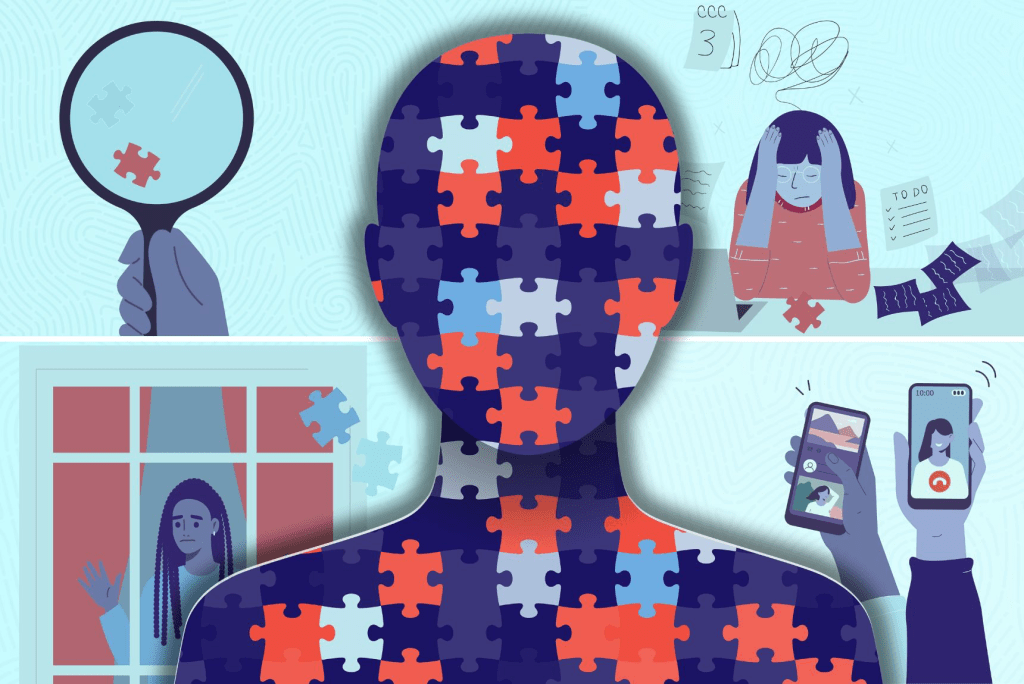
On the surface, college campuses buzz with energy – late-night study sessions, packed lecture halls and students chasing dreams with iced coffee in hand. But beneath that energy, many students are struggling with something less visible: their mental health. Anxiety, burnout and depression are increasingly common among college students (https://sph.umich.edu/news/2023posts/college-students-anxiety-depression-higher-than-ever-but-so-are-efforts-to-receive-care.html) , yet talking about those issues make some students uncomfortable and nervous. For many, the pressure to “have it all together” drowns out the need to ask for help.

Despite growing conversations around mental health, stigma remains a major barrier. Some students often feel that admitting they’re struggling could make them appear weak, dramatic or incapable of handling college life. 

“I felt like everyone else was thriving, so I kept pretending I was too,” said Natasha, a third – year biology major at Mercer University. 

This mindset – one that values toughness over vulnerability – can leave students isolated right when they need support the most.

Awareness of available mental health resources is another challenge. Many colleges and high schools offer counseling services, wellness centers or peer support groups but students often don’t know how to access them – or they assume the wait times are too long to bother. 

“I thought the counseling center was just for people in crisis,” Maggie, a high schooler at Northview High School, shared. “I didn’t know I could go just to talk.” 

Schools may host mental health events during midterms or finals, but that’s not always enough to change a culture of silence.

Students may benefit from more than just a flyer or a single awareness week. Ongoing, visible messaging from professors, resident assistants, and campus leaders can help reinforce that seeking help is a common and supported choice. Even when some teachers praise mental health as an important thing, some don’t realize they give more work than relaxation time.

“There are professors who preach that mental health is important and say you should take care of yourself, but then they say OK and you have a test in three days that is half your grade.” Naluchi, a senior in Mercer university, says. 

When faculty incorporates mental health resources into their syllabi or when student organizations engage in open discussions about emotional well-being, it communicates to students that their challenges are recognized. Even modest efforts – such as faculty highlighting office hours or promoting designated wellness days – can contribute meaningfully to a supportive academic environment. 

Breaking the stigma around mental health in college starts with honest conversations. Students are under pressure: managing school, jobs, relationships and identity – all at once. Minimizing or overlooking emotional challenges may influence the way support resources are accessed or perceived. 

“My school includes mental health and daily conversation, some weeks, which benefits the kids who are struggling in secret, and I think that’s what makes it stand out from all the schools that don’t.” Kerisha is a two-year psychology major from Mercer University. 

These outcomes may offer a broader perspective on what success in education can look like.

Joe Dennis

Joe Dennis doesn’t write as much these days, not because he’s out of words, but because students fill his office daily, needing someone to listen. A journalism professor with a heart for mental health; Joe has become a safe space for students dealing with anxiety, identity struggles and personal crises.

“They needed someone to be there for them,” he says simply. And so he is.

Raised in Georgia and shaped by a childhood in Catholic school, Dennis didn’t get mental health support growing up. During his battle with depression from a young age, he realized the power of being seen and heard. That experience now fuels his work for journalism, from his blogs on student well-being to the space he creates for those who need to talk.

During an interview, Dennis says, “They just needed someone to talk to.. They just needed someone to vent. They needed to know they weren’t alone. That I was there and they needed people to support them, and that really inspired me.”

Before teaching, Dennis lived in Monroe, Georgia, where he covered the heartbreaking story of a judge waiting for a liver transplant. The man died before receiving one, and the experience moved Dennis so deeply that he became a liver donor himself. It was a reminder of how stories and the people behind them can change lives.

Dennis, who proudly embraces his Filipino heritage, has always navigated the world as someone a little different. Growing up in Chicago, he saw firsthand how race shaped communities and opportunities. Those experiences appear in his writing and in how he teaches – with empathy, honesty and lived experience.

His favorite artist is Kesha, having each song for each mood.

“If I’m looking to get pumped up, like if I’m looking to you know, dominate the day, I’d probably listen to Blow,” Dennis said.

He is also very fond the emotional ballad, “Praying,” which speaks to him in different ways – whether it’s about letting go, standing up or forgiving someone who’s hurt you.

He’s known for his love of Kesha songs, his cooking inspired by his mom’s Filipinos recipes, his matching tattoo with his son and, of course, his collection of fedoras. The hat started as a dare from a friend. He kept it on – and made it his thing. Like the hat, Joe Dennis stands out quietly but meaningfully, reminding every student he meets that they matter.

Saybel Shuster

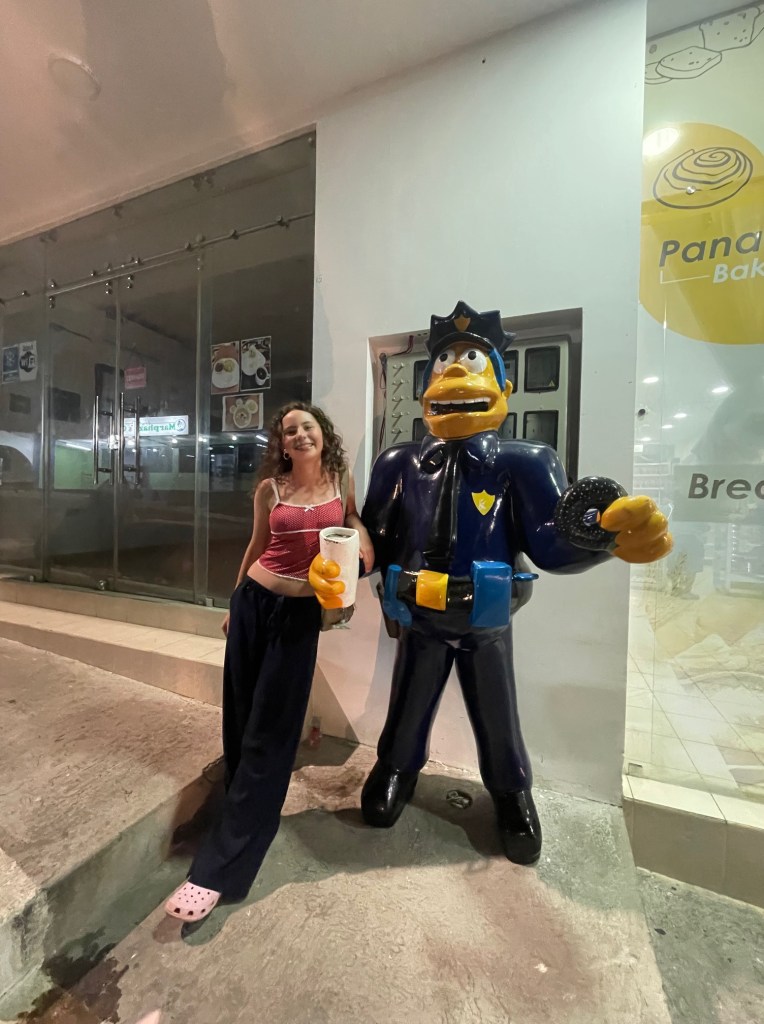
Me with a filter <333

Hello, I’m Saybel Shuster! I am from Macon, Georgia, originally from Vero Beach in Florida then I moved here in 3rd grade. I am one of the funniest people you’ll ever meet when you get to know me! I play tennis and am top doubles and singles, I don’t want to brag. I also do electric guitar. I love to eat! All the time! Like french fries, dumplings, cookies and cream ice creams, you name it, except seafood I don’t like. I love sweets most of all and would choose it over savory and salty foods. I like to pass out candy because I always have some on me, so if you’re ever looking for a sweet treat just ask! Another fun fact is my parents are opening a candy shop in Macon, Georgia called Shuster’s Candy and Creamery, so stop by if you’re visiting downtown! I like to talk a lot so just ask my best friend and the nerdiest but nicest person you’ll ever meet, Alli!

Growing up, me and my family have always traveled every summer to explore different foods and cultures. Just last week we went to The Galapagos Islands  and Ecuador which had great food and not so much wifi, which honestly I can’t live without. Last summer we went to the Bahamas, and the summer before that, Italy!

My favorite music artists include Billie Eilish, who doesn’t like her?; Paramore, Cigarettes After Sex, The Weeknd, Adrianne Lenker and Big Thief. My favorite shows are “Insatiable,” “The Simpsons,” “Dexter” and “Love Island”. My favorite movies are “The Princess Swan,” “Straw,” “Despicable me 2” and “13 Going on 30”. I have a pet golden poodle, Sunny, and an older sister, Ella.

I have a huge family with my mom having four sisters, all of their names starting with T, and my father having a sister and two brothers, they all had two kids except two of my aunts. So in total I have 12 cousins. I am Jewish and I had my Bat Mitzvah in October. Since only my dad is Jewish and my mom isn’t, we still celebrate both Christmas and Hanukkah! It’s fun celebrating both and I get double the gifts.

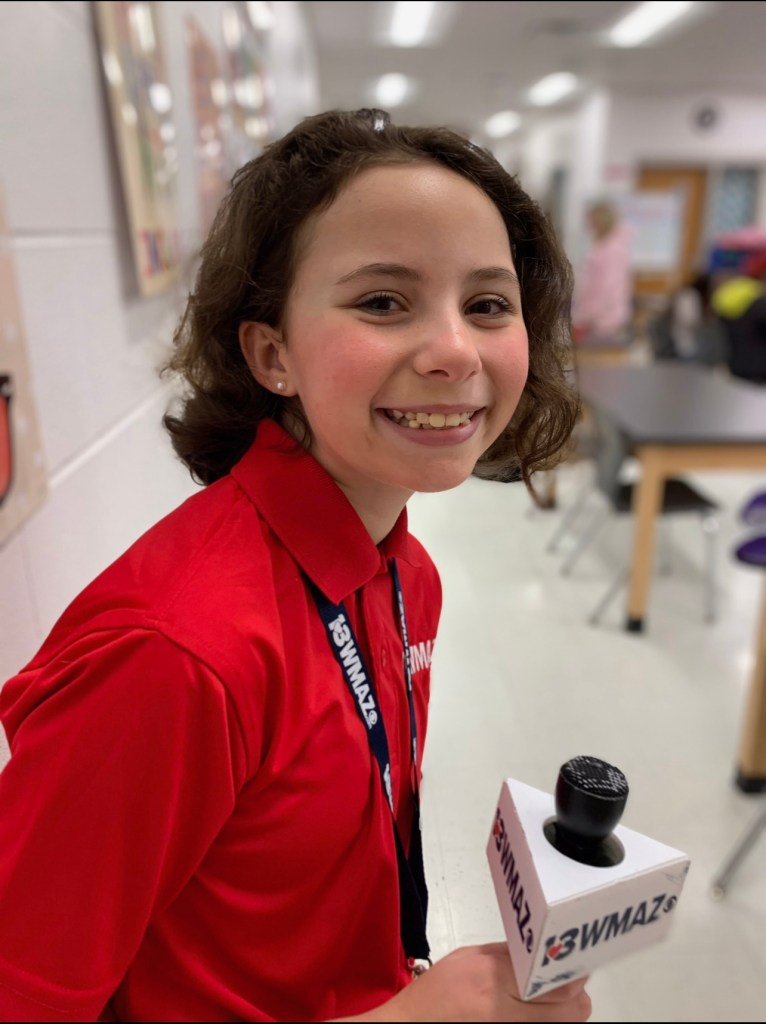
As I grew up I think I always knew I wanted to be a journalist, I loved photography and public speaking. My friends call me a very social person. I never knew I could have both in one job until my mom told me about becoming a journalist! Back in 6th and 7th grade I was a junior journalist for 13 WMAZ in Macon. I went to different schools, did Teachers Tops with interviewing the teachers and the students privately, or topics like about our Science and Arts Museum Christmas Tree Exhibit, or the ROTC program in high schools, and those videos were on the news and on their websites.

Yes, that’s me 4 years ago, we look and we don’t judge. I hope you guys think I had a major glow up. 🙂