Gun Violence affects on youth

Photo by Tom Def on Unsplash

By: Jupiter Sousa
Sprayberry High School
Marietta,GA

According to the Centers of Disease Control and Prevention (CDC) firearms have become the number one cause of death in youth in the US.

CNN reported children’s deaths by guns have been steadily increasing each year, , passing car accidents in 2020, with at least 18 school shootings being reported in the US as of May this year. 

In the spring semester of freshman year, my school had its first school stabbing. In America, gun violence in schools is normalized as it happens so frequently. In most cases, school shootings are forgotten a month later until the next one cycles through. That next week, no resources were provided and nothing was discussed, I was terrified for my life. The intruder was discovered to be an enrolled student, and he successfully stabbed a student. The victim was severely injured, stabbed multiple times and immediately transported to the hospital to undergo surgery. 

Weapons are extremely easy to obtain at such a young age. In some states, it’s easier for a minor to attain a weapon than it is to attain a vape pen. For example, in  Georgia, “Any person under the age of 18 years who is on real property under the control of such person’s parent, legal guardian, or grandparent and who has the permission of such person’s parent or legal guardian to possess a handgun…” said WomensLaw.org.

Youths are the number one demographic targeted towards gun violence, all of them being too young to experience life to the fullest, their lives being cut short by a bullet. This is a result of the lack of background checks and instruction teens are given. In many states, there are few regulations for teens possessing guns at a young age. 

Gun violence does not only impact its victims, but also its survivors. Many who have experienced gun violence go through survivors guilt after a traumatic situation, which can lead to depression, PTSD, and suicidal idealizations. Not to mention physical harm effects of being injured causing “problems with memory, thinking, emotions, physical disability from injury to the brain, and paralysis from spinal cord injuries” CDC states. 

These major effects can mentally and physically consume a person, a situation they had no control in permanently changing their perspective in life.  Disproportionately affecting minorities 

Gun violence mainly targets minorities. Violence increases in Black, hispanic, LGBTQ+ and more communities. Gun violence occurs everyday however “none more so than Black communities. In fact, Black Americans die from gun violence at 2.7 times the rate of white Americans,” according to the Giffords Law Center. Every person, despite religion, gender, race, should feel safe existing, but the trend continues to prove that gun violence disproportionately  affects minorities. LGBTQ are among those minorities.  : “In 2023, the Human Rights Campaign reported that at least 32 transgender and gender-expansive people were killed by partners, acquaintances, or strangers — 78% of whom were shot.”

The Second Amendment gives Americans the right to “a well regulated Militia, being necessary to the security of a free State, the right of the people to keep and bear Arms, shall not be infringed.”However, this amendment never states that gun rights supersede human life. Imposing stricter gun laws does not erase gun rights. Countless lives have been taken because of the lack of regulations to get a gun. A massive decrease in deaths will occur with stricter laws being applied to gun access following higher age requirements, weapon licenses, and extensive background checks. This will massively impact society to have a decrease in homicide, school shootings, suicides, and accidental deaths if we implement stricter gun laws.

According to the Centers of Disease Control and Prevention (CDC) firearms have become the number one cause of death in youth in the US.

CNN reported children’s deaths by guns have been steadily increasing each year, , passing car accidents in 2020, with at least 18 school shootings being reported in the US as of May this year. 

In the spring semester of freshman year, my school had its first school stabbing. In America, gun violence in schools is normalized as it happens so frequently. In most cases, school shootings are forgotten a month later until the next one cycles through. That next week, no resources were provided and nothing was discussed, I was terrified for my life. The intruder was discovered to be an enrolled student, and he successfully stabbed a student. The victim was severely injured, stabbed multiple times and immediately transported to the hospital to undergo surgery. 

Weapons are extremely easy to obtain at such a young age. In some states, it’s easier for a minor to attain a weapon than it is to attain a vape pen. For example, in  Georgia, “Any person under the age of 18 years who is on real property under the control of such person’s parent, legal guardian, or grandparent and who has the permission of such person’s parent or legal guardian to possess a handgun…” said WomensLaw.org.

Youths are the number one demographic targeted towards gun violence, all of them being too young to experience life to the fullest, their lives being cut short by a bullet. This is a result of the lack of background checks and instruction teens are given. In many states, there are few regulations for teens possessing guns at a young age. 

Gun violence does not only impact its victims, but also its survivors. Many who have experienced gun violence go through survivors guilt after a traumatic situation, which can lead to depression, PTSD, and suicidal idealizations. Not to mention physical harm effects of being injured causing “problems with memory, thinking, emotions, physical disability from injury to the brain, and paralysis from spinal cord injuries” CDC states. 

These major effects can mentally and physically consume a person, a situation they had no control in permanently changing their perspective in life.

Gun violence mainly targets minorities. Violence increases in Black, hispanic, LGBTQ+ and more communities. Gun violence occurs everyday however “none more so than Black communities. In fact, Black Americans die from gun violence at 2.7 times the rate of white Americans,” according to the Giffords Law Center. Every person, despite religion, gender, race, should feel safe existing, but the trend continues to prove that gun violence disproportionately  affects minorities. LGBTQ are among those minorities.  : “In 2023, the Human Rights Campaign reported that at least 32 transgender and gender-expansive people were killed by partners, acquaintances, or strangers — 78% of whom were shot.”

The Second Amendment gives Americans the right to “a well regulated Militia, being necessary to the security of a free State, the right of the people to keep and bear Arms, shall not be infringed.”However, this amendment never states that gun rights supersede human life. Imposing stricter gun laws does not erase gun rights. Countless lives have been taken because of the lack of regulations to get a gun. A massive decrease in deaths will occur with stricter laws being applied to gun access following higher age requirements, weapon licenses, and extensive background checks. This will massively impact society to have a decrease in homicide, school shootings, suicides, and accidental deaths if we implement stricter gun laws.

If you or someone you know has experienced suicide ideation or trauma by gun violence, dial 988. Reach out, you aren’t alone.If you or someone you know has experienced suicide ideation or trauma by gun violence, dial 988. Reach out, you aren’t alone.

Social Media: Spread like Wildfire

Social Media: Spread like Wildfire

Over the past decade, social media has transformed the way people consume news, share opinions and engage with the world. Platforms like Facebook, YouTube, TikTok and Instagram have not only made it easier for the world to stay connected, but they’ve also turned into primary news sources for many people, especially teens and young adults. However, in addition to its advancements and ease of use, experts have said it has turned into a strong tool for spreading false information.

“It’s not that people are lazy or don’t want to know the truth,” Ceylan, a postdoctoral at Yale SOM, says. “The platforms’ reward systems are wrong.”

Algorithms are at the core of this problem. Social media companies boost user engagement to drive their profits to earn more money. Their recommendation algorithms often favor sensational or controversial content, regardless of its accuracy, as it keeps users engaged. This approach has resulted in notable consequences in the real world. In 81 countries like Brazil, India, and Myanmar, social media misinformation has been linked to violent unrest and targeted attacks.

“One of the ways that we know that increases dopamine in the brain are extreme feelings,” Joe Dennis, a professor at Piedmont University and a former journalist, says. “So extreme feelings of anger is one of the ways that people keep engaged on platforms.”

As artificial intelligence evolve, the challenge of pulling the truth from online is only getting harder. AI technologies enable individuals to generate images and news that can be difficult to tell apart from factual information. People with large followings with spiteful motives can rapidly produce and spread propaganda across social media platforms. Videos can be altered with realism to make people appear to say or do things they never did. Truth and fiction are even harder to differentiate real and fake.

“Even just regular people who don’t use AI just to tell stories and use pictures of people who aren’t even part of the story to describe it,” Vayda, a rising sophomore at Loganville High School, says. “Most people scrolling will believe it without Googling it.” 

On social media, bots and fake accounts play a massive role in the spread of misinformation, often mimicking users to amplify their lies across the world. Bots and fake accounts often pose as regular people, sharing false stories of made-up “facts” to stir up arguments.

“They’ll be like, I’ve read about that and blah, blah, blah. And then you go there and blah, blah, blah is not even a website you know?” Saybel, a rising freshman at Academy for Classical education, says. “It’s like you read these and then you think they’re actual people commenting and being smart, but it’s false information.”

Bots and fake accounts spread information and they also help boost analytics by interacting with posts. When bots flood a post with likes, shares or comments; even if the content isn’t true, it gets pushed into more people’s feeds. The result is that false or misleading posts get more attention, while real information can get buried. It’s not just what the bots say, it’s how they help spread and amplify the lies.

“They’ll comment over posts and they’ll increase the engagement on those posts. And so that’s what pushes it into more people’s algorithms,” Alli, a rising sophomore at Academy for Classical Education, says. “So, even though the bots and themselves don’t seem to be doing anything, they’re pushing out that misinformation.” 

Misinformation can spread like wildfire. The truth is still out there, you just have to look a little harder to find it.

How the pitch clock saved baseball

By: Caroline Conner
Walter M. Williams High School
Burlington, NC

Yankee Stadium, 2024. Photo by Caroline Conner

My favorite memories are playing catch with my dad in the backyard, watching my beloved Chicago Cubs win the World Series and cheering for my Tar Heels on their road to the College World Series. The common denominator? Baseball.

The “national pastime,” baseball is a huge part of American culture and history. However, some, particularly the younger generation, find it about as exciting as their history class. Claiming that the game “takes too long” or is “boring,” many have concluded that baseball moves too slowly and that the 3+ hours it takes to get through all nine innings isn’t worth it. Lucky for them, Major League Baseball (MLB) came up with a solution. The new pitch clock, which was established in 2023, made for shorter games, less theatrics from players, and more action.

In an attempt to attract a larger audience, specifically the younger generation, the pitch clock has dramatically shortened the average MLB game length. According to ESPN, the average game time in 2022 was 3:04 (hours: minutes). After the implementation of the pitch clock in 2023, the average game length for that season was 2:40. According to Forbes Magazine, that 24-minute decrease in average game length led to a 9.6% increase in attendance from 2022 to 2023.

The pitch clock has also resulted in fewer theatrics and lengthy routines by players, which speeds the game up substantially. Batters are cutting down their time spent doing things like adjusting batting gloves, calling time to take a lap around the batter’s box and fastening elbow guards. They have done so due to the resulting penalty for taking too much time to get set up in box. The rule is if the batter isn’t set up and ready to hit before the pitch clock reaches 8 seconds, they are given a strike. Likewise, pitchers have had to shorten their pre-pitch routines to accommodate the new pitch clock. They must start their motion towards the plate within 15 seconds of when the ball was returned to him by the catcher. This time extends to 20 seconds with runners on base, or 30 seconds in between batters. A ball is added to their count if they fail to do this. These rules and penalties have allowed the game to move quicker, and therefore more action to occur, which has helped beat the narrative that the game is “boring,” increasing both interest and attendance.

The pitch clock and its new rules have also created more action by mandating that there be two players on each side of second base at all times, preventing infield shifting. When the infield can’t shift to cover the spots a batter is likely to hit the ball to, more hits will get through the infield. This creates more runners on base, resulting in more action and potentially more scoring. This is proven by the difference in batting average before and after the new rules on shifting were implemented. In 2022, the league batting average was .243, which was the worst in 54 years according to the LA Times. After the pitch clock and shifting rules were established, the league-wide batting average immediately rose 5 points to .248 according to the Society for American Baseball Research.

“These approval numbers for the rule changes seemingly verify that MLB made the right call.” said Seton Hall Professor Charles Grantham, who conducted a study that involved collecting polling data regarding the new pitch clock rules.

With MLB attendance and interest increasing as a result of the pitch clock, more kids will get to experience the thrill of baseball the way I did. Listening to Cubs games on the radio or watching the College World Series are some of my most treasured memories, and I’m excited that the pitch clock will allow more children to experience that same love for the game.

How NIL has taken over the transfer portal

By: Caroline Conner
Walter M. Williams High School
Burlington, NC

Sanford Stadium, UGA, 2025. Photo by Caroline Conner

“The first question out of their mouth is ‘How much money am I going to get?’,” Todd Berry, executive director of the American Football Coaches Association in Texas, told CBS News.

He was describing the new reality coaches are facing when recruiting college athletes. With the creation of Name, Image and Likeness (NIL), student athletes have the opportunity to profit off of their profile and performance. Many are receiving direct payments from established donor collectives at their respective university, while also partnering with different local and national brands. These opportunities have become what most coaches consider the most important aspect of recruiting and acquiring players in the transfer portal. A Big East basketball coach told On3, a network that primarily covers high school and college athlete recruitment, that “NIL is the single biggest factor in the criteria prospects now use to pick a college. Playing time, style of play, conference affiliation are now clearly second tier criteria.”

Athletic departments are shifting their financial approach to focus on this new aspect of recruiting and roster construction. “It’s part of everything we’re doing in the department. It’s just a new way of operating that everybody’s trying to get used to,” said Kris Pierce, Chief Operating Officer for the University of South Florida’s athletic department. She shared that USF has created a new NIL strategy unit that is responsible for finding NIL deals for their athletes and creating a strategy for revenue sharing across different sports. This is a model used by hundreds of athletic departments across the country due to the growing importance of NIL to athletic success.

“Five years ago, I wasn’t in conversation saying, ‘How much do you want to be paid?’ I never thought that would happen in college basketball,” Steve Alford, the head coach of Nevada men’s basketball, told Nevada Sports Net.

“NIL plays a huge role in transfer portal recruiting,” an SEC coach told On3. “Unfortunately, too much in my opinion.” An ACC coach added, “You cannot have enough money to compete in the portal.”

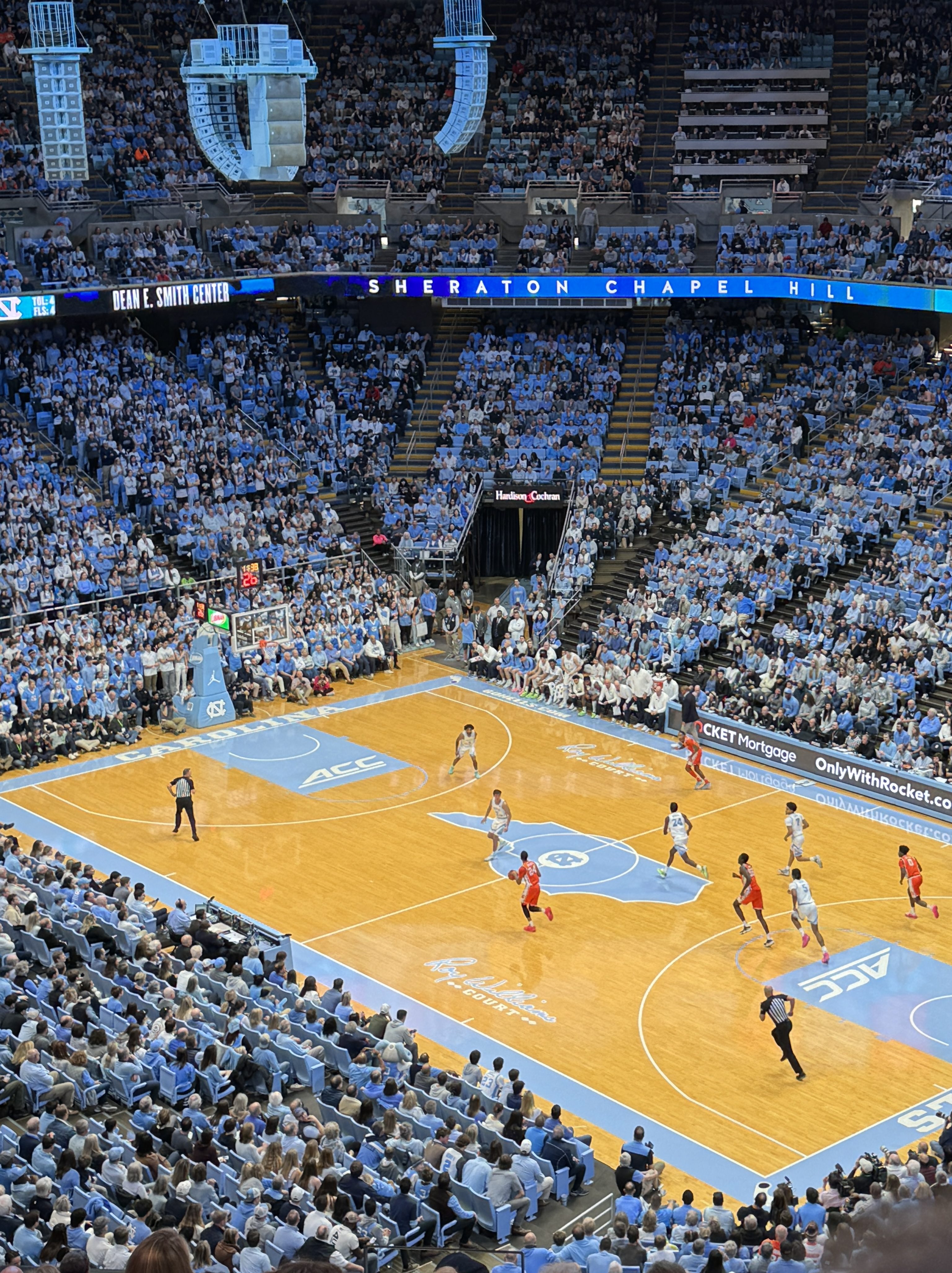
Dean E. Smith Center, UNC, 2023. Photo by Caroline Conner

Many, including former Alabama head coach Nick Saban, believe this new era of NIL is putting schools at a competitive disadvantage and they are highlighting the need for rules that establish a level playing field. Saban told “NIL Daily” on Sports Illustrated that, “It [NIL] has to be done in a way where you have some kind of competitive balance. Every school must have the same thing. One school can’t spend $30 million for players while another school is spending $3 million.”

In an attempt to provide a solution to this issue, the House v. NCAA case settlement was approved in June. This landmark agreement changed college sports forever. It allows for schools to directly pay athletes for the first time in history. This new revenue sharing model, according to The Athletic, allows athletic departments to “distribute roughly $20.5 million in name, image and likeness (NIL) revenue to athletes over the 2025-26 season.”

Previously athletes could only receive NIL compensation via outside organizations, such as local businesses, large brands like Nike or school donor collectives. The new House settlement also places a limit on team roster sizes, which has forced schools to adjust their scholarship distribution approach.

“We’ve already adjusted our scholarship limits for our sports going into the 25-26 year.” She added that USF is focused on “implementing it [House settlement] in a way that the student athletes are benefiting from it as they were intended to do so,” Pierce said.

Another aspect of the House settlement that is affecting college coaches and NIL donors alike is the establishment of a new NIL rule enforcement committee, known as the “College Sports Commission.” This entity is responsible for reviewing all NIL deals worth over $600 and determining whether they are “for a valid business purpose and reflect fair market value,” according to The Athletic. Many coaches seem optimistic and grateful for the creation of this committee, as it will aim to thwart any attempts to overcompensate athletes for minimal to no contribution to NIL providers.

Washington Huskies athletic director Pat Chun told Sports Illustrated, “We all recognize that nobody wants to exist in an unregulated, unsustainable environment. Relative to enforcement, I’m probably optimistic because, knowing what’s been done in the past, this is backed by a court-approved settlement.”

According to Yahoo Sports, some schools had been “hurriedly signing current players and transfers to new contracts before the approval of the settlement in deals that frontload a majority of the compensation.” The rush was driven by the fact that any contracts signed before the settlement approval and paid out before July 1 were not subject to the clearinghouse (College Sports Commission) or cap.

“Death Valley”, Clemson, 2023. Photo by Caroline Conner

For many fans, the biggest impact of NIL is its tendency to result in players transferring. Logically, if a different school offers a player more NIL money or resources, they are likely to transfer. Kris Pierce, a UNC Chapel Hill alumna, says, “I think I grew up in a golden era of college athletics. Being a Tar Heel, I know the value of folks staying around four years.”

Before the addition of NIL and the era of paying athletes, most players stayed at their respective schools for the duration of their college careers. This began to change in 2021, following the COVID-19 pandemic, when the NCAA granted every active student athlete one penalty-free transfer. With the introduction of NIL in 2021 as well, the floodgates were opened, sending a wave of student athletes into the transfer portal. These waves have continued to grow over the last four years with the increase in financial support of NIL.

That begs the question: will college athletics ever return to its “golden era” that so many miss? Only time will tell. For now, the introduction of the College Sports Commission and NIL spending cap, in an effort to control the transfer portal, is a step in that direction.

Online testing: a double-edged sword

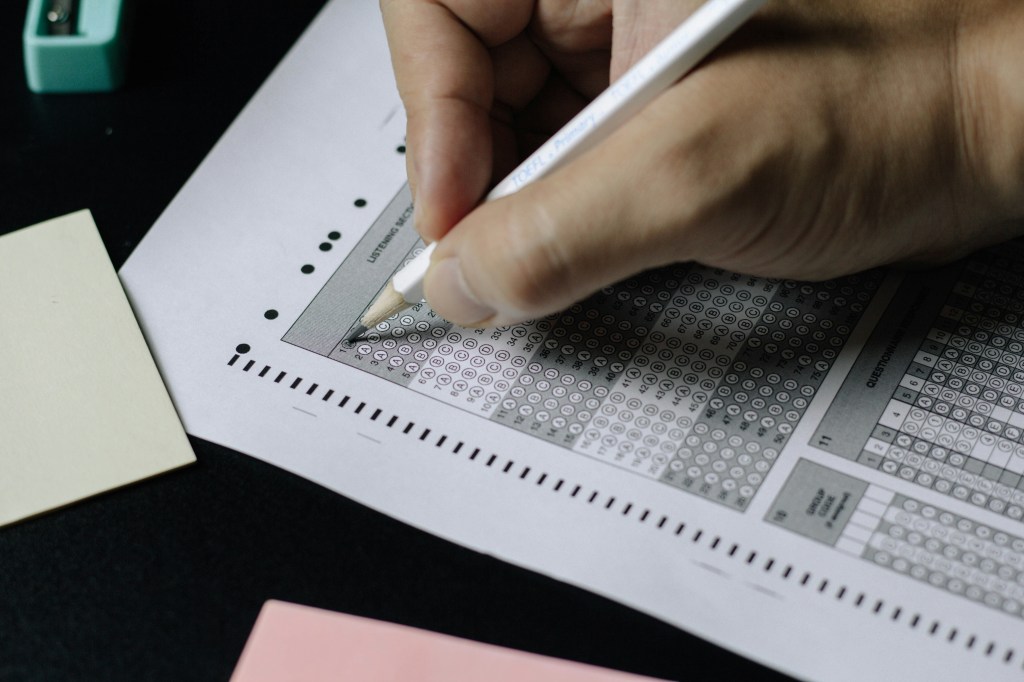
The room is too brightly lit. It’s too early in the morning. There are too many terms swirling through my mind, none staying long enough to make an impression.

The test proctor is reading from her paper, a long, droning speech that I’ve heard before. The only difference is the Chromebook that lies flat on my desk, waiting.

Ever since the Covid-19 pandemic in 2020, online exams have been growing rapidly in prevalence throughout the country. Covid-19’s forceful isolation and online schooling proved that virtual testing is possible. Whether it is a good idea is a very different question.

In February of 2024, the American College Testing (ACT) exam was first offered in a digital format. The SAT followed along, making the switch in March 2024. The next May, most Advanced Placement (AP) exams were administered at least partially digitally for the first time.

For the first hour of the exam, words swim across the harsh light of the screen, multiple choice options blur into endless paragraphs. But for the two hours after that, my hands fly across the keyboard writing essays faster than I ever could by hand. I finish early, but my head aches after three hours of reading from a glowing surface.

These changes were not unexpected, but they also were not always welcome.

My freshman year, I took the AP Human Geography exam the old-fashioned way: with pen and paper. Answering 14 short answer questions, my hand ached beyond belief, and I barely finished in time. Yet, I received an excellent score.

This year, I took the AP English Language and Composition exam in the modern way: with a keyboard and a computer screen. After three essays, my mind hurt, but my hand didn’t.

When I talked to my friends, I found that we each had different opinions on the usefulness of online exams. 

My friend with dyslexia had been able to read even less than usual. My friend with ADHD hadn’t been able to concentrate. Others weren’t able to type, so they were slower in the written portions. Contrarily, some loved the new way of doing things. I heard praise for fewer testing materials, quicker essays and easier work-checking.

This is why online testing is a double-edged sword. There are aspects of exams that work better online, and there are aspects that work better on paper. The problem is, what those aspects are depends on the person.

Flawed and cruel: the true identity of the death penalty

The death penalty is many things, but for starters, it is flawed, expensive and defined by bias. Besides this, there is also the essential question of whether human beings deserve to kill. 

In 1989, Bryan Stevenson, a lawyer and bestselling author of “Just Mercy” created the Equal Justice Initiative (EJI) to provide “legal representation to people who have been illegally convicted, unfairly sentenced, or abused in state jails and prisons.” Part of their mission is to challenge the death penalty and excessive punishment as well. 

“Just Mercy” follows the true story of Walter McMillian and how he was wrongly convicted of murdering a white woman in Alabama and sentenced to capital punishment. With the help of Bryan Stevenson and the EJI, McMillian’s innocence was proved with clear and frank evidence, but the book also follows the stories of other incarcerated individuals.

One of these individuals was Joe Sullivan, who was sentenced to die for a non-homicide crime he committed as a 13-year-old. Sullivan was finally released in 2017, 25 years after he was sentenced. The book also shed light to the issue of botched executions, especially with the use of lethal injections. According to a study conducted in 2024, 73 lethal injection executions were botched, which is just over 5% of those conducted since 1982. There is no doubt that the instances and statistics listed are painted in bias, as majority of the botched executions and unjust sentences are carried out on Black men. 

American society as a whole must look at the problem as it is and draw attention to the truth — the death penalty is unjust, cruel and adds no benefit to the safety of our country. How do we as human beings grant ourselves the right to end another person’s life? How do we allow retributive principles — a life for a life — to govern our justice system? This is not a justice system dedicated to justice. 

At the root of the problem is how little attention is given to this problem. It takes a significant accident to spark empty conversations dealing with the issues of mass incarceration. The leading thought is that these people truly did commit their crimes, so they deserve their punishment. 

The world discusses human rights concerns with civilians around the world, so shouldn’t the same rights apply to these prisoners? Let’s start with the most basic right, the right to life. 

Why American Sign Language is important

Made by: Maggie L
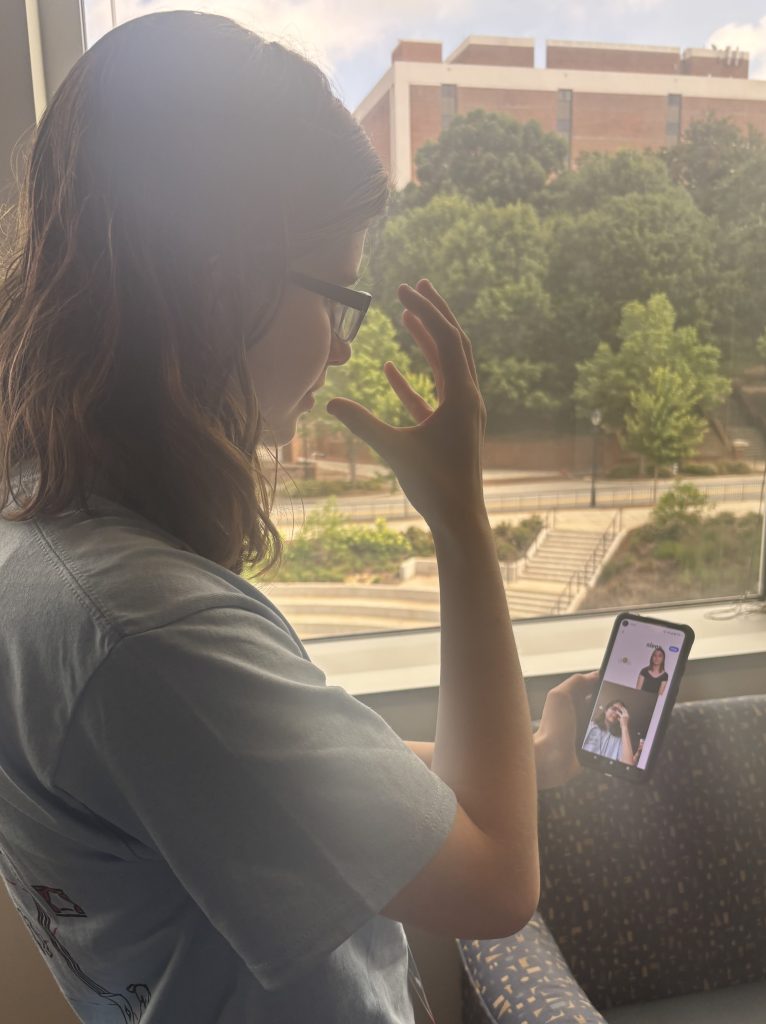
A student learns ASL with an app called PocketSign

Sign language is very important for our world. I have a close deaf friend my age who wears cochlear implants and a deaf adult in my life who mainly signs. This language is also good for when you need to be quiet but still want to talk to others. ASL is a real language with its alphabet, grammar rules and even poetry. 

As the ASL President at Fuquay Varina High School in North Carolina, I know it’s important for people to learn some signs so they can talk to a larger population. Some signs also travel across languages, even though American Sign Language and British Sign Language are different. 

More than 4,000 children are born deaf, according to the Dallas Hearing Foundation. The World Health Organization says that 2.5 billion people will have some degree of hearing loss in 2050. NIDCD says that 15% of adults report they are losing their ability to hear, and one out of three people from the ages 65-74 have hearing loss. 

Some people with neurological disabilities can go selectively mute. Knowing sign for events like these help people feel heard when they are too scared or overstimulated to talk. So with this information, learning sign language is good for the community. 

Sign language is needed for the deaf, mute and families of deaf people. It’s a crucial part of deaf culture that can create beautiful words. Some people don’t believe sign language is a real language because it’s not vocal, nor does it have a writing system. There have been languages before that don’t have a writing system along with the fact that people can understand each other. 

So learn some ASL. Just learning little phrases is a good start. There is a whole new world that you can talk to and the community will love that you want to learn. Search up online or on social media about events near you where you can learn sign language. 

Journalism is “dying” when it is needed most

The world is falling apart and no one knows it.

Journalism is being ignored when it is needed most. To have freedom of the press is to have the freedom of information. Now more than ever, the public needs journalism. A new president means new policies and laws and it can be hard to stay informed. It’s a scary thing to not know what is going on in the world, let alone your own country. Protests, riots, wars, injustices and conflicts. These things are always happening. Every day, all the time, around the world. But not everyone knows. 

For example, many people are unaware of the many conflicts and wars going on in Africa. According to the Geneva Academy, there are more than 35 ongoing armed conflicts in Africa. There are also many who are or were unaware of the fact that the conflicts between Israel and Palestine began long before Oct. 7, 2023. 

One of the main purposes of journalism is to tell the truth and keep people informed. Staying informed is about knowing and understanding both sides of a story. Understanding both sides is extremely important, especially if you decide that you prefer one side because it is important to know what you stand for and what that means to yourself and others. If you don’t know and understand the details of what you are fighting for, how will you be able to properly plan for the outcome.

A good example of this is President Trump’s tariffs. While the purpose of this was to boost the American economy, it ended up raising some prices even more for businesses such as Mattel. According to AP News, “Company executives told analysts on a conference call that China currently accounts for 40% of Mattel’s global production”, and due to the fact that Trump’s imposed 145% tariffs on most of China’s products, Mattel has to raise their sale prices. 

Recently however, media outlets have come to realize that because of the great amount of time people spend on social media, it would be easier to share news with the public via social networks. BBC claims that roughly 54% of people get their news from social media platforms. Because of this, more people are becoming informed, however it could potentially mean the end of hand held paper news. 

With corruption and the need to consistently fact check our own president, journalism is essential to the people. Journalism allows people to be knowledgeable about the things that affect them, and if people don’t know what is going on, no one can move to make a difference. 

If journalism dies now, so will our rights. Stay informed, stay educated, understand both sides, so that we may all make a difference for the better. 

On the Other Hand

By: Finley Aldred

Have you ever been bothered by the right-handed desks at school? Annoyed at all the writing smudged on your hand? Had trouble using certain equipment like scissors, or can openers? Have you ever been drinking out of a mug and not able to see the design on the front while drinking? Gotten weird looks when you tell people what hand you write with? 

These are daily inconveniences that left-handed people such as myself run into while trying to navigate life on the outs.

Only 10% of the world is left-handed which shows that many people do not know what it is like to have challenges doing normal tasks that are much more difficult doing left-handed. But as a “lefty” myself I find myself being inconvenienced at school and items in my household not being accommodated for left-handed usage. 

As a kid, I never thought anything of it because my mom was also left handed. You never pay attention to it mainly because all you use your hands for is picking up toys and food. However, once I got into the public school district I began to see the issue of society catering to right- handed people. 

All throughout my years there has always been the struggles of desks. Most desks at my school have the chair attached to them by an armrest. That armrest just happens to be on the right-handed side. I find this inconvenient because while the rest of the class has no problem comfortably writing I have to be uncomfortable writing, smudging my paper without an arm rest. 

Spiral notebooks are also inconvenient because they are designed for right-handed use. They are often painful because as we write our hands are digging into the metal spiral. In the 20th century the invention of special notebooks for left-handed people were created. However because the consumer population of left-handed people is so low, they are not as commonly available and known to the public.

Another issue is the social aspect of being left-handed. Since it is so rare people are often always surprised and you can be looked at differently because of it. A few of my friends find me unusual or strange for how I manage living left-handed, but trust me it’s not easy or cool. In some cultures it can be seen as having a negative connotation. It can be seen that parents force their kids to write with their right hand because it is seen as more socially acceptable.

Even now I always get surprised when I meet another left-handed person because it is so uncommon. It is nice to be able to have a conversation with someone who is like me and experiences all of the same inconveniences in our day-to-day life. 

Being left-handed has given me plenty of frustrations and inconveniences in my life, but I feel like it has also made up a part of who I am as an individual. It makes me feel unique and it is always a conversation starter.

To all the left-handed people, just know you are not alone in the annoyance of daily life. There is a community of people who share the same experiences as us.

How Do Tests Affect The Mental Health Of Students?

by Madison McKenzie
Academy for Advanced Studies
McDonough, Georgia

With teenagers facing multiple mental health challenges, the plethora of testing required in many schools can be overwhelming for  students. 

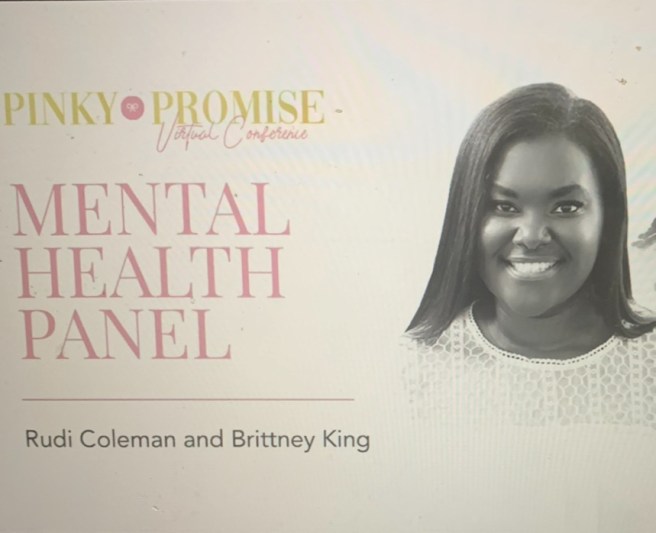
Rudi McKenzie, a licensed clinical social worker who works primarily with women who suffer from depression and anxiety, said testing can cause high anxiety for students, especially for those already suffering from mental health issues.

“From a counseling standpoint, what I see with different clients is how test taking can impact identity, how you see yourself, the pressures that the society, your family, your friends and your close circle can put on you,” McKenzie says. “As far as, ‘If I don’t do well, how will they see me? If I don’t do well, they will see me as a failure.” 

Christopher McKenzie, a former part time lecturer at Kennesaw State University in the Wellstar program, said he saw that anxiety firsthand with some students. “By testing the knowledge that they gain throughout the course of the semester, that anxiety comes up in various forms,” Christopher McKenzie said. “Whether it’s them saying they are not going to show up to class today, or saying that they are going to panic.” 

Christopher McKenzie, a former lecturer at Kennesaw State University, noticed that some of his students struggled with test anxiety.

In his time at Kennesaw, some students would have some sort of anxiety when it comes to testing, or just homework in general. This would be because students are afraid of failure and have the fear of disappointing, McKenzie said. This can lead to panic attacks, shortness of breath, chronic worry, difficulty concentrating, a lack of sleep, and mood changes. Food habits can also be impacted. 

Depression also comes into play. This is because so many things are coming to one’s mind and so many things within an individual  are changing as well. A lot of tests can really make or break somebody. If a person is a bad test taker, that is also more stress and anxiety on a student or even an adult that is trying to go back to school. 

Rudi McKenzie would see some of these students in her practice.

“I think on average, If I had 20 students on my caseload, more than half have been impacted in some form mentally by testing, anxiety, or testing impacts,” she said.

There are healthy approaches to help a student succeed. Student services and counseling services are some ways that students can get the testing accommodations that they really need. Students that make what they are going through known to a trusted adult can most definitely get the help that they need. The other side is there are other students that are maybe afraid to ask for help because they don’t want to seem like they need somebody to depend on. They could also be afraid to speak out about how they feel because they are scared that they will get turned down. 

“Address the thinking,” Christopher McKenzie said. “It is important to address irrational thoughts, and those irrational thoughts can really turn into a gambit of ideas and things like false beliefs. It is important to have a safe space to address any false belief, help create emotional wellness or well being.” 

Rudi Coleman, a licensed counselor, said that people should be aware of how anxiety impacts them.

Rudi McKenzie said that recognizing that there are steps a student can take to improve their own mental health is critical to overcoming anxiety. “We are all responsible,” she said. What I’m thinking, what I’m going through is different than what you are thinking and going through. Even though we share similarities we are also two different people.” 

Despite the differences between people, Rudi McKenzie said confiding in friends and others who share similar feelings can be helpful in overcoming anxiety.“Make sure that you have a community in which you can relate to or share things with, especially communicate with,” she said, adding that it’s important not to focus on comparing your experiences with others. “Comparison can be really dangerous because you can get in your head and think that you are the only one thinking something and that something is wrong with yourself.” 

Acknowledging that your anxieties are natural is critical. “Remind yourself that your thoughts, your feelings, your emotions, are important and very meaningful.”

If you are experiencing mental health concerns, call 988.