Online testing: a double-edged sword

The room is too brightly lit. It’s too early in the morning. There are too many terms swirling through my mind, none staying long enough to make an impression.

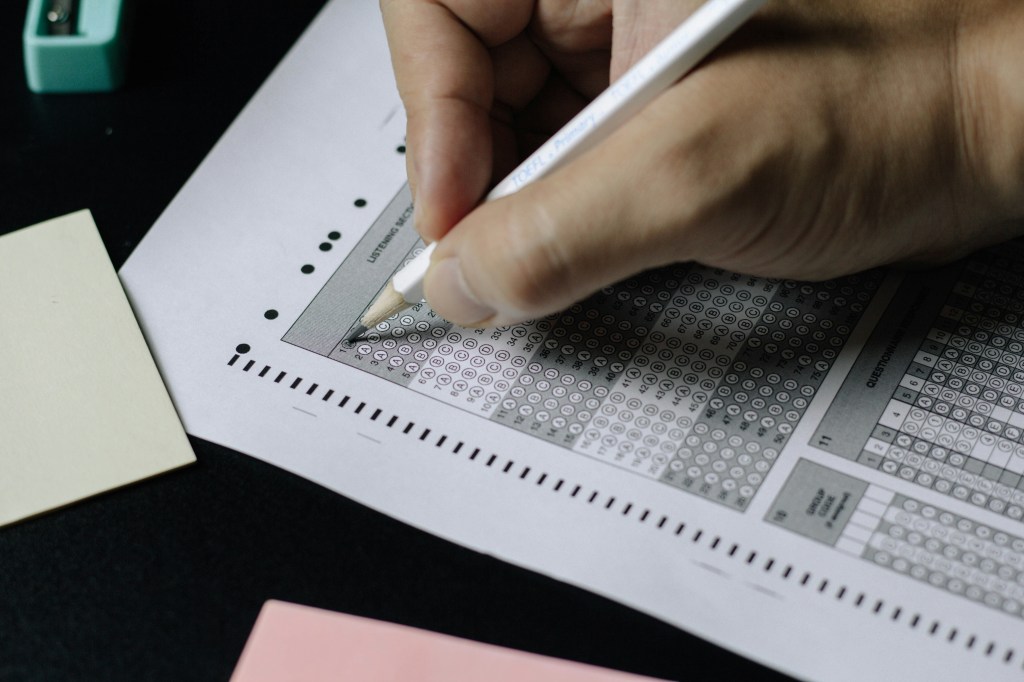
The test proctor is reading from her paper, a long, droning speech that I’ve heard before. The only difference is the Chromebook that lies flat on my desk, waiting.

Ever since the Covid-19 pandemic in 2020, online exams have been growing rapidly in prevalence throughout the country. Covid-19’s forceful isolation and online schooling proved that virtual testing is possible. Whether it is a good idea is a very different question.

In February of 2024, the American College Testing (ACT) exam was first offered in a digital format. The SAT followed along, making the switch in March 2024. The next May, most Advanced Placement (AP) exams were administered at least partially digitally for the first time.

For the first hour of the exam, words swim across the harsh light of the screen, multiple choice options blur into endless paragraphs. But for the two hours after that, my hands fly across the keyboard writing essays faster than I ever could by hand. I finish early, but my head aches after three hours of reading from a glowing surface.

These changes were not unexpected, but they also were not always welcome.

My freshman year, I took the AP Human Geography exam the old-fashioned way: with pen and paper. Answering 14 short answer questions, my hand ached beyond belief, and I barely finished in time. Yet, I received an excellent score.

This year, I took the AP English Language and Composition exam in the modern way: with a keyboard and a computer screen. After three essays, my mind hurt, but my hand didn’t.

When I talked to my friends, I found that we each had different opinions on the usefulness of online exams. 

My friend with dyslexia had been able to read even less than usual. My friend with ADHD hadn’t been able to concentrate. Others weren’t able to type, so they were slower in the written portions. Contrarily, some loved the new way of doing things. I heard praise for fewer testing materials, quicker essays and easier work-checking.

This is why online testing is a double-edged sword. There are aspects of exams that work better online, and there are aspects that work better on paper. The problem is, what those aspects are depends on the person.

Flawed and cruel: the true identity of the death penalty

The death penalty is many things, but for starters, it is flawed, expensive and defined by bias. Besides this, there is also the essential question of whether human beings deserve to kill. 

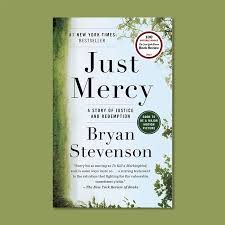
In 1989, Bryan Stevenson, a lawyer and bestselling author of “Just Mercy” created the Equal Justice Initiative (EJI) to provide “legal representation to people who have been illegally convicted, unfairly sentenced, or abused in state jails and prisons.” Part of their mission is to challenge the death penalty and excessive punishment as well. 

“Just Mercy” follows the true story of Walter McMillian and how he was wrongly convicted of murdering a white woman in Alabama and sentenced to capital punishment. With the help of Bryan Stevenson and the EJI, McMillian’s innocence was proved with clear and frank evidence, but the book also follows the stories of other incarcerated individuals.

One of these individuals was Joe Sullivan, who was sentenced to die for a non-homicide crime he committed as a 13-year-old. Sullivan was finally released in 2017, 25 years after he was sentenced. The book also shed light to the issue of botched executions, especially with the use of lethal injections. According to a study conducted in 2024, 73 lethal injection executions were botched, which is just over 5% of those conducted since 1982. There is no doubt that the instances and statistics listed are painted in bias, as majority of the botched executions and unjust sentences are carried out on Black men. 

American society as a whole must look at the problem as it is and draw attention to the truth — the death penalty is unjust, cruel and adds no benefit to the safety of our country. How do we as human beings grant ourselves the right to end another person’s life? How do we allow retributive principles — a life for a life — to govern our justice system? This is not a justice system dedicated to justice. 

At the root of the problem is how little attention is given to this problem. It takes a significant accident to spark empty conversations dealing with the issues of mass incarceration. The leading thought is that these people truly did commit their crimes, so they deserve their punishment. 

The world discusses human rights concerns with civilians around the world, so shouldn’t the same rights apply to these prisoners? Let’s start with the most basic right, the right to life. 

Journalism is “dying” when it is needed most

The world is falling apart and no one knows it.

Journalism is being ignored when it is needed most. To have freedom of the press is to have the freedom of information. Now more than ever, the public needs journalism. A new president means new policies and laws and it can be hard to stay informed. It’s a scary thing to not know what is going on in the world, let alone your own country. Protests, riots, wars, injustices and conflicts. These things are always happening. Every day, all the time, around the world. But not everyone knows. 

For example, many people are unaware of the many conflicts and wars going on in Africa. According to the Geneva Academy, there are more than 35 ongoing armed conflicts in Africa. There are also many who are or were unaware of the fact that the conflicts between Israel and Palestine began long before Oct. 7, 2023. 

One of the main purposes of journalism is to tell the truth and keep people informed. Staying informed is about knowing and understanding both sides of a story. Understanding both sides is extremely important, especially if you decide that you prefer one side because it is important to know what you stand for and what that means to yourself and others. If you don’t know and understand the details of what you are fighting for, how will you be able to properly plan for the outcome.

A good example of this is President Trump’s tariffs. While the purpose of this was to boost the American economy, it ended up raising some prices even more for businesses such as Mattel. According to AP News, “Company executives told analysts on a conference call that China currently accounts for 40% of Mattel’s global production”, and due to the fact that Trump’s imposed 145% tariffs on most of China’s products, Mattel has to raise their sale prices. 

Recently however, media outlets have come to realize that because of the great amount of time people spend on social media, it would be easier to share news with the public via social networks. BBC claims that roughly 54% of people get their news from social media platforms. Because of this, more people are becoming informed, however it could potentially mean the end of hand held paper news. 

With corruption and the need to consistently fact check our own president, journalism is essential to the people. Journalism allows people to be knowledgeable about the things that affect them, and if people don’t know what is going on, no one can move to make a difference. 

If journalism dies now, so will our rights. Stay informed, stay educated, understand both sides, so that we may all make a difference for the better. 

On the Other Hand

By: Finley Aldred

Have you ever been bothered by the right-handed desks at school? Annoyed at all the writing smudged on your hand? Had trouble using certain equipment like scissors, or can openers? Have you ever been drinking out of a mug and not able to see the design on the front while drinking? Gotten weird looks when you tell people what hand you write with? 

These are daily inconveniences that left-handed people such as myself run into while trying to navigate life on the outs.

Only 10% of the world is left-handed which shows that many people do not know what it is like to have challenges doing normal tasks that are much more difficult doing left-handed. But as a “lefty” myself I find myself being inconvenienced at school and items in my household not being accommodated for left-handed usage. 

As a kid, I never thought anything of it because my mom was also left handed. You never pay attention to it mainly because all you use your hands for is picking up toys and food. However, once I got into the public school district I began to see the issue of society catering to right- handed people. 

All throughout my years there has always been the struggles of desks. Most desks at my school have the chair attached to them by an armrest. That armrest just happens to be on the right-handed side. I find this inconvenient because while the rest of the class has no problem comfortably writing I have to be uncomfortable writing, smudging my paper without an arm rest. 

Spiral notebooks are also inconvenient because they are designed for right-handed use. They are often painful because as we write our hands are digging into the metal spiral. In the 20th century the invention of special notebooks for left-handed people were created. However because the consumer population of left-handed people is so low, they are not as commonly available and known to the public.

Another issue is the social aspect of being left-handed. Since it is so rare people are often always surprised and you can be looked at differently because of it. A few of my friends find me unusual or strange for how I manage living left-handed, but trust me it’s not easy or cool. In some cultures it can be seen as having a negative connotation. It can be seen that parents force their kids to write with their right hand because it is seen as more socially acceptable.

Even now I always get surprised when I meet another left-handed person because it is so uncommon. It is nice to be able to have a conversation with someone who is like me and experiences all of the same inconveniences in our day-to-day life. 

Being left-handed has given me plenty of frustrations and inconveniences in my life, but I feel like it has also made up a part of who I am as an individual. It makes me feel unique and it is always a conversation starter.

To all the left-handed people, just know you are not alone in the annoyance of daily life. There is a community of people who share the same experiences as us.

The Handmaid’s Tale: A glance into the future

The Handmaid’s Tale is a fictional piece of writing about a dystopian society where men control women’s choices of fertility. It’s feared that in the developing world, it’s slowly coming true.

A handmaid in the story was declared brain dead after losing too much blood, but she was pregnant at the time. In the fictional society, women were used to produce children and nothing else. So, they kept the handmaid alive as a human incubator until the child was developed enough to be born through a cesarean section and then the handmaid was finally allowed to die.

Meanwhile, this story happened right in my home state of Georgia. Adriana Smith is a 31-year-old woman who had been having headaches, but received medical attention for the issue. The next day, she was unable to breathe and her boyfriend called 911. Emory University Hospital reported that she had blood clots and she was brain-dead. At this time, she was eight weeks pregnant. 

Georgia’s abortion law is that after six weeks or when a fetal heartbeat is heard, an abortion cannot be performed. There are some exceptions, such as sexual abuse or incest. However, a police report must be filed before they have the abortion. They have 20 weeks to perform the abortion, but it is still very early on in pregnancy. Many women don’t realize that they’re six weeks pregnant until their menstrual cycle doesn’t repeat. By the time most women realize, it’s too late to get a legal abortion. Some women, in fear of being persecuted, take abortion into their own hands. One woman attempted an abortion herself by taking a lethal amount of painkillers, and she didn’t get medical help because of her fear of being jailed. In Ohio, they have a similar six week ban; a 10-year-old had gone to get an abortion, but she was denied due to being six weeks and three days pregnant. Many women who seek abortions don’t have the resources to take care of a child or it’s too dangerous for them to continue with the pregnancy.

As a 14-year-old girl, this is terrifying to grow up into. When I listen to the women in my family berate these women who wish to not have children, it’s appalling. Victims of sexual abuse are overshadowed and told that they have more grace with a 20 week period. Not everyone has the resources to file a police report or to find out about the pregnancy early on. It sickens me even further when I hear that it is always the woman’s fault. All we can do is protest and fight for the rights that we deserve instead of allowing state lawmakers to control when and how we can get abortions. 

When a fictional dystopian society slowly starts to become real, it’s bone chilling. I believe that women should have the rights to their own bodies instead of being told what to do.

Opinion Story

I’m not a politician or a policy expert; however, I’m someone who believes that no one in this country should have to suffer or die because they can’t afford to see a doctor. It’s simple: healthcare should be a universal right in the United States.

I’ve watched people I care about delay treatment because they didn’t have insurance. I’ve seen people on the news refuse medication, avoid emergency rooms, and live with chronic pain, all because the cost of care was too high. These are not rare experiences; they are everyday realities for millions of Americans. A 2022 survey found that 22% of Americans have delayed seeking healthcare due to the associated costs.

Other countries, who have fewer resources, have figured this out. Universal healthcare systems across Europe, Canada and beyond don’t bankrupt their citizens for getting sick. They don’t link health coverage to employment. They treat healthcare as a public good, a human right, not a profit machine. Their people are healthier while the citizens of The United States deteriorate. They worry less about whether they can afford to get the help they need.

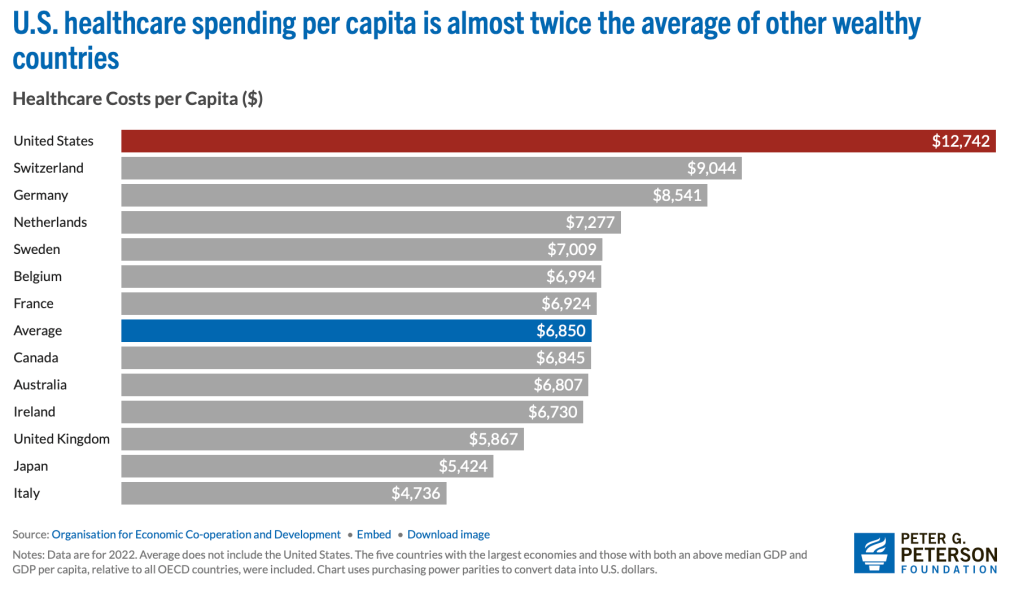
Opponents often say it would cost too much, but we already spend more than any other developed country on healthcare—by far—and get worse outcomes. The real cost is in the state of affairs: people avoiding doctors, diseases going untreated, lives cut short. We pay for this every day with our money and with our humanity.

I understand change isn’t easy, but it’s frustrating to hear that universal healthcare is unrealistic. What’s unrealistic is continuing down this path, where health is treated like a luxury and insurance companies dictate care.

Health is a human right, and whether one gets treatment shouldn’t be determined by how much money they have. More importantly, care should be determined by doctors who are invested in the health of their patients, not insurance companies whose sole purpose is to make money.

Literacy rates falling for elementary children

by Andrew Davis
Campbell High School

Reading is a staple of early elementary education. It’s something that we learn so early on, we do it without thinking. It’s what people have known how to do it for years and maybe even decades. Unfortunately, it is becoming increasingly common for younger generations to be unable to read. Literacy rates among children around the country are falling, and rapidly.

This problem is prevalent in upper elementary school. According to an article from the National Center of Education Statistics, 67% of children in fourth grade read under the standard level. Children entering fourth grade around 9 to 10 years of age being behind the curve might never catch up.

These children contribute to the eventual 8,000 kids a day that drop out of high school. The number of academically at-risk kids will only grow larger if the problem isn’t fixed.

Photo by Jonathan Borba

34% of children entering kindergarten do not have the skills needed to read. Lacking in these skills may turn out poorly for these children in the future.

The inability to read is affecting these children very much. The children that are lacking now will become the adults that are lacking in the future. According to researchers, 21% of American adults have low literacy skills that are close to, if not illiteracy.

These statistics are worryingly low for a generation of people that have access to almost any book they could want. Reading has become increasingly accessible to everyone through apps and websites such as Kindle and Scholastic. as As more people gain access to resources such as these, literacy rates should be increasing.

“The reason for the lack of expert readers in elementary school is because of the expectations of the school board, requiring teachers to push students to the next grade level without meeting the minimum requirements,” said Jemila Davis, an elementary school teacher.

School teachers are being encouraged to move on the students rather than make sure they learn what they need to. This is causing the children to miss out on information they need to know, for the sake that they can finish school “on time.”

If teachers and administration take necessary steps, we can improve our education system in general.

Snapchat is detrimental to relationships. Here’s why.

by Liv Selman
West Laurens High School

There’s no doubt that in 2024, we as a society live in two worlds – the one that’s physical, and the one that exists solely in our phones and computers, the world of social media. 

Among all the different social media apps available, there is none quite like Snapchat. According to a 2024 study, there are currently 107.61 million Snapchat users in the United States.  Snapchat makes it possible to communicate with many people at once with disappearing messages and snaps. Its casual and secretive nature has made it very attractive to teenagers and young adults. However, it is important to consider the effects that Snapchat can have on one’s personal relationships, especially romantic ones.

“Snapchat is a way for people to hide what they are doing with someone else from their friend or a partner,” said Averi Staus, an aspiring journalist.

Snapchat’s “snapscore” feature can create insecurity and awkwardness in relationships.  By checking someone’s snapscore, one can see if they had snapped anyone by paying attention to whether or not the number had increased. This becomes problematic when one partner is waiting for a snap back from the other, and notices that their partner’s snapscore has gone up. This leads the person to wonder, “Who were they snapping if not me?”

“It can make you very obsessive over someone,” Staus said of the snapscore feature.

Snapchat also provides another unique feature known as the “snapmap.” The snapmap allows users to have access to the location of their friends on Snapchat if they have it allowed in their settings.  

17-year-old Kathryn Bryan said this has caused problems. “For relationships, it makes people want to obsessively check locations to make sure cheating or lying is not going on.”

Snapchat ranks the eight people you interact with most as your “best friends list.”  Someone may be concerned by this if they notice that someone else is higher up on their partner’s best friend list than them. Although this does not necessarily mean anything, it could lead someone to believe their partner is cheating or cause mistrust in the relationship.

Snapchat, along with all social media platforms, can be problematic for a person’s mental health. Studies report that 59% of people say that social media has negatively affected their mental health. If someone is struggling with their own mental state, how can they be expected to maintain a healthy relationship? Snapchat hurts relationships, even indirectly, through causing anxiety and depression.

Finally, Snapchat opens the door for cheating. The app gives people the ability to hide messages and who they are talking to easily and without a trace. Although most users of Snapchat are not cheaters, the app enables the people who are to get away with it with ease. It can also cause unwarranted suspicion and tension.

“Snapchat can be really unhealthy for a relationship.” Staus said.     

Cell phones should be banned in school.

by Lucia Rodriguez
Druid Hills High School

I was sitting in my fourth period history class when, for the third time, my history teacher stopped and stared at our class. As I looked around to figure out why he stopped talking, I noticed multiple students looking down at their phones. This situation is happening across the country and not enough is being done to stop phone usage during school.

According to Education Weekly, 97% of students use their phones at some point during the school day. Although this is an alarmingly high percentage of students, it shouldn’t come as a surprise. Our entire society now revolves around a metal talking device.

I have come to realize the tremendous effect that cell phone usage is having on my peers and me. Many of us stay up late talking to friends, watching shows or just aimlessly scrolling through social media which ends up ruining our sleep schedule. The worst part about this endless cycle of cell phone usage is the fact that we’re all aware of how horrible it is for us and our mental health, but we also can’t seem to get off the internet because it’s everywhere. 

“I think especially when you’re just in your bed at night, scrolling on your phone, you’re like ‘one more show’ or ‘one more video’ but you keep constantly scrolling and it’s an endless cycle,” sophomore Emory Miller said.

Lack of sleep has a direct correlation with performance in school and Idaho State University wrote an article titled “How Sleep Impacts Your Studies” that proves this statement. The article goes on to talk about how lack of sleep can lead to a decrease in focus and memory, an increase in irritability and anxiety, and physical exhaustion. All of those factors are critical in the outcome of someone’s day and I can attest that a lack of sleep hinders my learning experience.  

Aside from the physical effects that cell phone usage can have on school performance out of school, there are many factors that affect school performances in school. One of the most concerning is the increase in cheating and how easy it has become to cheat. A study found on Verywell Family says that 35% of teens admit to using their phones to cheat on homework or tests and 65% of the same students stated that they’ve seen their peers using phones to cheat. As a student myself, I can attest to how easy cheating has become in school (not that I would ever cheat). Platforms like Quizlet and Socratic allow you to look up a question and receive the answer almost instantly, but they also help when it comes to studying so it just depends on how you use the resource. Now with the introduction of AI into classrooms, there has been a tremendous increase in fabricated work, and we can only expect this issue to grow with time. 

Along with the cheating, students spend their time in class scrolling on their phones, listening to music, watching TV, or shopping online. This limits student’s ability to focus and retain information during lectures. An article written by the Berkeley High Jacket called “Teenage Attention Spans: Where Did They Go?” talks about how teens’ attention span is task-dependent and how we could spend hours scrolling on the internet but can only focus on homework for less than twenty minutes. I have noticed my attention span shorten as the years pass and I can confidently say it’s because of TikTok. I used to love watching movies but now I’m lucky if I manage to watch an episode of a show without going on my phone because my brain gets bored so fast. Obviously, in a room full of teenagers, people are going to get bored and go on their devices, but if a phone ban was placed the kids would have no choice but to listen. 

At the root of my reason in favor of a phone ban in school is the teachers. Our teachers spend countless hours preparing lesson plans and making sure that our curriculum is adequate and it breaks my heart to see students disregard their hard work by going on their phones.

Are devices stunting childhood development?

Photo by Robert Collins on Unsplash

by Emory Miller
The Burlington School

Summer is the perfect time for playing outside, riding bikes with friends, or even heading to the neighborhood pool. 

Unfortunately, many children are likely to be found indoors in front of some form of electronics.

Today, technology use has increased significantly as it has moved from adults to teens, and from teens to elementary students. Not only are elementary students being put in front of screens at school to learn, but many are also immediately put in front of a screen when they get home as a form of entertainment. 

Children may initially be given electronics for purposeful reasons like learning new information, increasing vocabulary, and developing math skills. However, electronic usage can often become a strategy for parents excessively, resulting in negatively impacting the overall development of children.   

There are many technological advancements that children are increasingly given access to from a young age. 

Researchers stated in a study, that “96% of Americans have a TV and 94% of children ages 3 to 18 have internet access through a computer or smartphone.”

This has led to a negative impact on school performance, social skills, and overall physical fitness of youth across the United States. 

“If young children spend most of their time engaging with an iPad, smartphone, or television, all of which are highly entertaining,” Dr. Jennifer F. Cross, a child behavioral specialist, said in the Journal of the American Medical Association of Pediatrics. “It can be hard to get them engaged in non-electronic activities, such as playing with toys to foster imagination and creativity, exploring outdoors, and playing with other children to develop appropriate social skills.” 

Kristi Tanner, Dean of Students at The Burlington School in Burlington, North Carolina recognizes both the personal and professional impact she has seen as a result of increased screen time. Tanner’s children, like many others, turn into zombies when watching an electronic because they are consistently staring at a screen. 

Tanner has seen that screen time is being shown to affect her children’s creativity. Tanner said, “My own kids love to play pretend and make up new situations, school, restaurant, coffee shop, etcetera, but when they watch a show all of their imagination freezes.”

Many children who are addicted to screens are limiting their social skills and are then limited from having impactful conversations. This hinders children’s abilities to connect with others, unlike children in the past.  

Heather Gibson, a teacher at Providence Christian Montessori, a school in Burlington, North Carolina, said, “I find that the children that have less time on a screen have a higher conversation level. They are able to sit and talk with their families, reason through, and have real conversations.”

When children participate in different kinds of play, for example, sports, walking the dog, or running around the playground, they learn so much more than watching something on an iPad, computer, TV, and other electronics. Harvard graduate Leah Shafner stated in Summertime, Playtime, “In play, children learn to navigate their physical and social environment, while also imagining and constructing new realities. They practice solving problems, testing out how to love, what is wise, and what is safe.” 

The impact of overuse of electronics additionally impacts children’s performance in school. Tanner suggests that as an educator she has observed how resourcefulness and resilience across the board has decreased, and that she believes this is correlated with increased screen time for children. 

“Students want immediate feedback and need lots of reassurance, significantly more than 15 years ago,” Tanner said. 

The need for immediate reassurance leads to children finding it difficult to fend for themselves, Tanner said. Children rely on other people to create their own ideas without having to use their own imagination.

Additionally, Gibson, discusses how when families of children took away leisurely electronics for one month parents and teachers saw a vast difference. 

“Those children were more in tune in class, more thoughtful, and better at problem-solving.”

According to Charles Nechtem Associates, teachers now are starting to plan shorter lessons for their classes. This is because by watching screens or being on electronics, they are prone to become easily distracted, which then results in not being able to stay focused for a long period of time.

Excessive screen time almost immediately affects the child’s ability to watch and understand the everyday involvement which they need to understand the world better even from a young age. But sometimes being addicted to an electronic can change a child’s sense of reality, decreasing their understanding of the world even from a young age. 

Richard Frampton, an elementary school physical education teacher in North Carolina, believes being on an electronic computer can change a child’s sense of reality. 

“Unless a parent sits down and talks to the kid about the games or videos they watch we have a false sense of reality,” Frampton said. “If they are playing a game where they kill people if it is not explained in the world that there is no reset button, there is no new game.” 

Frampton has seen that being on an electronic for extended lengths of time greatly decreases children’s physical activity.

“That’s one of the really negative things about electronics is that kids get addicted so quickly. One more show turns into another, then another, then another one. You finally reach the point of being addicted,” Frampton said. “Because they get so addicted they never step outside or never move their bodies which is honestly harmful to their overall health.” 

In order to counteract the negative effects of the overuse of technology, Providence Christian Montessori decided to make their students spend over 1,000 hours outside during the school year.

“There is so much to gain from being outside. Our bodies need the vitamin D to help process the calcium and magnesium which helps kids grow,” Gibson said. “Being outside helps children with a better sleep schedule, lets the children get their energy out, and just overall have a fun time enjoying nature.”

By having extra time outside children learn from mistakes but also have guidance as needed. Not only does playing outside help problem-solving skills, but it also helps with development and communication with other children since “playing means noticing social cues, listening, and taking another’s perspective,” Shafner stated in a study. 

While some will say there is a need for screens and others will argue that screens will never be good for child development, there must be a balance between screen time and playtime. Children deserve to physically experience the world and need to be encouraged to ditch the iPad and play outside.