Social media. Is it bad for you?

Social media impacts people in more ways than known. Apps like Snapchat, Tik Tok, Instagram and Facebook are main sources of social media that are used that have many positive and negative effects on the human brain. 
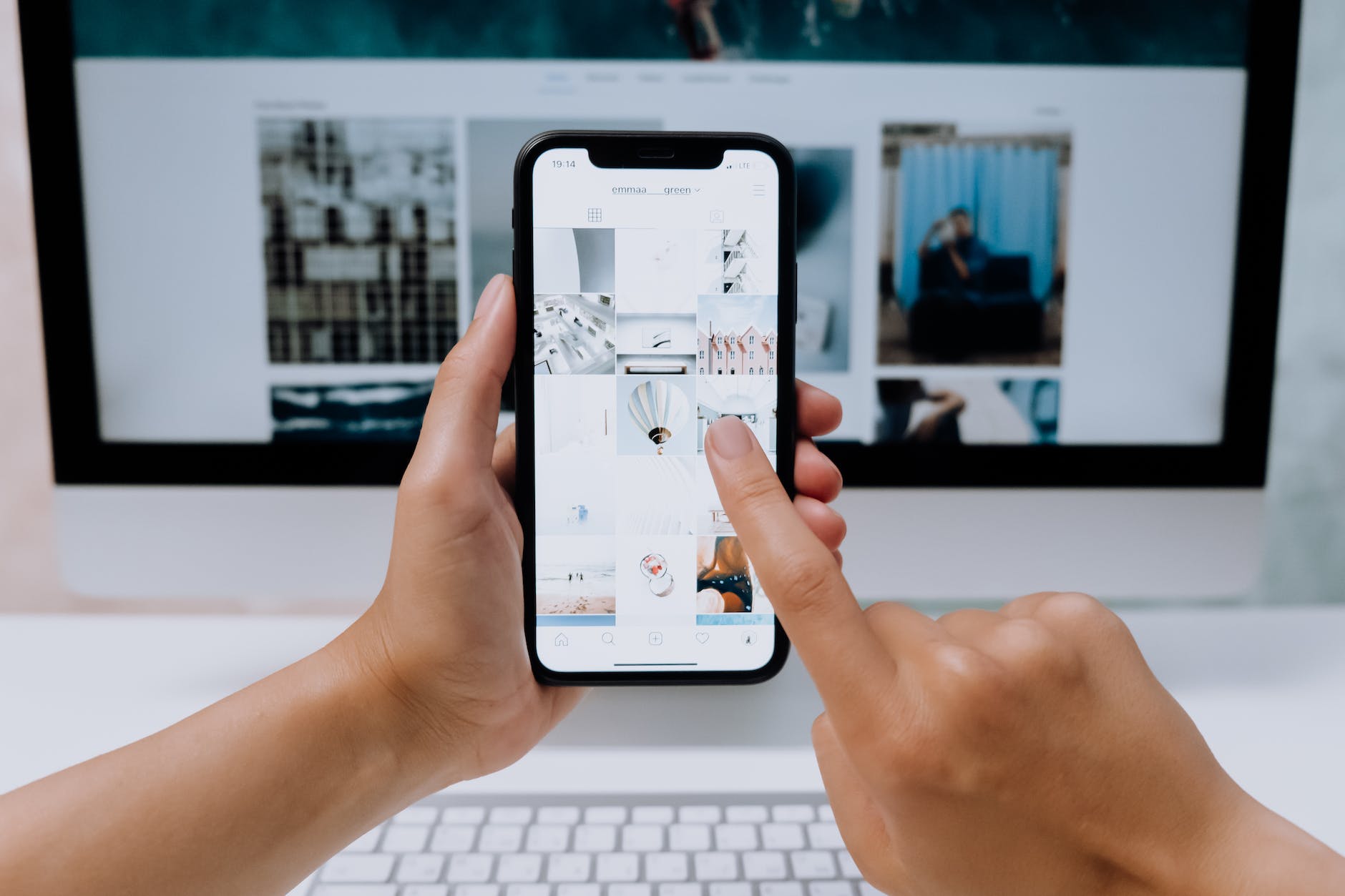
Photo by cottonbro studio on Pexels.com

“Dopamine is the feel good chemical, so when we have exercise or eat chocolate or have really positive social interactions, our brain releases that dopamine which leaves us craving more,” said Dr. Melissa Tingle, a professor of mass communication at Piedmont University and an expert on social media. “When we do not have that dopamine and the reward center is being activated, we oftentimes experience things like anxiety and depression.”

Tingle was able to relate these positive interactions to social media to show how addictive it can be. Social media produces content that people like and find entertaining which makes them more addicted to it. 

“Whenever I check my friends’ locations and I see them posting pictures of themselves on Instagram or Snapchat without me, I always feel left out, and it could further lead to signals of depression,” said Mandie Michaels, a high school student from Milton, Georgia.

In similar ways, it also affects people’s body images in both positive and negative ways. Most of the time people think about the negative ways, like getting jealous or insecure of what people post on apps like Instagram. There is also a positive side though, in some ways it can be motivation to start a journey.

“Individuals who want to start their narrative or their journey trying to become this idealized image that they see on social media can have some helpful and some harmful effects,” Tingle said.

Everytime people unlock their phones, most go straight to social media. People see people with these “ideal” beauty standards. If a girl doesn’t fit into a certain size she’s too fat, but if she does there is something else wrong with her body. It’s a constant never-ending cycle. Social media can cause girls to develop negative thoughts about themselves.

According to a survey conducted at the 2023 Summer Media Academy at the University of Georgia, 75% of the high school students in attendance said that they use social media three or more hours a day. Respondents felt that social media has more negative aspects that it does positive. 

“It serves as a way to kind of shut down, but not in a good way — mindless doom scrolling and such,” one survey respondent wrote. “Social media can also end up making me feel pretty distressed because it’s so much unfiltered content and news that I see in like one or two scrolls.” 

“I try not to spend too much of my time on social media and try to limit my use because in the end I realize that it makes me feel bad about myself and avoiding social media can take that feeling away,” said Elsa Block from Larkspur, California.

Is society’s obsession with true crime healthy?

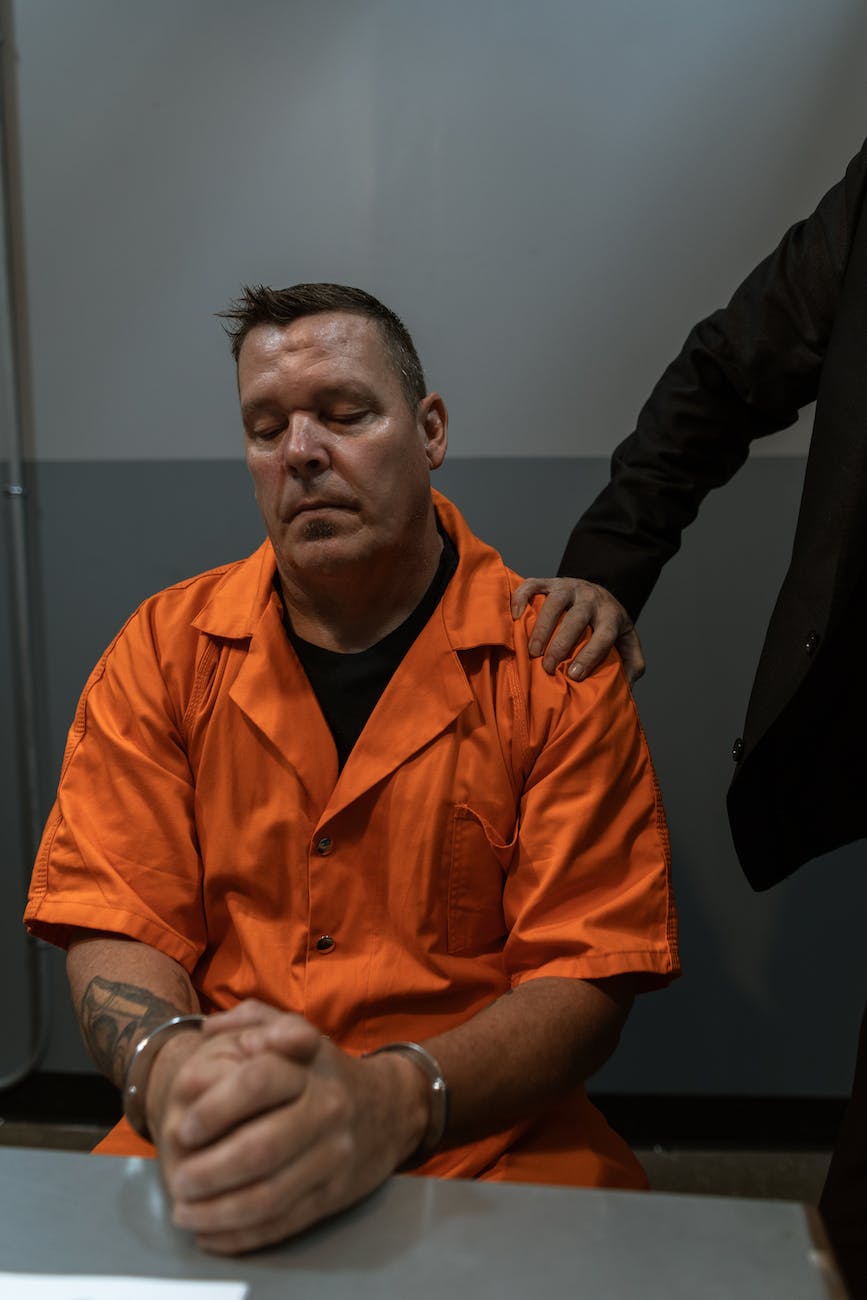
In the last decade, true crime has reached a peak in popularity and people are loving it. Books like “The Girl in the Leaves” and “If you Tell” top best-seller lists. Shows like “Monster: The Jeffrey Dahmer Story” and “Love and Death” populate streaming services. And podcasts like “Morbid” and “My Favorite Murder” top most-listened to charts. But is this recent obsession becoming dangerous for society?

Photo by RDNE Stock project on Pexels.com

But is society’s fascination with true crime healthy? The belief that a sliver into a serial killer’s psyche can mean life or death is where the appeal lies. Not only that, but humans are also just curious as to what makes people do what they do. There is nothing wrong with being interested in true crime, however if it is beginning to become all you think about, and a factor in your decision making, that is when it becomes a more serious issue. 

Excessive consumption of what may seem like a casual interest or hobby can lead to mental health instability. Listening to people getting kidnapped or killed in what seemed like a safe situation can cause excessive anxiety about the “What ifs?”. Dr. Steve Jacobs, associate professor of sociology at Piedmont University says that too much true crime can lead to overthinking.  

“When people are watching a lot of that kind of content, they might have an inflated sense of what can happen,” he says. 

The overconsumption of true crime can lead to the idea that real crime is worse than it actually is. Crime has been so publicized in the last few years despite the fact that violent crime has actually decreased dramatically in the United States over the past 20 years. The media sometimes gives people a false sense of reality by reporting on a lot of the crime that does happen. “These stories, when they do happen, are awful, but they’re really unlikely to happen to any given person,” Jacobs says. 

The solution for the general public is to limit how much true crime they’re watching in their everyday life and to separate it from reality. But what about the people who knew the victims of the true crime personally? 

As more and more true crime productions are being made, we have to think about the people who experienced these crimes first hand. Monster: The Jeffrey Dahmer Story has been the most controversial true crime productions made in the past few years. Family members of some of the victims voiced their disapproval with the show as it forced them to relieve such a traumatic experience.

“I think there’s an interesting ethical question there,” says Jacobs, “What does it mean when you’re producing something but there are people who have a relationship to it. What do you do there?”

HS bell schedule does not reach the needs of a teenager

Trying to balance school, sports, work and anything else in a day is not an easy task. I find myself fighting with this every day of the school year. 

Photo by Andrea Piacquadio on Pexels.com

On top of this, the lack of sleep I get every night does not help this problem at all. According to the CDC, “teenagers aged 13-18 years should sleep 8-10 hours per 24 hours.” As a 16-year-old, I can confirm that I do not get 8-10 hours of sleep each night.

Let’s start off with sports. This past school year for example, I swam for my high school. Every morning before school we would have practice from 5:15 to 6:15, requiring me to get up at 4:45 a.m. If you do the math, to get the minimum amount of sleep that I should get, I would have to go to bed at 8:15 p.m. But how is this possible with school work and softball practice the night before?

On a regular day, with no swim practice, I wake up around 6:30 a.m. to start getting ready for school, which officially starts at 8:20 a.m. This bell schedule does not allow a tennager to be able to have a healthy sleep schedule. 

Every night, I think to myself, “how am I supposed to get to sleep before midnight with all of this school work I have along with softball practice?”

There are numerous times I cry during the school year because I am stressed out about school work and on top of that, upset because I am so physically and mentally drained. I do not get enough sleep to be able to do everything I do each day. 

Even If I got to sleep by midnight, that’s six hours of sleep, which according to the CDC,  is just not enough.

A study from Health Line states, “Research has found that 73 percent of high school students regularly do not get a healthy amount of sleep.” 

If they keep the bell schedule as is, the teachers need to rethink the workload. I strongly believe that most teachers think we have no life outside their class and forget we have five other classes to worry about as well. It’s as if they think we have all the time in the world to work on things for their one class. That’s in addition to the sports many students play and the jobs many students work. 

When I lived in Florida, high school and middle school started around 8 a.m. and elementary school started around 9 a.m.. How is this fair? The children who have no homework, no jobs, and usually no sports get to sleep, which they don’t even do in the first place. 

Thomas Dekker famously said, “Sleep is the golden chain that ties health and our bodies together.”

Sleep is so important to our developing minds and bodies, and school starting early does not allow for adequate sleep. To be able to have good mental health and be involved in much more than just school, us teens deserve sleep.

Our sense of community is lost. It’s time we find it again.

As kids we’re told to tell an adult if we see something bad happening. You see someone stealing? You see someone hurt? Tell. The older we get, the more we are expected to follow the honor code of ‘telling’, but the older we get, we also learn about the ramifications. The person you saw stealing out of a walmart? A woman with a baby at home, that’s been crying for hours non stop because they’re out of baby formula. The person you saw hurt? A man who’s homeless and can’t afford to be in a hospital due to not having healthcare. The older we get, the more often we see the consequences of being ‘honorable’ and while the idea of being a law abiding citizen is good, the society we live in isn’t and therefore the consequences aren’t either. 

Photo by Monstera on Pexels.com

So then we start to practice another code of ignorance. Minding your business, see but don’t tell, ignorance is bliss, etc. This in turn has left us without community. So while traveling through the fear of being the cause for someones fall to the fear of becoming apart of the laws that are slowly tearing apart our society, we come to a path that makes us lose our sense of community. Without community, we are slowly being drivin to division. Nobody depending on everyone and as long as you do nothing to or for me, i’ll do nothing to or for you. And according to the problem at hand, this should be a good solution. Right?

No. 

The true meaning of community is about protection. Whether your community lies in ethnicity, where you live, the subculture you participate in, or your family, you rely and trust for them to protect you. Throughout political and societal unrest for over 100 years, a communities purpose has upheld the value of protection. 

In the 1970s, many subcultures had to uphold the idea of community due to societal restrictions. One of the more iconic examples of this, is the punk subculture. A lot of this cultures ideaology was about breaking rules and the previously mentioned societal restrictions. From the fashion, the music, and the artwork, the purpose of being “punk” was specifically to offend public figures of authority (mostly the government) and the general public. The most memorable thing about punks was that due to so many of the UK’s youth participating in such offensive, and at times illegal acts, it was very difficult to stop or put all offenders into jail. This solidified it as a community, as most punks followed the idea of “see but dont tell” and “what happens here, stays here”. 

Black communities used to share the same belief as well. From the slave days till around the 80s, black unity was extremely essential and even though it still is now, it’s very rare to find. Black women tend to have hard times finding unity within black men who tend to be more concerned with belittling black women and at times aligning their beliefs with racist idealogies. The most recent and popular example of this is the case of Megan Thee Stallion and Tory Lanez. Megan Pete was shot on July 12, 2020 by Tory Lanez during an altercation after Kylie Jenners’ party. During the 3 year period that it has taken for the trial to begin and end, many people turned on Megan in support for Tory, although there was overwhelming proof that he did in fact fire a gun on her. To truly put it into view as to how grotesque it was, let me paint it for you. A black woman, whos entire life is publicized, didn’t want people to know that she was dating another famous singer whos entire life is also publicized and in turn was shot. So, in turn she was taken through a three year process of doubt, guilt, and disbelief by the same community that was meant to protect her.

All because they wanted to defend a man who couldn’t take no for an answer. 

Our lack of community isn’t just dividing us as people, but it’s messing with our sense of morality. While we may turn to other people outside our subcultures and ehtniticites, there are experiences that can only be shared and kept sacred by one another. While it may seem like it, this isn’t a call for a hive mind but rather a call for safety. There is so much unrest, whether politically or socially, in our current time and while a ‘community’ may not stop it, it would help to have people, who share your experiences and life stories, to turn to. 

Twirling is a sport .

“Baton twirling is a sport involving the manipulation of a metal rod with the hands and body to co-coordinated routine.” as so says the google definition but in my eyes it’s WAY more than that. Baton twirling is a skill that combines dancing and gymnastics into one with a little twist. The actual baton itself gives the routine more flavor but it’s about who’s holding the baton to show what all it can do.

Learning how to twirl isn’t easy and takes lots of training just like any other sport. It takes time, work, practice, and determination to actually want to learn the sport. Baton twirling is mentally challenging just as it is physically challenging, you’re adjusting to moving your body a certain way adapting to stretching and working out to be able to even participate in the sport. It’s already hard even forcing yourself to throw or baton or try a new trick under it, especially when you know what can happen when you miss. The risk can even get more challenging once you decide to throw in another baton or two.

I experienced some of these dangers firsthand. When I first started baton twirling, I tried to perform a very hard trick in our routine — even though I probably wasn’t ready to do it —  and I twisted my knee. I also have several scratches, bruises and blisters from my years of baton twirling. It’s not an easy sport.

Just like any other sport national baton twirlers do get paid. Once you’ve mastered the skill and get into the big league there are two organization’s that allow all around majorettes to get paid for their talents. Two of the largest U.S associations today are the United States Twirling Association (USTA) and the National Baton Twirling Association (NBTA). They both hold national competitions every year and officiate competitions at local state and regional levels. The salaries of Baton Twirlers in the U.S range from $16,640 to $74,880, with a median salary of $35,360.

Beyond the friendships you’ll forge with other twirlers and members of the band, you may get to travel to other parts of the country, performing for thousands of spectators in support of your school or organization. Some schools also provide financial support and scholarships for collegiate twirlers.

Twirling is a small world round sport that many people don’t know about. Still, a solid group of people, mostly in small U.S towns kept baton twirling alive. Now twirling is experiencing somewhat of a renaissance, appealing to aspiring athletes with its melding of gymnastics and dance. Baton twirlers now compete in national and world competitions instead of marching in parades.

The college admissions lottery

Ajani Salvary was going through the college admissions process last year. He applied to many universities, many out of state, hoping to be admitted to as many as possible. With his future in the balance, Salvary believes whether he got accepted to a school or not revolved around one variable: luck.

“The college admissions process revolves mostly around luck, one must think of it as playing the lottery,” said Salvary. “There are things that can increase your chances such as high GPA and good essays but no matter what you’re not guaranteed to go anywhere.”

The admission process is a four-year long development. It’s based on your high school career and has many factors, from test scores to GPA to extracurricular involvement.

David Graves, interim director of admissions at The University of Georgia, said students should begin thinking about college as soon as they enter high school. Going from being a tiny middle schooler to a big high schooler who has to start worrying about their future is a big development, especially for someone who’s 14-15 years old. 

“The transition from middle to high school is a key time for students as they reach new levels of both academic and personal discovery,” wrote Graves on the UGA Admissions blog. 

Another huge factor is your outside activities from school, whether you do a sport, debate, National Honors Society. However, this can be a lot for a teeanger balancing course load, extracurriculars and their social life. “Colleges want to look at your extracurriculars so they can know you can handle something full time and turn in your work on time,” says Zoi Bascon, a rising senior at Redan High School in Georgia.

SAT/ACT preparation is one of the stressful things a high schooler can study for and it starts as early as middle school. Over time these tests have lost relevance for some universities, and while they’re still important, lots of colleges are integrating to test optional.  According to the Fair tests website, there are 1,843 colleges that are now test optional. 

“While it is admirable for students to receive stellar scores on these exams, we are going to understand that four years of hard work in a classroom tells us more than four hours spent taking a given exam on a Saturday,” says Joshua A. Williams, the admissions officer for access and inclusion at the University of Georgia.

Juggling having a social life and preparing for college during high school is going to be difficult, no matter what changes throughout the years. Graves said that not all college applications are equal, and it’s important for students to take that into consideration.“When dealing with college admissions, my key suggestion is to look at what the admissions office says they value in their review, and focus on that information in your understanding of decisions,” he wrote. “In addition, look at the overall picture of the admissions situation for the individual college and that specific year, as the applicant pool changes every year.”

Is there a link between the mental health epidemic and the COVID-19 epidemic?

Nine out of 10 adults said ​they believed that there is a mental health crisis in the US today.

By Sarah LaFon Buck

June 22, 2023

Credit- Iso-Form LLC

An artistic rendition of a COVID-19 virus particle

____________________________________________________________________________

One of the biggest global crises in this generation was COVID-19. It had severe and long-lasting effects on the economy, society, and many people’s lives. Many people lost their jobs and required financial help, and many businesses went bankrupt. 

As of June 21, 2023, more than 6.9 million people have died from COVID. The pandemic has led to a mental health epidemic. According to Mental Health America, in 2019-20, 20.78% of adults were experiencing mental illness, equivalent to 50 million people in America. 

“The Covid-19 pandemic exacerbated numerous social stressors that we know can increase the risk of both substance use and mental illness,” said Dr. Nora Volkow, director of the National Institute on Drug Abuse.

One cause of this was unemployment. During COVID, many people lost their jobs. When business closures and restrictions happened, unemployment peaked at 23 million in April 2020. Additionally, many people lost loved ones and were experiencing grief alone. During Covid, many adults reported they felt symptoms of anxiety and depression, peaking at 39.35% of adults in Feb. 2021, according to the Kaiser Family Foundation (KFF). 

“As someone who likes to be sociable, it was a challenging time for me,” said Joe Dennis, a professor at Piedmont University. “From being around students all day to being stuck in my home staring at a screen — I definitely struggled with my mental health.

Dennis was not alone. Many people felt isolated and lonely in quarantine because they could not see their friends and family for a long time. Azi Daw, a rising high school student from Virginia, said the pandemic was especially difficult for her since it exacerbated previous health conditions already impacting her family.

“The quarantine, the isolation — I could not really handle it anymore,” she said, adding that she’s thankful she had strong support systems in place with her family to help her get through her struggles. “Going to sleep at night was really hard for me. I just couldn’t slow my brain down. My mind was always racing.” 

Although the KFF showed mental health struggles dropped to 31.5% in Feb. 2022, it has most recently gone up to 32.3% in Feb. 2023. As more people are struggling, getting help has become much harder. Many people could not afford it or were scared to seek help. 

“I myself did not go to the clinic for therapy for an entire year partly because of this fear,” said Esenam Abra Drah in an article published by the World Health Organization in June 2022. 

Drah is from Ghanda and suffers from bipolar disorder, and says that Covid affected her and many of her friends. “I have many friends who had relapses in their mental health because of the increased fear and panic. It was almost as if fear was contagious.” 

Health care workers especially experienced an increase in mental health concerns. There was a lot of fear around the hospital because of how many people had Covid. With increasing workloads and exposure to infected patients, many health care workers became much more stressed during the pandemic. 

A Sept. 2020 survey conducted by MHA found that 93% of healthcare workers were experiencing stress. 76% were worried about exposing their children to COVID-19, and 48.61% were stressed from the increased workload from Covid. 

As society still suffers from the remnants of the pandemic, it’s important to prioritize one’s mental health. “The impact of COVID-19 on mental health cannot be underestimated,” Esenam said. “It cannot be made light of.”

Spanish Dialects and Indigenous Languages in Colombia

By Azi Dau

No one thinks of Spanish beyond learning it in school. Little do they know the language runs deeper than ¿Cómo estás? and ¿Dónde está el baño?

“The language affects the culture,” said Colombian-born Abe Dau. “It’s like the chicken and the egg.”

Colombia is known as the country with the most understandable Spanish in the world. But there are over 70 dialects and indigenous languages. Dialects are regional variations of a language that change common pronunciation, vocabulary, and tone of voice. Two of the most prominent dialects are coastal (costeño) and inland. 

Dialects develop because of geographic location and time. A language can also be influenced by other languages, creating a dialect. Howstuffworks uses a made-up scenario to explain the concept. It says to picture two groups of people who originally spoke the same language, causing a “geographical and social divide, [causing] distinct dialects, or accents, over time.”

Dau was born in Cartagena, a city on the coast. “Life is easier and happier near the beach,” as he recounts his childhood, “making costeño speaking more relaxed and joyful, including jokes and lively vocabulary.” 

“I grew up only knowing combined words that I actually thought were the real thing,” said Jim Dau, son of Abe Dau. “I was an adult before I learned that ‘qué vina’ wasn’t one word.” 

Costeño Spanish is known to speak fast and cut their words together. He was born in Cartagena as well, but only lived there until he was around 3-years-old. He returned to visit family some summers though, re-immersing himself into Colombian culture. 

The other popular dialect is away from the shore. “People inland are known for the most accent-free, cleanest, and most accessible Spanish in the world,” said Jim Dau. 

Because of this, lots of Latinx news anchors, actors and public figures are from Colombia. 

There are around 65 known indigenous languages. One of the families of indigenous languages is Creole, which mixes other indigenous languages with languages from enslaved Africans. Another is named Cariban, which is where the name Caribbean is from. It’s from the areas near the Caribbean Sea.

Many families of these languages aren’t just unique to Colombia, though. Languages from the Tupi-Guaraní family can go all the way to more southern countries like Argentina, while Quechan languages can stretch all of the western coast of South America. 

Modern life depends on communication. 

“Without languages, the world wouldn’t work,” Abraham Dau said.

(My grandfather and father 40+ years ago in Colombia. My father is the younger boy.)

Behind the Judgment: Exploring the Reasons We Judge Others


Human instincts are hard-wired in all of us, whether it is to feel fear, hunger or happiness. We pick up on everything, from what someone is wearing to what someone is doing with their time. When we are observing others, it is common to judge them, whether it is good judgment or bad judgment. Everybody judges someone at some point. But why? And how does this affect human connection?

According to Dr. Janet Frick, an associate professor of behavioral and brain sciences at the University of Georgia, we are always subconsciously perceiving others. It is human nature to pay close attention to the actions and behaviors of others and to perceive how one is acting. 

 “We are all very prone to stereotypes,” Frick said. “These stereotypes can absolutely lead to passing judgment before getting to know them. We all do this — the best thing to do is to be aware of what we are doing.”

The stereotypes are formed and evolve throughout our lives, and essentially result in us judging others, even if it’s subconscious. “The ability to make judgments is rooted in our need to evaluate [a situation],” Frick said. “Judging is an instinct we have just as social animals.”

Mandie Michaels, a high school student from Milton, Georgia, said that she can’t help but judge people sometimes. “Judging is a human instinct, I think everyone does it once in a while. It’s just the way the mind works,” she said.. 

According to Frick, Michaels is right. While we often associate judging others with negative intentions, there are also ways where judgments can have a positive connotation. 

“Judgment isn’t always bad,” Frick said. “If my neighbor gets up and goes for a run every morning, I may make a judgment that that person is very health-conscious and disciplined, which shows that judgment can absolutely have a positive impact.”

Maika Walker, a high school student from Atlanta, said she notices that some people act in a way in which they want attention, and that’s typically when she finds herself judging them. “Judgment isn’t really making me feel better about myself or making them feel worse, I usually judge when someone is doing something that grabs my attention, it’s almost like they want us to judge,” she said. “Sometimes people set themselves up to be judged.”

Additionally, judgment can impact how people build relationships with others. It is common for people to judge others before they really meet, just with one glance in passing by. Judging someone before really getting to know them can be questionable, as it is hard to tell who someone is as a person before speaking to them. However, doing this isn’t really bad or good, it’s an instinct we have to seek out people similar to us, as that makes us feel safe. If we sense someone is different, we can immediately think to judge who they are.

“We have a tendency to seek out people who are similar to us, that helps to reassert our own choices,” Frick said. “It is an inherent bias to seek out people we see ourselves in.” 

Judging others is a natural human behavior that we all experience to some degree. While it can be harmful and unfair in certain situations, it also is a way for us to form opinions and figure out a sense of what is going on around us. By acknowledging that judgment is a part of human nature, we can work towards finding a healthy balance between being critical of others and being more understanding.

Community College should be free

I grew up comfortable, but not everyone did. 

I know I likely will be able to go to college, but not everyone will.

But everybody should.    

Whether or not community college should be free is a controversial topic. However, it really shouldn’t be. Although some argue that free community college would hurt the economy, it’s actually the opposite. It would help it.

In 1947, the GI bill stated that anyone who served in the military would get to go to college for free. These people, unaffected by the stress of student debt, did good in the world. They donated to charities and volunteered when they could. Now, these people have done great things for society, such as being scientists, doctors, dentists or other jobs essential to society. Ultimately, giving people free college formed the backbone of the economy.

Statistics show that those who didn’t attend college have lower employment rates than those who did. These people are rigged against financial stability from the start. They are unable to afford college, so their chances to live even a comfortable life is less than average.

A common argument is that if a person wants to go to college then they should get a scholarship, but that argument forgets two important pieces of information: scholarships are limited and the wealthy, just as intelligent as the poor, don’t deserve school any more. If a person born into money with supportive parents is as smart, or even less so, they get a free ride from their parents, So, why are the poor told they should just get a scholarship, when that is such an unachievable objective for many average students who would flourish as a rich kid?

In the United States, student debt is nearly $1.75 trillion, while 45 million people begin their working lives in debt. Saddled by what could be a lifetime of stress, people are less likely to contribute to the community in a charitable way, and have less money to spend in the economy. 

Imagine if community college were free. Just the students who attended community college would not be in debt and they would be financially free to contribute to the economy in many ways, whether that’s through donating to charities, starting a business or simply spending more. 

The expenses of higher education is a flaw in the United States, and offering free community college would be one way to help offset this problem. 

My father couldn’t afford to go to college, but he got lucky and was able to land a job that led to him giving my family a comfortable life. 

But not everyone got so lucky.

And it shouldn’t come down to luck.