How Do Tests Affect The Mental Health Of Students?

by Madison McKenzie
Academy for Advanced Studies
McDonough, Georgia

With teenagers facing multiple mental health challenges, the plethora of testing required in many schools can be overwhelming for  students. 

Rudi McKenzie, a licensed clinical social worker who works primarily with women who suffer from depression and anxiety, said testing can cause high anxiety for students, especially for those already suffering from mental health issues.

“From a counseling standpoint, what I see with different clients is how test taking can impact identity, how you see yourself, the pressures that the society, your family, your friends and your close circle can put on you,” McKenzie says. “As far as, ‘If I don’t do well, how will they see me? If I don’t do well, they will see me as a failure.” 

Christopher McKenzie, a former part time lecturer at Kennesaw State University in the Wellstar program, said he saw that anxiety firsthand with some students. “By testing the knowledge that they gain throughout the course of the semester, that anxiety comes up in various forms,” Christopher McKenzie said. “Whether it’s them saying they are not going to show up to class today, or saying that they are going to panic.” 

Christopher McKenzie, a former lecturer at Kennesaw State University, noticed that some of his students struggled with test anxiety.

In his time at Kennesaw, some students would have some sort of anxiety when it comes to testing, or just homework in general. This would be because students are afraid of failure and have the fear of disappointing, McKenzie said. This can lead to panic attacks, shortness of breath, chronic worry, difficulty concentrating, a lack of sleep, and mood changes. Food habits can also be impacted. 

Depression also comes into play. This is because so many things are coming to one’s mind and so many things within an individual  are changing as well. A lot of tests can really make or break somebody. If a person is a bad test taker, that is also more stress and anxiety on a student or even an adult that is trying to go back to school. 

Rudi McKenzie would see some of these students in her practice.

“I think on average, If I had 20 students on my caseload, more than half have been impacted in some form mentally by testing, anxiety, or testing impacts,” she said.

There are healthy approaches to help a student succeed. Student services and counseling services are some ways that students can get the testing accommodations that they really need. Students that make what they are going through known to a trusted adult can most definitely get the help that they need. The other side is there are other students that are maybe afraid to ask for help because they don’t want to seem like they need somebody to depend on. They could also be afraid to speak out about how they feel because they are scared that they will get turned down. 

“Address the thinking,” Christopher McKenzie said. “It is important to address irrational thoughts, and those irrational thoughts can really turn into a gambit of ideas and things like false beliefs. It is important to have a safe space to address any false belief, help create emotional wellness or well being.” 
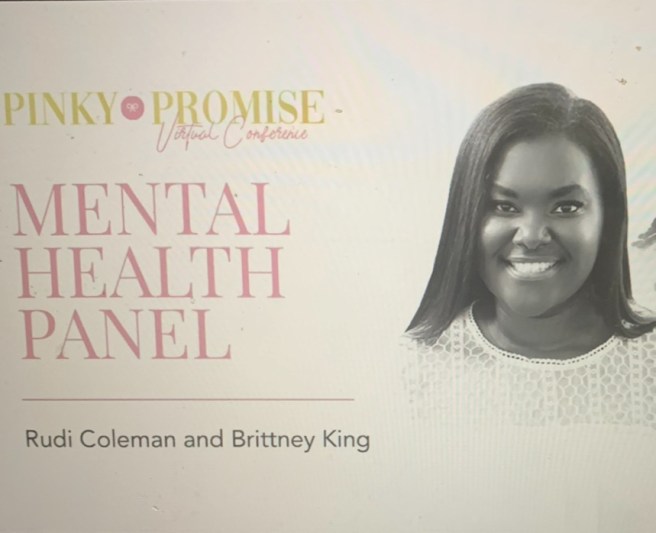
Rudi Coleman, a licensed counselor, said that people should be aware of how anxiety impacts them.

Rudi McKenzie said that recognizing that there are steps a student can take to improve their own mental health is critical to overcoming anxiety. “We are all responsible,” she said. What I’m thinking, what I’m going through is different than what you are thinking and going through. Even though we share similarities we are also two different people.” 

Despite the differences between people, Rudi McKenzie said confiding in friends and others who share similar feelings can be helpful in overcoming anxiety.“Make sure that you have a community in which you can relate to or share things with, especially communicate with,” she said, adding that it’s important not to focus on comparing your experiences with others. “Comparison can be really dangerous because you can get in your head and think that you are the only one thinking something and that something is wrong with yourself.” 

Acknowledging that your anxieties are natural is critical. “Remind yourself that your thoughts, your feelings, your emotions, are important and very meaningful.”

If you are experiencing mental health concerns, call 988.

Joe Dennis

Joe Dennis doesn’t write as much these days, not because he’s out of words, but because students fill his office daily, needing someone to listen. A journalism professor with a heart for mental health; Joe has become a safe space for students dealing with anxiety, identity struggles and personal crises.

“They needed someone to be there for them,” he says simply. And so he is.

Raised in Georgia and shaped by a childhood in Catholic school, Dennis didn’t get mental health support growing up. During his battle with depression from a young age, he realized the power of being seen and heard. That experience now fuels his work for journalism, from his blogs on student well-being to the space he creates for those who need to talk.

During an interview, Dennis says, “They just needed someone to talk to.. They just needed someone to vent. They needed to know they weren’t alone. That I was there and they needed people to support them, and that really inspired me.”

Before teaching, Dennis lived in Monroe, Georgia, where he covered the heartbreaking story of a judge waiting for a liver transplant. The man died before receiving one, and the experience moved Dennis so deeply that he became a liver donor himself. It was a reminder of how stories and the people behind them can change lives.

Dennis, who proudly embraces his Filipino heritage, has always navigated the world as someone a little different. Growing up in Chicago, he saw firsthand how race shaped communities and opportunities. Those experiences appear in his writing and in how he teaches – with empathy, honesty and lived experience.

His favorite artist is Kesha, having each song for each mood.

“If I’m looking to get pumped up, like if I’m looking to you know, dominate the day, I’d probably listen to Blow,” Dennis said.

He is also very fond the emotional ballad, “Praying,” which speaks to him in different ways – whether it’s about letting go, standing up or forgiving someone who’s hurt you.

He’s known for his love of Kesha songs, his cooking inspired by his mom’s Filipinos recipes, his matching tattoo with his son and, of course, his collection of fedoras. The hat started as a dare from a friend. He kept it on – and made it his thing. Like the hat, Joe Dennis stands out quietly but meaningfully, reminding every student he meets that they matter.

Alli Kruczkowski

Hello! I’m Alli and I’m a major nerd, a title I use with pride. I am 14 and I turn 15 in October. I’m from Macon, Georgia and I attend the Academy of Classical Education. I am attending a camp at the University of Georgia for the first time. I am extremely drawn to a biology career and with the help of this camp I might be able to write an article of my own someday. I dabble in art; my sketchbook is normally filled with drawings of my latest interests (currently stuck on strawberry hats on animals).

My interests influence me widely, and my friends are always there to listen to whatever new thing that’s on my mind. Although I’ve had an insect interest for about three years now, I can’t help but screech when I see a spider. I love watching animated shows such as anything with “Sonic,” “Steven Universe” or “Gravity Falls.” My obsession with plushies is great, and I always need to be restrained by someone or something, such as my chronic debt, from buying a new Sanrio plush. Cute things are all I dream of! I also spend my time studying art and learning new ways to improve my own. My favorite color is pink, but you’ll always catch me wearing dark or earthy colors. I love blending into nature and I feel at home when I go on runs in the woods. I’ll enjoy studying or watching any insects I see on the way, researching each one if I get the chance.

When I meet new people I am typically very awkward and I make horrible jokes, so I apologize in advance. I can talk for hours when I’m truly comfortable with my friends. My friends are some of my favorite people in the world, they inspire many of my actions and I wouldn’t be where I am without them.

I love finding out the uniqueness of everyone. Individuality is a feature I find to be the most important in a person, which is why I dislike many things regarded as ‘trendy.’ In my opinion, weird is a compliment that means you’re not afraid to show your true self. It’s truly special when you can click with someone else, but that shouldn’t take away your special spark. It’s important to never change who you are for anyone. If they don’t like you, someone else always will!

Is there a link between the mental health epidemic and the COVID-19 epidemic?

Nine out of 10 adults said ​they believed that there is a mental health crisis in the US today.

By Sarah LaFon Buck

June 22, 2023

Credit- Iso-Form LLC

An artistic rendition of a COVID-19 virus particle

____________________________________________________________________________

One of the biggest global crises in this generation was COVID-19. It had severe and long-lasting effects on the economy, society, and many people’s lives. Many people lost their jobs and required financial help, and many businesses went bankrupt. 

As of June 21, 2023, more than 6.9 million people have died from COVID. The pandemic has led to a mental health epidemic. According to Mental Health America, in 2019-20, 20.78% of adults were experiencing mental illness, equivalent to 50 million people in America. 

“The Covid-19 pandemic exacerbated numerous social stressors that we know can increase the risk of both substance use and mental illness,” said Dr. Nora Volkow, director of the National Institute on Drug Abuse.

One cause of this was unemployment. During COVID, many people lost their jobs. When business closures and restrictions happened, unemployment peaked at 23 million in April 2020. Additionally, many people lost loved ones and were experiencing grief alone. During Covid, many adults reported they felt symptoms of anxiety and depression, peaking at 39.35% of adults in Feb. 2021, according to the Kaiser Family Foundation (KFF). 

“As someone who likes to be sociable, it was a challenging time for me,” said Joe Dennis, a professor at Piedmont University. “From being around students all day to being stuck in my home staring at a screen — I definitely struggled with my mental health.

Dennis was not alone. Many people felt isolated and lonely in quarantine because they could not see their friends and family for a long time. Azi Daw, a rising high school student from Virginia, said the pandemic was especially difficult for her since it exacerbated previous health conditions already impacting her family.

“The quarantine, the isolation — I could not really handle it anymore,” she said, adding that she’s thankful she had strong support systems in place with her family to help her get through her struggles. “Going to sleep at night was really hard for me. I just couldn’t slow my brain down. My mind was always racing.” 

Although the KFF showed mental health struggles dropped to 31.5% in Feb. 2022, it has most recently gone up to 32.3% in Feb. 2023. As more people are struggling, getting help has become much harder. Many people could not afford it or were scared to seek help. 

“I myself did not go to the clinic for therapy for an entire year partly because of this fear,” said Esenam Abra Drah in an article published by the World Health Organization in June 2022. 

Drah is from Ghanda and suffers from bipolar disorder, and says that Covid affected her and many of her friends. “I have many friends who had relapses in their mental health because of the increased fear and panic. It was almost as if fear was contagious.” 

Health care workers especially experienced an increase in mental health concerns. There was a lot of fear around the hospital because of how many people had Covid. With increasing workloads and exposure to infected patients, many health care workers became much more stressed during the pandemic. 

A Sept. 2020 survey conducted by MHA found that 93% of healthcare workers were experiencing stress. 76% were worried about exposing their children to COVID-19, and 48.61% were stressed from the increased workload from Covid. 

As society still suffers from the remnants of the pandemic, it’s important to prioritize one’s mental health. “The impact of COVID-19 on mental health cannot be underestimated,” Esenam said. “It cannot be made light of.”