
Opinion Story

I’m not a politician or a policy expert; however, I’m someone who believes that no one in this country should have to suffer or die because they can’t afford to see a doctor. It’s simple: healthcare should be a universal right in the United States.

I’ve watched people I care about delay treatment because they didn’t have insurance. I’ve seen people on the news refuse medication, avoid emergency rooms, and live with chronic pain, all because the cost of care was too high. These are not rare experiences; they are everyday realities for millions of Americans. A 2022 survey found that 22% of Americans have delayed seeking healthcare due to the associated costs.

Other countries, who have fewer resources, have figured this out. Universal healthcare systems across Europe, Canada and beyond don’t bankrupt their citizens for getting sick. They don’t link health coverage to employment. They treat healthcare as a public good, a human right, not a profit machine. Their people are healthier while the citizens of The United States deteriorate. They worry less about whether they can afford to get the help they need.

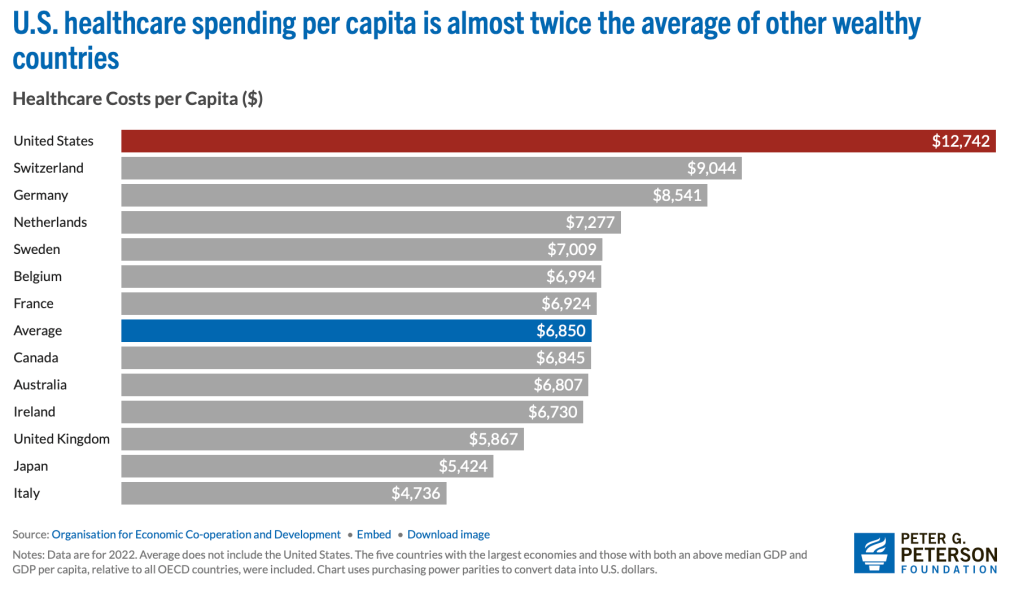
Opponents often say it would cost too much, but we already spend more than any other developed country on healthcare—by far—and get worse outcomes. The real cost is in the state of affairs: people avoiding doctors, diseases going untreated, lives cut short. We pay for this every day with our money and with our humanity.

I understand change isn’t easy, but it’s frustrating to hear that universal healthcare is unrealistic. What’s unrealistic is continuing down this path, where health is treated like a luxury and insurance companies dictate care.

Health is a human right, and whether one gets treatment shouldn’t be determined by how much money they have. More importantly, care should be determined by doctors who are invested in the health of their patients, not insurance companies whose sole purpose is to make money.

Joe Dennis

Joe Dennis, a journalist and educator, and is also known for his fedora. The hat became his signature during his Ph.D. studies in New York when a friend suggested he try it on.

“You actually look good in a fedora,” and he trusted her judgement.

Since then, the fedora has been a constant companion, with Dennis owning six other variations, his favorite being the black one purchased at House of Blues, matching a fedora of the 1980s movies he cherishes.

Joe Dennis’ journey began on the south side of Chicago, where he was raised in a Catholic family and went to a Catholic school. Despite the challenges of growing up in a segregated city, he developed a deep appreciation for the importance of understanding different perspectives. Growing up, Dennis experienced the challenges of being part of a minority in a segregated city. He faced discrimination, which he later reflected upon in his writing. His experiences shaped his understanding of identity and the importance of representation in media.

“Chicago, everyone says it’s a diverse city which it is when you look at it on a map and you look at the population and it’s so diverse,” he says.

While no senior family members pursued journalism, Dennis’s influence has sparked an interest in the field among his children. His oldest son dabbled in journalism, earning an award before transitioning to computer science. More notably, his 14-year-old son has developed a “weird fascination” with journalism, inspired by hearing his father’s experiences and stories.

In a gesture of bonding, Dennis and his son got matching tattoos of the Filipino flag on his son’s 21st birthday.

“Let me tell you, that was maybe one of the most meaningful things any of my kids ever said because it was totally unexpected,” he says.

One of Dennis’s most inspiring journalistic experiences was covering a local judge in Monroe, Georgia, who was awaiting a liver transplant. Over several months, Dennis reported on the judge’s journey, culminating in the judge’s passing before receiving the transplant. This story deeply impacted Dennis, leading him to become an organ donor himself, underscoring the profound effect journalism can have on personal choices and societal awareness.

“I’ll never forget the day he died, and I actually went and became an organ donor myself,” he says.