Journalism is “dying” when it is needed most

The world is falling apart and no one knows it.

Journalism is being ignored when it is needed most. To have freedom of the press is to have the freedom of information. Now more than ever, the public needs journalism. A new president means new policies and laws and it can be hard to stay informed. It’s a scary thing to not know what is going on in the world, let alone your own country. Protests, riots, wars, injustices and conflicts. These things are always happening. Every day, all the time, around the world. But not everyone knows. 

For example, many people are unaware of the many conflicts and wars going on in Africa. According to the Geneva Academy, there are more than 35 ongoing armed conflicts in Africa. There are also many who are or were unaware of the fact that the conflicts between Israel and Palestine began long before Oct. 7, 2023. 

One of the main purposes of journalism is to tell the truth and keep people informed. Staying informed is about knowing and understanding both sides of a story. Understanding both sides is extremely important, especially if you decide that you prefer one side because it is important to know what you stand for and what that means to yourself and others. If you don’t know and understand the details of what you are fighting for, how will you be able to properly plan for the outcome.

A good example of this is President Trump’s tariffs. While the purpose of this was to boost the American economy, it ended up raising some prices even more for businesses such as Mattel. According to AP News, “Company executives told analysts on a conference call that China currently accounts for 40% of Mattel’s global production”, and due to the fact that Trump’s imposed 145% tariffs on most of China’s products, Mattel has to raise their sale prices. 

Recently however, media outlets have come to realize that because of the great amount of time people spend on social media, it would be easier to share news with the public via social networks. BBC claims that roughly 54% of people get their news from social media platforms. Because of this, more people are becoming informed, however it could potentially mean the end of hand held paper news. 

With corruption and the need to consistently fact check our own president, journalism is essential to the people. Journalism allows people to be knowledgeable about the things that affect them, and if people don’t know what is going on, no one can move to make a difference. 

If journalism dies now, so will our rights. Stay informed, stay educated, understand both sides, so that we may all make a difference for the better. 
From Athlete to Advocate

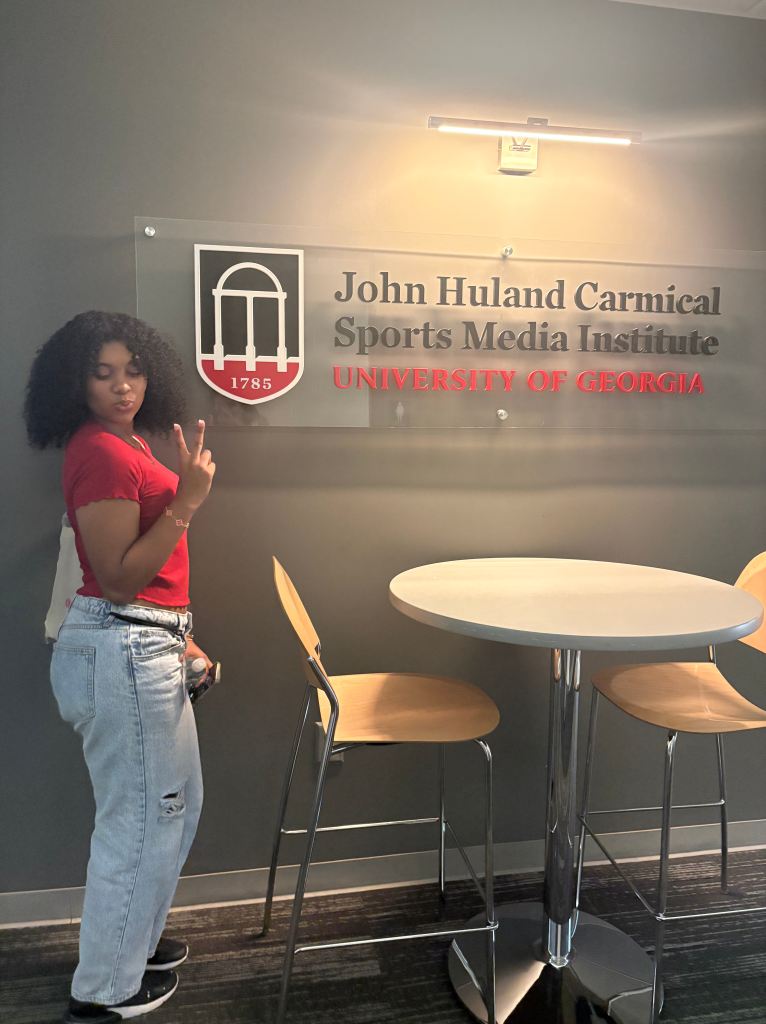
Florida State and University of Georgia graduate Karmen Morrison uses her skills in the communications and journalism industry and being a graduate assistant. Morrison grew up in Jacksonville, Florida playing basketball, volleyball and flag football throughout high school.

“What drew me from sports to journalism? When I was in high school, I was asked to do a lot of interviews about school and sports. I was in an early college program, so people were asking me a lot about that. I ended up being the Female Athlete of the Year of my city. So I did a few different interviews for that, and I had fun doing it. I was the interviewee, obviously, but I enjoyed it. And I was like, I think I could probably do this. So that’s where I got my start. ”

In high school being an involved student athlete, Morrison said she saw the difference between men’s and women’s sports quickly.

When going to Florida State majoring in media communications studies, she used her social media platforms to advocate for women’s sports. With women’s sports on the rise right now, it’s important to see other women and previous athletes show support. Female athletes deal with more pressures than men as professionals. For example,

when you’re a woman people will criticize your looks, skill, background, race and sexuality.

“I’m on social media, so I share my opinions,” Morrison said, adding that one interview she conducted was really powerful to her. “I got to talk to Lonnie Alameda. She’s their head softball coach, very, very renowned coach. And this was following a very late game. So I asked her, what’s your opinion on you guys playing really late? And she was very open, honest, blunt about it. It’s probably one of my favorite interviews I’ve done. She spoke about a lot of the things that could change with the Women’s College World Series, and so I included that stuff in my package.”

Morrison expresses herself through sports journalism and takes pride in women’s sports, whether it’s on social media, the stories she does, or just little quotes. Morrison mentioned that tennis is one of the only sports to pay women and men equally, at least in the majors. She thinks it’s important, but just a small step.

Morrison believes no matter race, age, or gender, representation matters. Even though she calls herself a rookie she likes to share what she knows with younger people to help them become better than what she is.

“I think for me, one thing that irritated me, is we had a good football team when I was there, and they would always get free shirts. But we were districts champs year after year, and I’m like, why we aren’t we getting free shirts? What’s going on?” This is one example of how something simple can make a difference. Looking beyond the sport, it’s the principle of it not being equal for the girls and boys teams.

“And I think for me, representation matters. Obviously, I’m a black woman, so you got to be able to reach back and show little girls, even little boys, and show them what’s possible. I think it’s really about representation at the end of the day.”

Joe Dennis’ path to become an “enemy of the american of the American people”

Joe Dennis grew up on south side of Chicago in a Filipino household, where he was discriminated on because he was believed to be Mexican by his white neighbors.

“People thinking I’m Mexican, how do you deal with people yelling slurs at you without them even being applicable to you?” Dennis says while speaking about the prejudice.

Joe is now the department chair at Piedmont University where he teaches his students podcasting and necessary journalism strategies to have a successful career. One of the main reasons he continued pursuing his passion for writing and journalism is due to his former mentor Conrad Fink.

“He was a hardcore military veteran type of guy.” Joe recalls. “He believed in me, he believed in my writing like no other had. If this guy believes in me, than I really should believe in myself.”

When Joe felt doubt about his capability to be a good writer, he could always count on encouragement from Conrad. He still tries to live up to Conrad to this day.

Although he loves journalism, there is always critique that comes with the profession.

Dennis said that his most critiqued article was a column he wrote about the difficulty to hide the truth about the legitimacy of Santa. He received a lot of backlash that his son was too old to believe in Saint Nick, or that he shouldn’t be living in a fairy tale world.

“You never know what’s gonna click with people.” Joe said in response to the critics on what is supposed to be a comedic article.

Finding Joe in a crowd is as simple as finding the man wearing a fedora. This fashion statement originated from a work trip in New York city.

“I was with a friend, and I had kind of been looking for my thing, fashion wise, and this person goes at a fedora stand, ‘hey you would look great in a fedora,’ and I’m like right, they’re just trying to sell me something, and I tried it on, and my friend who was with me goes, you actually look good in a fedora, you could rock the fedora Joe and I’m like, well I trust you. So I went and I got the fedora, like this is Joe’s thing now.”

Joe Dennis now owns six fedoras, mainly tending to the hot Georgia weather, wearing fedoras with the style of a straw hat.

Although he isn’t an active writer Joe still makes a large impact teaching at Piedmont University.

“The day after the election, I had students in my office, I had an openly bisexual student, an illegal immigrant, and a self-identified feminist, a student dealing with anxiety and an African-American student, and they were all devastated, and they were waiting for me, like ‘Joe what are we going to do’ and they needed someone to talk to, someone to vent and make them feel like they’re not alone.”

Not Your Average Joe!

By: Madison McKenzie

Who is Joe Dennis? A husband, a father, a Kesha fan man and fedora lover.

“I got my start in college when my Summer orientation leader said he needed a volleyball reporter and I had a crush on a girl who was on the team,” Joe said.

Joe got his start at North Central College in Naperville, Illinois as a volleyball reporter, with no background on the sport.That didn’t stop Joe from stepping up to the plate and hoping to talk to his crush.

After he had some time and practice, Joe eventually picked up journalism as a minor and you can tell his feeling toward it changed from “I don’t want to do it” to something he can say he enjoys. His long term professor and mentor at Grady College, Conrad Fink, whom he gives thank to.

“He really believed in me and my writing like no one ever has and he showed me how good I really am, and he said that I should really do this. He really believed in me,” Joe said.

His mentor gave him what he needed to hear in order to become the great writer he is today.

“When I was working in Monroe, on Tribune here in Georgia I interviewed this judge who was a local judge who needed a liver transplant, and so we continuously did story updates like every month,” Joe said “The way we started these updates was where he was on the waiting list for a liver transplant. So we did about four or five stories on him and just tracking how he declined each month and tying in to that the importance of organ donation in each story. And he died before he got the chance to get a liver transplant. I’ll never forget the day he died.”

This led him to become an organ donor. Joe believed that “there was no reason for this man to die.” He believes no one should have to wait to live life. Joe is a very caring person who is very in tune with his feelings.

Joe also picked up the new habit of cooking. Cooking dishes from his Filipino culture, he enjoys making a coconut dubbo, pancit and lumpia, which is Filipino egg rolls, and Filipino bbq. He recently asked his mom for new recipes from his culture.

“How much soy sauce do I need,” she says “Enough.” Joe responded “Well how much is enough?” His mom responded “Enough is enough.”

In addition to writing and cooking, he listens to Kesha in his spare time.

“She’s someone who I feel is very inspiring because of her history, she has really overcome a lot in her life and has persevered,” Joe said.

He gets pumped up by listening to the Kesha song “Blow” which, in his words, help him “dominate the day” and “get the party started.” He loves her lesser known songs as well, songs like “Raising Hell,” where he believes it’s a song about her standing up for her rights.

He mentions the song “Praying.”

“That song is just so emotional, so heartfelt. It’s a song where someone hurt her so deeply, she’s actually praying for that person so it just shows a lot of forgiveness.” Some things just resonate with Joe.

Joe Dennis: Fedoras and Family

Written By Sara Anderton

The fedora-wearing professor, Joe Dennis works at Piedmont University, a private liberal arts college. Dennis teaches his college students and his own kids journalism.

“I have no senior family members that did journalism. I’m the first one to do it, as far as I know,” said Dennis. “My oldest son did a little bit in high school. He won some awards for it too but he’s more into computer programming. My fourteen-year-old has expressed a lot of interest when I’m just talking about things. He has a weird fascination in it. I’m like oh cool, maybe he’ll take after me.”

He has matching tattoos with his oldest son of the sun and stars from the Philipino flag. It connects the two to their culture along with their father-son bond. Dennis also wrote a blog about his three sons and how he raised them along with some fun moments.

Now Dennis writes editorial pieces based on his students lives.

“The day after the election I had students in my office; I had an openly bisexual student, I had an illegal immigrant, I had a self-identified feminist and I had someone with severe anxiety and an African American student,” Dennis said. “They were all devastated and they were waiting for me. I keep my door unlocked and they were all waiting there. They needed someone to talk to, someone to vent to, someone to know they weren’t alone and that really inspired me.”

Dennis has loved being a teacher to his students. They inspire him to write. He gets to be a safe space for them, which is different from his catholic school. The professor enjoys seeing what his students have learned and how they have grown in their writing skills.

And the fedoras?

“Yeah, I have 6 fedoras that I own,” said Dennis.

Most of them are light because of Georgia’s hot weather.

“I do have a favorite, it’s a black fedora,” Dennis said, “I purchased it at the House of Blues in Chicago. It’s kinda the same fedora supposedly that the Blues Brothers wore in the 1980s movie that I loved. So that’s kinda my special fedora. It’s thicker, it’s wool, so I really only wear it in the winter.”

We can see how education matters to Dennis. He continues to teach and wants more people to be interested in journalism. He cares for humanity and enjoys talking to others and learning their stories.

Joe Dennis

Joe Dennis doesn’t write as much these days, not because he’s out of words, but because students fill his office daily, needing someone to listen. A journalism professor with a heart for mental health; Joe has become a safe space for students dealing with anxiety, identity struggles and personal crises.

“They needed someone to be there for them,” he says simply. And so he is.

Raised in Georgia and shaped by a childhood in Catholic school, Dennis didn’t get mental health support growing up. During his battle with depression from a young age, he realized the power of being seen and heard. That experience now fuels his work for journalism, from his blogs on student well-being to the space he creates for those who need to talk.

During an interview, Dennis says, “They just needed someone to talk to.. They just needed someone to vent. They needed to know they weren’t alone. That I was there and they needed people to support them, and that really inspired me.”

Before teaching, Dennis lived in Monroe, Georgia, where he covered the heartbreaking story of a judge waiting for a liver transplant. The man died before receiving one, and the experience moved Dennis so deeply that he became a liver donor himself. It was a reminder of how stories and the people behind them can change lives.

Dennis, who proudly embraces his Filipino heritage, has always navigated the world as someone a little different. Growing up in Chicago, he saw firsthand how race shaped communities and opportunities. Those experiences appear in his writing and in how he teaches – with empathy, honesty and lived experience.

His favorite artist is Kesha, having each song for each mood.

“If I’m looking to get pumped up, like if I’m looking to you know, dominate the day, I’d probably listen to Blow,” Dennis said.

He is also very fond the emotional ballad, “Praying,” which speaks to him in different ways – whether it’s about letting go, standing up or forgiving someone who’s hurt you.

He’s known for his love of Kesha songs, his cooking inspired by his mom’s Filipinos recipes, his matching tattoo with his son and, of course, his collection of fedoras. The hat started as a dare from a friend. He kept it on – and made it his thing. Like the hat, Joe Dennis stands out quietly but meaningfully, reminding every student he meets that they matter.

Edie Ash

Peer, student journalist and coffee fanatic are all things I can use to describe myself. From UGA Football games to neighborhood music festivals, being an Athens, Georgia native played a significant role into the shaping of my self identity.

Growing up in Athens, I was constantly surrounded by the music, art, food and culture of the diverse town. I was exposed to a variety of people with backgrounds exceptionally different than mine, which is ultimately what led me to journalism. I was intrigued by the idea of telling the stories of the people who made up the community that I love.

My journalistic journey didn’t start until my freshman year when I joined my schools magazine- the ODYSSEY Media Group at Clarke Central High School. Though I intended on furthering my journalistic skills, I primarily joined to get involved with my school community. I was unaware of the true impact practicing journalism would have on me, and how it would change my outlook on numerous topics. The stories I witnessed the upperclassman in my publication report on inspired me to come back my sophomore year, in hopes that I too could have the same impact. From politics to natural disasters, I was shocked by their ability to cover such mature topics with an exceptional amount of professionalism.

Following the deadly shooting at Apalachee High School, I read what felt like endless articles covering the political controversy sparked by the incident. It wasn’t until I read an article published by a student journalist at my school that I truly felt seen, heard and understood as a student. It was then that I was able to grasp the true importance and impact student journalists have on their community, and the essential role they play in ensuring that the student body is heard in a time where we often feel like the last priority.

As I continue my journey as a student journalist, I have made it my mission to be an outlet for student voices, opinions and stories. Not only this, but in a way that is diverse, accurate and balanced. It is the student body that shapes me as a journalist.

Madison McKenzie

Born and raised in Decatur, Georgia in 2008, and later moved to McDonough in 2012 when my little sister was born. All my life I knew I wanted to do something that was important to me, but I wasn’t sure what that was. I ran track since elementary school then stopped because I felt overwhelmed with it, just to go back to it in 11th grade. In my years of down time, I joined my high school’s dance team and left which led me too the school’s step team, where I later became captain. After I left the step team I finally joined color guard and I feel like that was one of the best things I’ve done in my high school career.

Starting in 9th grade, I had a teacher named Mr.Usry. He was a real important part of why I enjoy writing today. Poems specifically, he encouraged me to be able to express myself in a way I didn’t think I could. Saying how I felt was always hard for me but writing them out wasn’t. This sparked the want to become a writer. I feel as if I could speak to the public and connect with people that are going through the same things that I am going through and/or experienced.

Today, I have a good 10 (or more) poems based on emotions, and things I’ve noticed about certain lifestyles. I would have more but I got busy and stopped writing for some reason.

I’m not sure when I made the decision that I want to become a news reporter/television personnel, but I know since then I’ve always had my heart set on those goals. I want to major in journalism and minor in hospitality management because not only do I want to write books and become a news reporter, but I also want to own my own hotel chain. I’ve been told I have the personality to do both, so that’s exactly what I am going to work towards. I believe if I continue to work toward my goals, I will get what I really and truly want.

There have been two outlets for me. Other than writing poems from my feelings, I’ve been dancing on my color guard team, known as the Flying Redz. I started late 9th grade going into 10th grade and I’ve absolute loved it ever since. As I’ve continued, my love for the sport has grown more and more and I really and truly thank one specific coach and my captains for seeing something in me. Fast forwarding to today, I am the captain of the Flying Redz for my last year of high school. I can say that this team will forever hold a special place in my heart and when I graduate I pray that they continue to grow and get bigger.

Tiffany Harris

Getting to know an only child is very easy because you are asking them about their most favorite topic ever — themselves! While I could be very detailed and tell you that I’m a Leo, in a STEAM program, Georgia Merit student, or how the time I fell off of my bike and smashed my bacon burger created one of my most cherished friendships ever, I can just give you a little insight.

I am from a city right on the edge of Los Angeles — Inglewood, California. After my parents split, my mom decided to move us across country, which was the end of the world to 7-year-old me. My mom promised me a bike to ease the pain. That same bike is the one to blame for the smashed burger incident, but that gave me a best friend so it wasn’t to bad (minus the huge scar and a missing chunk of my left elbow).

With that same best friend, we both tried out for a volleyball club, and that started one of my favorite hobbies. I’ve been a middle blocker ever since that day and wouldn’t change it. Outside of volleyball you can find me reading outside on a hot day because I love the feeling of sun on my skin, or inside my own world listening to music through my Beats. I’m a huge sports fan, especially football. I absolutely adore Friday night lights, every little thing about it. From the theme-matching outfits, constant screaming for joy, the majestical sounds from the band, to the post-game debriefs at Waffle House with your friends. My mom told me to find a job in doing what I love and what’s more cooler than getting to cover athletes and sports all over the world, which is why I fell in love with sports journalism. I knew I wouldn’t play volleyball in college but I still wanted to stay connected to the athletic lifestyle — or at least get first-hand info about it.

Being on my own does have some draw-backs from time to time but it also leaves me with time to figure out what to say when I’m asked “Who are you?” . The fun part is that being so young, you can never have a finished answer to that question, which means I can do what I do best — always talk about myself!

Sara Anderton

Hello There,

My name is Sara Anderton. I’m learning American Sign Language along with Hebrew. Once I finish those two languages I hope to learn Ancient Greek, Aramaic, Arabic, Irish Gaelic and if I have time maybe some Hindi or Spanish because my mom was a Spanish teacher. I am the person who will know the most when someone faints or has a seizure; I’m also most likely to faint with my vasovagal syncope. I love learning cultures and religions. I love to learn in general, so I love journalism where I can learn even more. My family is a big advocate for education for all.

Additionally, I’m Jewish-Christian which basically means I believe in Jesus but I keep kosher and celebrate the holidays. Just think I know Lord’s Prayer and Shema. I study Tanakh (Old Testament) and Brit Chadashah (New Testament). Celebrating both religions is just fun for me and gets me connected to my faith. How I practice isn’t for all but it is for me and I’m proud of my faith. I also go to church in my school so that’s fun.

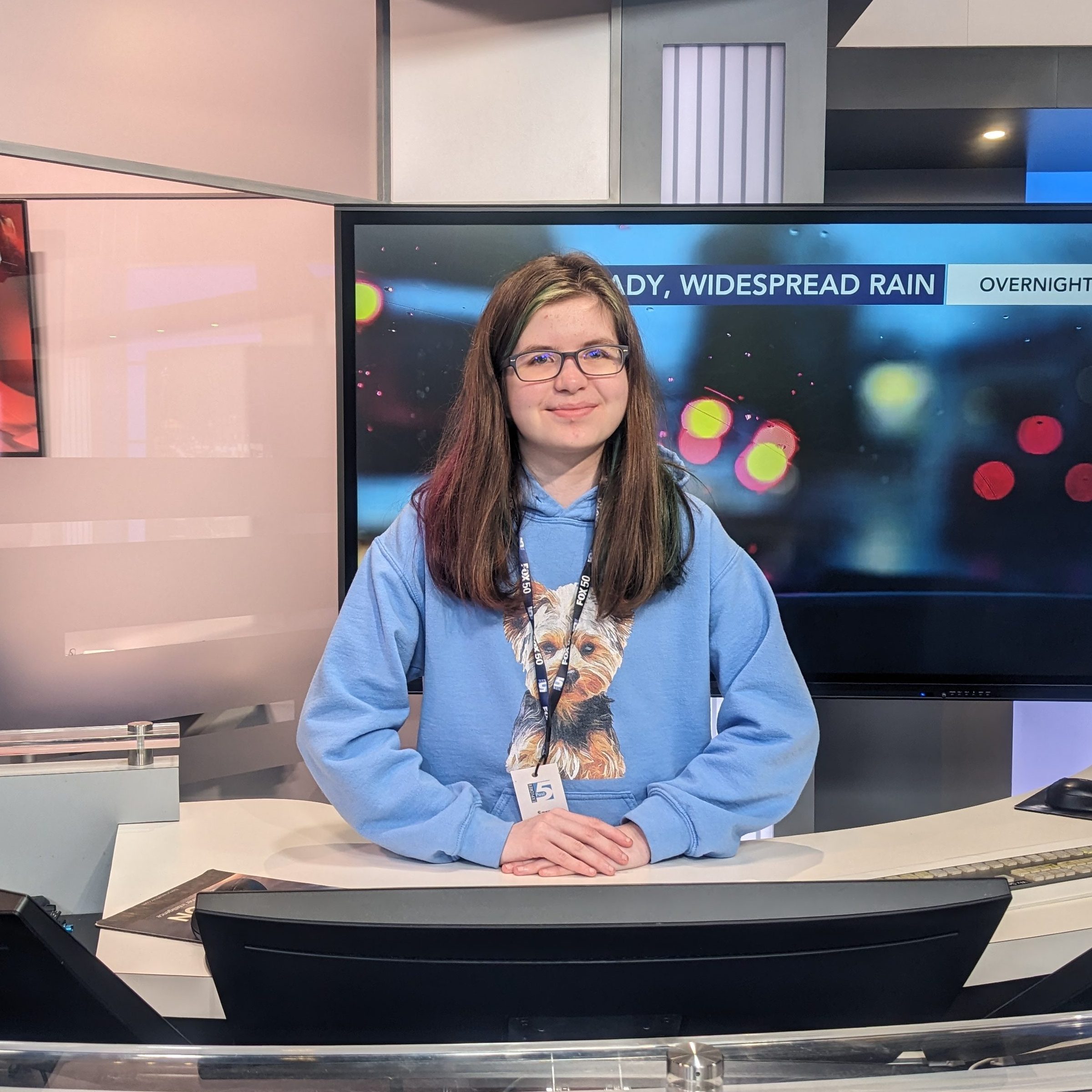
I hope to go into journalism either with a small company or with NPR over the radio. I’ve been writing for my Newspaper “Fuquay Varina’s Roaring Bengal” since freshman year. I’ve written about faith, to infrastucture, to school events. I know a lot about boats, space and planes because of these articles. My most notable works are my JDRF (now Breakthrough Type 1 Diabetes) walk article and my four part series on the different religious holidays in spring. I was a part of a workshop called Post 5 where I worked with WRAL, a local news station in North Carolina. I got to see broadcast journalism. I learned a lot from them, especially what I want to do and what I don’t want to do.

I am a writer with a book published on Amazon. I write fantasy war stories, mixing religions (hints: my own faith) and cultural stories where I create a whole new place. I also work on the sci-fi and romance genre which can be difficult. One has many of many ideas but no plot. I’ve made tons of maps out of rice and don’t have enough stories for them. I use what I got from my day for some of my stories especially if someone does something particularly funny.

I love dogs. My yorkie-poodle, Tessa is my little sister. I’m an only child of only children so the dog is worth it. I got her in fourth grade after fostering many other dogs from boxers to terriers. Tessa’s full name is Pequina Tessora Trouble Anderton. Her first name is Spanish for little treasure. Spanish names for dogs are a trend in my family. When I was a baby we had a dog named Quesi (Kacy), short for Hermosita Quesi which means definitely cute. We foster with Second Chances Pet Adoptions. I’ve fundraised for them with my school’s Pet Parade. I wasn’t the first with the idea but I continued it and I hope that another shelter gets money from the parade again.