School’s out!…but what about business?

Chloe Orton
Cambell High School
Smyrna, Georgia

The University of Georgia is located in a small Georgia town named Athens. During the school year this town is a place of packed bars and restaurants, football fans, shopping students and full parking lots. But what happens to the businesses that rely on the busy crowds when the students go home for the summer and football season ends?
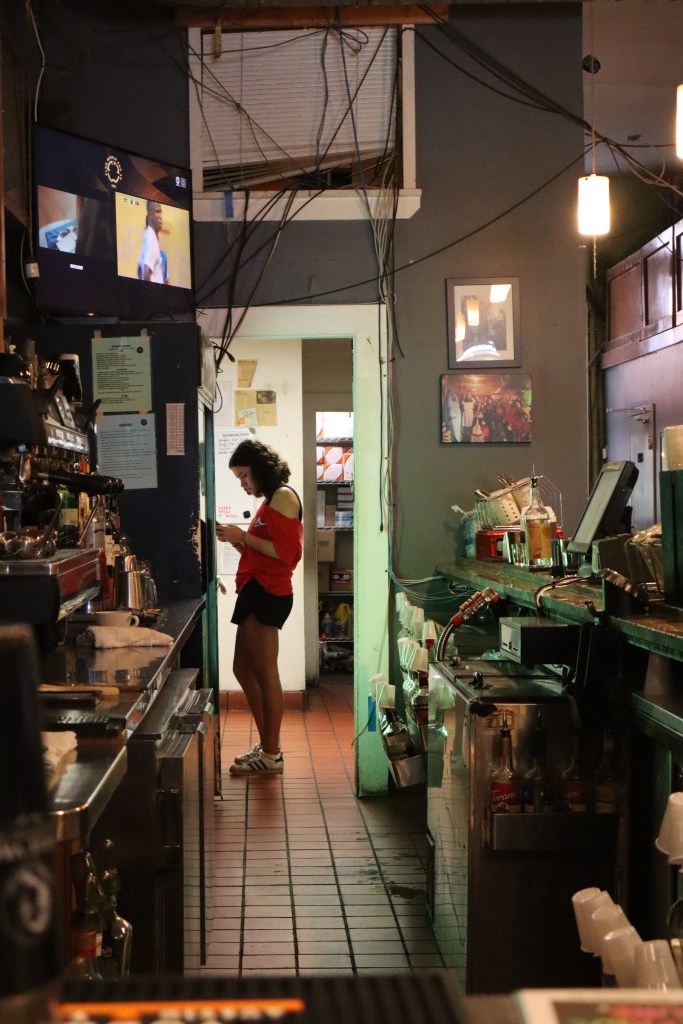
Eric Nelson, who works at Walkers Coffee Shop and Pub, said there is a distinct difference in business once the students leave. “It’s terrible. Summertime is not great because the summer session classes are a lot longer and more intensive, so people want to go home after and not out.”

This is in contrast to fall and spring. “If you were coming here during the school year there would be nowhere to sit.”

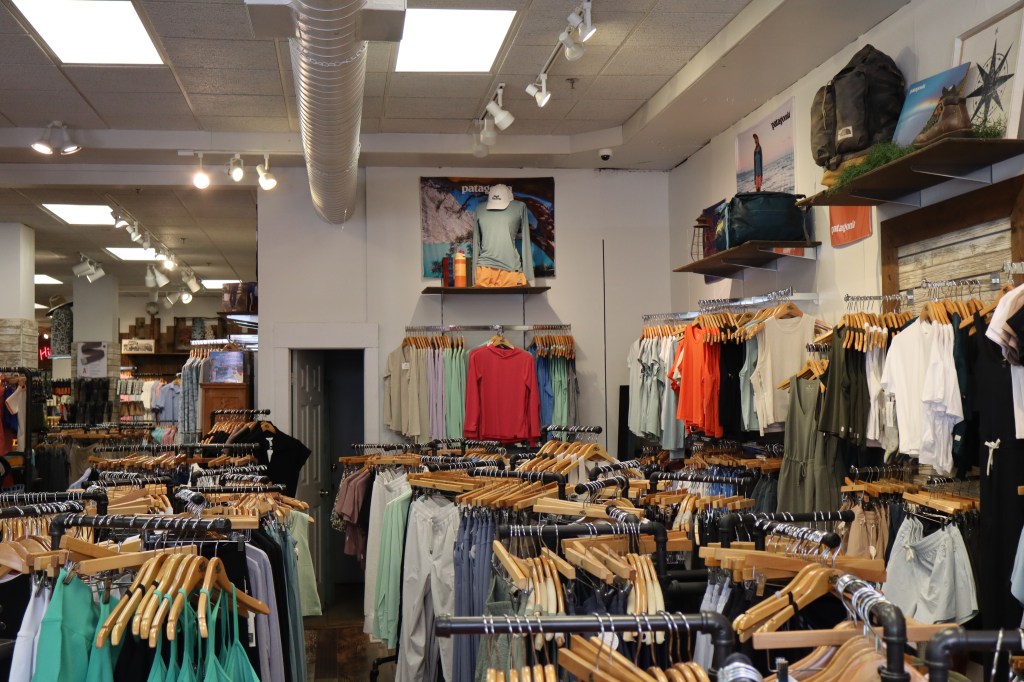
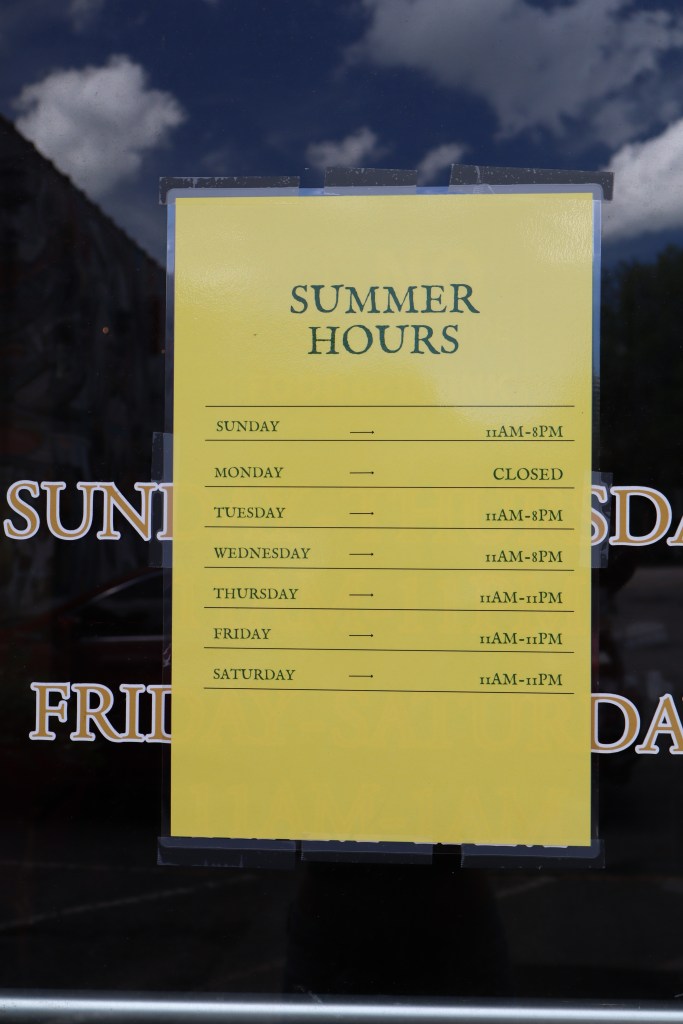
The lack of foot traffic during the summer in Athens significantly slows down business. Stores and restaurants are impacted in different ways by the lack of customers. Some more unique establishments, such as The Rook and Pawn, have to adjust their hours during the summer. Other businesses, such as High Country Outfitters, have to adjust to new staffing due to the loss of student employees during the summer. 
With the absence of the major crowds, most businesses rely on local events such as AthFest to bring people in. Tim Kelly, one of the owners of The Rook and Pawn said, “Any sort of downtown festival is a huge boom for us.”

For other businesses like High Country Outfitters, they rely on back to school and student summer events to bring people in.

“Once rush picks up, more people will start to buy shoes, and towards the end of summer more people come in and start to look for things like backpacks for the school year and study abroad,” said High Country Outfitters’ manager Skylar Umstead.

However, some businesses take this off season as an opportunity to renovate and update products. “It’s slower but it’s nice because we get a chance to reset most of the stuff in the store,” Umstead said.
Without students, businesses must adjust to a different audience. “We’ll see more younger kids and families come in during the day looking for something to do which we don’t see a lot of during the school year,” said Kelly. 

There are both ups and downs to the summer season, but these businesses are what make Athens such a fun place to live in and visit. There may be some changes in scheduling, customer audiences or new renovations, but the businesses are loved the same by the UGA students when they come back from summer break.  

“Overall it’s still our place and still very much the same aesthetic and vibe,” said Kelly.
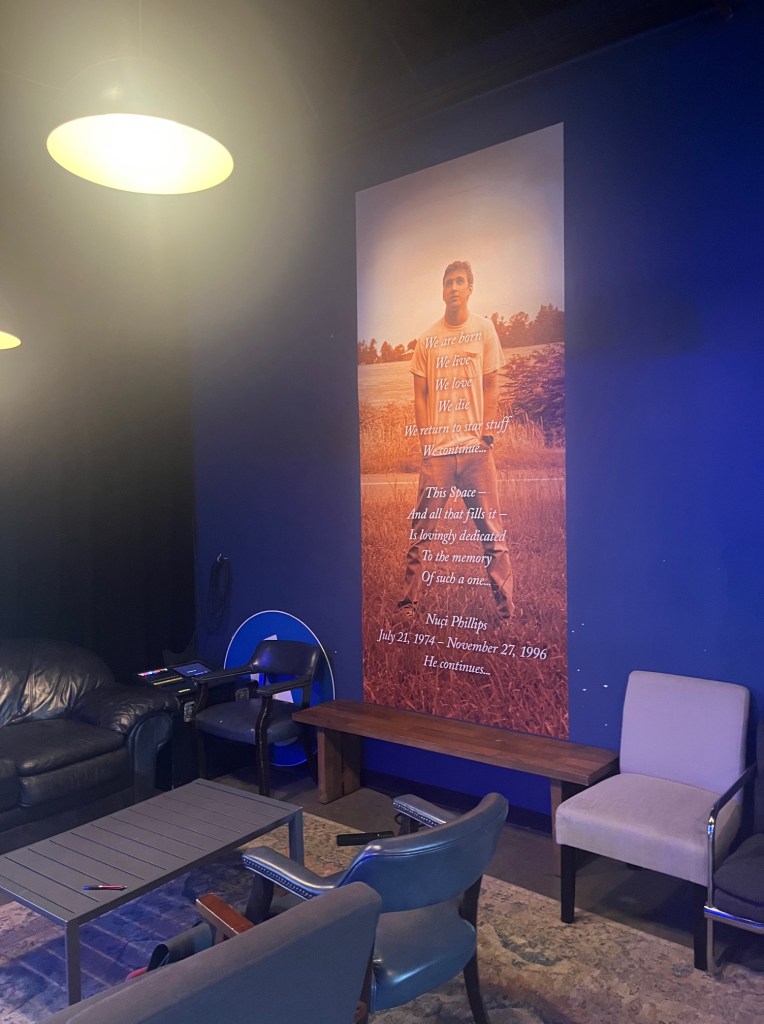

Mental health’s affects on young musicians

It is no secret that the teenage years are transformative for adolescents, as they grow into young adults. These years can be especially tumultuous for young musicians, who grapple with the pressures and common problems of the music industry, resulting in mental health concerns. If not addressed early, these young musicians are prone to developing more long-term and serious problems like depression, eating disorders and grappling with bipolar or schizophrenia.

While music is beautiful and expressive, the music industry can be a pressure cooker where musicians are pushed to their limits. Nuçi’s Space is an organization in Athens focused on suicide prevention, specifically for musicians. The space was founded after a UGA student and musician named Nuçi Phillips, took his life in 1996. His mother, Linda Philips, created the organization in 2000 to address the epidemic of suicide that was, and to this day still is, raging across the country. Abby Winograd, the marketing & communications manager at Nuçi’s Space, explained the hardest parts of being a musician.  

“Musicians are not put in the best position to access health care and support, especially if people pursue music full time. They’re not getting access to insurance. They’re in late night scenes with exposure to not necessarily healthy conditions,” Winograd said. “Linda wanted to create a center of sorts to provide a safe space for musicians to seek support and help and pursue their music without sacrificing their health.”

The teen years can be anxiety inducing and scary as young people study with their confidence, insecurity and emotion shifts. A rising junior at Athens Academy, and young musician, Evangeline Bina, talked about some of the struggles she has experienced during her teen years and how music has helped her through it all.

“I had a lot of experience in middle school struggling with anxiety, but it kinda all went away. I got really involved in the local orchestra scene, and that helped me build confidence, because, where I wasn’t confident in myself, music helped with that a lot,” Bina said. “Music has gotten me through some of the worst times in my life, times where I kind of felt like I didn’t have anyone, or nobody really understood what was going on.”

Music also pushes you to be more vulnerable, as one captures their emotions in their art. Bina and Winograd both explained how this can be an outlet for young musicians and their emotions, but also open a young person to struggles with their mental health.

“To make music, you have to be very like, in touch with yourself, and sometimes that vulnerability can make you more susceptible to mental health issues, insecurity, emotional problems, which sucks, but it’s also part of making good music,” Bina said.

“Music is a language for people that don’t necessarily have the words or comfort in speaking about how they’re feeling. Music is the language in which they choose to express themselves. It’s how they bond with other people,” Winograd said, adding that mental health needs to be looked at and addressed as a serious health concern, and using the term “brain illness” instead of mental health helps do just that.

“We say brain illness instead of mental illness, because mental health is a real health concern. It’s in the body as much as cancer and really any other physical disease you can think of,” Winograd said. 

Music is a beautiful outlet for young musicians as they struggle with life’s many internal and external problems, and for one to paint their emotions into art is something special. It is important for young musicians to have a safe space that sparks their creativity and Nuçi’s Space is the perfect, supportive atmosphere for that. Bina, a participant of Camp Amped at Nuçi’s Space, explained how the space allowed her to pursue and feel more confident in her singing. She was also able to bond with other campers who had experienced similar struggles to her, to create music.

“I don’t usually like lose myself in the music, but sometimes it can be a sacred space, almost where all the hard things about life just don’t really impact me because music isn’t very judgmental. The people in music aren’t judgmental, but music itself isn’t judgmental either. Like, you can kind of, if you allow yourself, be vulnerable. You can be completely free with yourself, and just let it help you. I find safety and security in that.”

If you ever feel like you need to reach out to someone or need help, you can call the suicide and crisis hotline at 988. This is the link to the hotline’s website.

The Nuçi’s Space website also has a crisis page with lots of helpful information linked here.

Social Media: Spread like Wildfire

Social Media: Spread like Wildfire

Over the past decade, social media has transformed the way people consume news, share opinions and engage with the world. Platforms like Facebook, YouTube, TikTok and Instagram have not only made it easier for the world to stay connected, but they’ve also turned into primary news sources for many people, especially teens and young adults. However, in addition to its advancements and ease of use, experts have said it has turned into a strong tool for spreading false information.

“It’s not that people are lazy or don’t want to know the truth,” Ceylan, a postdoctoral at Yale SOM, says. “The platforms’ reward systems are wrong.”

Algorithms are at the core of this problem. Social media companies boost user engagement to drive their profits to earn more money. Their recommendation algorithms often favor sensational or controversial content, regardless of its accuracy, as it keeps users engaged. This approach has resulted in notable consequences in the real world. In 81 countries like Brazil, India, and Myanmar, social media misinformation has been linked to violent unrest and targeted attacks.

“One of the ways that we know that increases dopamine in the brain are extreme feelings,” Joe Dennis, a professor at Piedmont University and a former journalist, says. “So extreme feelings of anger is one of the ways that people keep engaged on platforms.”

As artificial intelligence evolve, the challenge of pulling the truth from online is only getting harder. AI technologies enable individuals to generate images and news that can be difficult to tell apart from factual information. People with large followings with spiteful motives can rapidly produce and spread propaganda across social media platforms. Videos can be altered with realism to make people appear to say or do things they never did. Truth and fiction are even harder to differentiate real and fake.

“Even just regular people who don’t use AI just to tell stories and use pictures of people who aren’t even part of the story to describe it,” Vayda, a rising sophomore at Loganville High School, says. “Most people scrolling will believe it without Googling it.” 

On social media, bots and fake accounts play a massive role in the spread of misinformation, often mimicking users to amplify their lies across the world. Bots and fake accounts often pose as regular people, sharing false stories of made-up “facts” to stir up arguments.

“They’ll be like, I’ve read about that and blah, blah, blah. And then you go there and blah, blah, blah is not even a website you know?” Saybel, a rising freshman at Academy for Classical education, says. “It’s like you read these and then you think they’re actual people commenting and being smart, but it’s false information.”

Bots and fake accounts spread information and they also help boost analytics by interacting with posts. When bots flood a post with likes, shares or comments; even if the content isn’t true, it gets pushed into more people’s feeds. The result is that false or misleading posts get more attention, while real information can get buried. It’s not just what the bots say, it’s how they help spread and amplify the lies.

“They’ll comment over posts and they’ll increase the engagement on those posts. And so that’s what pushes it into more people’s algorithms,” Alli, a rising sophomore at Academy for Classical Education, says. “So, even though the bots and themselves don’t seem to be doing anything, they’re pushing out that misinformation.” 

Misinformation can spread like wildfire. The truth is still out there, you just have to look a little harder to find it.

AthFest brings community to the Classic City

photo creds: Lydia hunt

by Marin Torres
Oconee High School

Along the streets of downtown Athens, Georgia from June 21-23, crowds mingle on the streets checking out the street vendors, whilst the smell of festival food wafts throughout. Locals and visitors make small talk as bands get ready for their next song. 

“While I’m watching a live band, I could be supporting a local barbecue smoker and eating a rib while supporting local artists, I don’t know,” said Gracie Waters, a local of Athens.

Athens is often a place not recognizable without a map. However, despite the town’s humble appearance, Athens has been home to many bands known worldwide including R.E.M, Widespread Panic and the B-52’s. These are all bands that have origins within the Athens community. 

There is no better way to celebrate and honor the vibrant art culture in Athens than a three-day festival dedicated to celebrating the local artists, bands and businesses. The AthFest Music & Arts Festival is held in the middle of June, signifying the halfway of summer. 

This festival includes an artist market made up of over 70 booths with work from local and non-local artists, sponsor booths, retail vendors, along with food trucks. KidFest is included in AthFest as well which allows for a family-friendly environment.

Arguably, the main attraction at AthFest, however, are the music performances. There are three outdoor stages, with artists performing on all three. At KidFest, the Full Moon School of Music is performing on Friday night. Gracie Waters is one of the performers who will be singing. 

“[AthFest] encourages people to look at different kinds of music and stuff and also be able to see the different bands who are local in Athens,” Waters said. “I think it’s gonna be a fun experience to be on stage, and I’ve worked hard for it.”

In addition to the main outdoor stages, AthFest also holds a ClubCrawl, hosted by some of Athens’ most iconic venues. 40 Watt Club, The Georgia Theatre, Hendershots, Cine and the Foundry, are only some of the venues helping to host ClubCrawl. There will be 94 bands being hosted from Friday to Sunday just through ClubCrawl. In all, AthFest will host around 156 bands, both local and not. 

Some past artists who have played at AthFest include, John Mayer, Jennifer Nettles, and Kishi Bashi. 

AthFest is made possible by the many local sponsors that help this festival take place. One of the sponsors of AthFest, is TheRed & Black, a local student run newspaper in Athens. 

“The Red & Black is a fellow nonprofit organization here in Athens, and we adopt a culture of philanthropy, both in our own organization as well as in our community, because we would hope to have the same support from our community as well,” said Charlotte Norsworthy Varnum, executive director of the Red and Black newspaper.

“AthFest is such a pivotal event in Athens, we have covered it for as long as it’s been around, and we really just see it as an opportunity to showcase our support for AthFest educates and the cause and the mission that it serves,” Varnum said. “To get the idea being that if we all support one another, we will all thrive and make our community better.”

Not only is AthFest a way for the community to get together, AthFest also raises money for AthFest Educates.

photo creds: Lydia Hunt

AthFest Educates is a non-profit organization committed to sustaining and advancing music and arts education for K-12 youth in Athens Clarke County. The proceeds from both AthFest and the AthHalf Half Marathon fund the organization’s annual grant-making efforts. The mission of AthFest educates is to provide high-quality music and arts education for local youth and the Athens community through direct support of school and community-based programs and events, including an annual music and arts festival. 

As of 2024, AthFest has issued over $620,000 in grants throughout Athens, and the Clarke County School District. This includes all of the elementary schools, middle schools and high schools. 

The Red & Black sponsor AthFest for the very purpose that it raises money for AthFest educates. 

“We are training the future of the free press,” said Varnum. “And so the idea of education in general is incredibly important. We also kind of culturally believe that knowledge is power, right? We provide free, reliable news to our community. And so the overall idea is a mission, alignment for us, music and arts education is just as important as the education that we provide to our community that makes people more civically engaged and able to make decisions and live their lives.” 

As the music dies down, and the festivities come to a close on Sunday night, AthFest’s impact does not disappear. Throughout the next year, the money raised will continue to have an impact on students in the Clarke County School district through grants and special projects.

“AthFest is so unique compared to any other music festival that I’ve ever gone to, and I love the idea that it’s all the local conjunctions of what makes Athens culture so unique together in one event,” Varnum said. “It’s just a great thing to pay witness to.”

In the spotlight

by Eliza Fox
Bethesda Chevy Chase High School

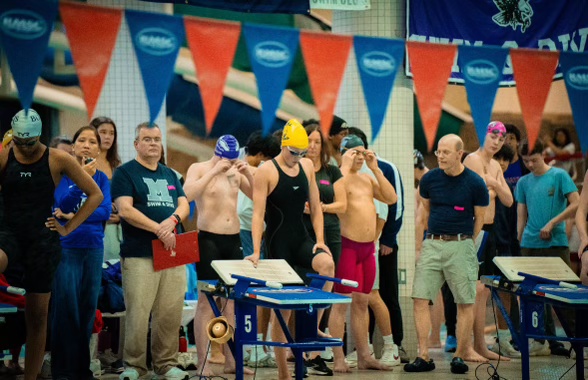
You’re on the starting block, with thousands watching you in person and millions watching you on live TV. One millisecond. That’s what can separate you from the athlete next to you, from giving you a chance to fulfill your dream of competing in the Olympics. The pressure is intense. 

Photo by Bradly Steiner

How should you cope with this?

Treat it like any other race.

“The best thing you can do is to not make it a bigger deal than it is,” said Coach Blanken, Bethesda Chevy Chase, ASA and River Falls swim coach. “Because at the end of the day — whether it’s a 50 freestyle or 200 backstroke —, it’s the same [event] that you did, and you know, even if it was two years ago, it’s the same swim from the last time. It’s just a different pool under a different set of lights, but the actual activity is the same. So treat it that way.”

Ranked first in the class of 2026 in Maryland, 16 year-old Virginia Hinds, secured her place in this week’s Olympic trials with a time of 2:13.14 in the 200 backstroke. Hinds swims for the ASA (All Star Aquatics), Bethesda Chevy Chase’s Varsity team, as well as CCRA. 

The trials are a big event on the swimming schedule and attract big TV audiences. Despite her young age, Hinds seems to be heeding her coach’s advice and taking the pressure and attention in stride. 

“There’s a good amount of pressure sometimes but for me I just try to not think about the pressure and have fun,” Hinds said. “At the end of the day, as long as I’m having fun and happy with my races that’s all that matters to me.”

Hinds is following closely in the footsteps of Olympic gold medalist Katie Ledecky. Both are determined and hard working swimmers who hold many swimming records. Hinds spends the majority of her time in the water, and started swimming because of her older sister, Clara. 

“I’ve looked up to my sister mainly because she is the reason I started swimming and is always my biggest supporter,” Hinds said. 

Maryland Olympic swimmers Phoebe Bacon and Katie Ledecky swam at the same Stone Ridge Pool where Hinds currently trains. Bacon and Ledecky began their remarkable journeys to Olympic success at the Stone Ridge pool, a hot spot of Maryland talent. The state’s strong swimming community and facilities have provided an essential platform for swimmers to develop their skills and move to competing in the US Olympic trials.

Kristinia Lennox swam for Puerto Rico in the 2008 Olympics. Lennox coached GDS High School, NCAP Gold lll as well as the Somerset Dolphins, coaching many swimmers keeping Maryland swimming strong. She was 23 years old when she swam in the Olympics held in Beijing.

Photo by Bradly Steiner

“[Even though] the people are from different nations, the language is the same,” Lennox said. “We all knew how to get up on blocks, set up and go. That’s universal, but it’s just different and definitely very intimidating.”  

A former Spanish swimmer Dario Fuentes agreed the pressure around swimming is very intense. As there is a lot of tension within each swimmer. 

“We trained for four years to reach our goal that may be decided in less than a minute race,” Fuentes said.

Although Hinds just missed qualifying for the Olympics in 2024, Blanken is proud of his swimmer. “It’s just an unbelievable accomplishment,” he said of her 5th place finish. “And it’s one that she’ll have with her forever. She is in a very, very small group of people that can say that they got that far, it’s very difficult to make. So it’s really cool to see.”

Is The $16 Movie Ticket Worth It?

by Kira Taylor
Woodward Academy

Imagine this: A new movie that you have been waiting on for months comes out today on both Netflix and the movie theaters. Are you buying a ticket to the cinema, or are you chilling in bed with your dog and watching it at home?

It seems that nowadays, more people are choosing the latter option and it is upsetting those who adore the magic of the cinema.

CEO of Netflix, Ted Sarandos, encourages watching movies outside of the cinema. Even saying that big blockbuster movies would be enjoyed just as much on streaming as in the theaters.

Because of the effects of the global pandemic, less and less people have been wanting to enjoy new movies in the movie theaters and are instead choosing to save money, and watch movies at home instead.

55 year old Atlanta police officer, Michael Porter, used to go to the movies almost weekly as a young adult, but now he finds himself never compelled enough to drive to the cinema.

“I just don’t think that the movies they make now make me want to go,” Porter says.

Many believe that movies simply aren’t worth it anymore. Given that before the pandemic, there were so many box office hits such as Marvel’s “Avengers: Endgame” and many iconic Star Wars movies. Now, it is hard to feel excitement for movies now in comparison.  

Not only are people not going for this reason, but there is the aspect of money involved too.  People are no longer willing to spend money on overpriced movie tickets.

“After Covid, the thought of paying almost $20 to go to the movies when I could just watch it at home is incredibly unappealing,” Porter says. 

Even with the many downsides of going to the cinema nowadays, the experience of watching a film in HD on a 50 foot screen is incomparable. 

“The crowd, the atmosphere and the experience will turn a film into an experience,” says Daniel McCall, a 17 year old film lover advocating for the importance of cinemas.

Many of the most iconic movies to ever grace a screen have been so special to many people because of the experience they had with it in the cinema.

Christopher Nolan’s 2023 box office hit, “Oppenheimer” for example, is a film that many have fond experiences with in the cinema. The film contains incredible shots and a captivating score that can only be fully experienced on the big screen, according to Nolan.

McCall recollects many movies that he watched at home during the pandemic that he wishes he had the privilege to watch at his local cinema.

“The magic of film stopped when the world did,” McCall says, referring to the global pandemic.

Even though movie theaters are notoriously overpriced and the quality of movies are seemingly at a decline in the past decade, the experience of the cinema is something that should be forever cherished.

“The experience of the cinema is priceless,” McCall says.

Flag football rises in popularity

Flag Football is becoming a more popular and entertaining sport throughout the youth of America, especially between girls the ages of 14-17.

Karleigh Gorman, former high school flag football player advocates for girls playing flag football.

“It makes me feel like I’m equal to a guy, because guys always brag about playing football and girls can’t. It makes me feel important and it makes me feel like I have a right and I am empowered,” Gorman said.

In recent years flag football has made a wide appearance across the state of Georgia becoming more popular, a club sport and an official high school sport for girls. Only 15 colleges offer competitive collegiate flag football teams, with all the colleges being National Association of Intercollegiate Athletics, NAIA. Only two of those colleges are in Georgia.

Flag football opens various opportunities for people of all ages. It provides people, specifically kids, the opportunity to branch out and broaden their skills. Kieth Wenrich, the director of recreational sports, mentioned that kids can benefit from flag football in all aspects. Flag football also opens doors for girls across the country and gives them more opportunities in the sports world.

“The ways are numerous, here are a few; physical activity, team building, socialization, well-being, leadership, sportsmanship, competitiveness, friendship, critical thinking, risk management” Wenrich said.

Many girls throughout Georgia have joined local club teams and or teams provided by their schools. This past year Fulton county of Georgia added flag football sports teams to most of their high schools.       

 “I do not see it becoming an NCAA sport.” Wenrich said addressing the chances of women’s flag football becoming more than a NAIA sport.

Although flag football is becoming more and more popular, it is not apart of the National Collegiate Athletic Association, NCAA. As of now there are no future plans for flag football becoming an NCAA sport. 

Even though it is still in the beginning stages of becoming more prominent, flag football is still enjoyed throughout the community.

Hockey from the South

When people think about hockey, the first thing that often comes to mind is ice, snow and the cold — all traits of Northern cities. Most would not consider weather and Southerners. 

“The south should definitely have hockey, it’s just a great thing to have,” said former hockey player Austin Treubert.

Treubert started playing hockey at the age of 5 and stopped playing his senior year of high school. He grew up in Freehold, New Jersey so he was introduced to many opportunities in hockey. Around the age of 10, Treubert played against a team from North Carolina. This is when he realized there were teams in the South. 

Current hockey players, Matteo and Luca Salvatore, found it difficult to play hockey after moving from Canada to South Carolina. “Hockey was the only sport in Canada, it was the only thing to do,” Matteo Salvatore said. 

The set of twins started playing hockey at the young age of 3 and still continue with their careers today. “Hockey is now in a different environment for us and it was hard to adapt,” Matteo Salvatore said. “Traveling really impacted me, there should really be more places down here.”

Since hockey has started to open up more, Matteo and Luca don’t have to travel as much. Both boys would travel every weekend and miss parts of the week for hockey, “Traveling took a toll on me, having to fly then play five games a day was hard,” Luca Salvatore said. 

Sophomore David Eberly from Atlanta, who plays for the UGA Ice Dawgs, faced struggles when traveling, “I can’t explain the amount of things I missed out on due to traveling for hockey.” 

Due to his travels up north, Eberly only got one weekend off, if he was lucky. Having to travel almost every weekend can impact anyone. As more states like South Carolina, North Carolina and Georgia started to have more teams, this lessened travel. 

 “We have lots of opportunities (in the South) now,” he said.

Danny Bryant, the arena general manager for the Classic Center, was very open to the idea of more southern hockey teams. Bryant said that Athens, Georgia will be announcing the arrival of their new ECHL team. This new arena will help attract more people for hockey. 

Over the past seven years, the UGA Ice Dawgs — who will play home games in the new arena — have won conference championships and have proved themselves as a competitive team. “People love the Dawgs — we always have a big crowd,” said Bryant.  “Even the students love it.”

The rise of hockey in the South has done more than add another sport for people to play and watch. It also has created a community. “I just love being in the environment it gave me and the community it created,” said Matteo Salvatore.

Matteo Salvatore has been on multiple teams at one time with so many different players. Some of them are from the North that have decided or have been recruited to play down South. Players coming from the North to the South is not uncommon. The current UGA Ice Dogs roster features 14 players from northern states, including New York, Maryland, Wisconsin and Colorado.

Regardless of where they came from, all of the players on the team have developed a strong bond and have even taught others some other skills that they know. “It was fun learning new things that other guys had learned from up north, they definitely brought some newer things” Eberly said. 

Luca Salavote, a goalie for his team, said that it was important to him when he got to show some of his skills to other players that didn’t have them. Due to the lack of camps and training facilities in the South, many native Southern hockey players missed out on opportunities to improve their game. Eberly noted that kids from New York or Maryland have a slight advantage from the other players. 

Whether from the North or South, Austin said hockey players share a common bond — their passion for the sport and their desire to share their love for it. 

“Hockey is more than just a sport, it lets people come together and be one big family,” Austin said. “It’s a community of people that love each other, I think every kid should have that.”

Music Matters: The Music Experience At UGA

People care a lot about sports, but don’t pay any attention to performing arts. 

Ian Jones, a recent UGA graduate that was a music major said, “I really do value music and it’s not pursued because I want to make money,” he said. “I’m pursuing it because I love it.” 

At most colleges, sports is the number one priority. Other programs besides sports become forgotten and not recognized as much as student athletes. Performing arts being one of them. Performing arts is a very competitive field and musicians don’t get the credit they deserve. 

“I feel like I have matured a lot because of music,” Jones said. “I’ve gained a lot of sensitivity and emotional input and output and it’s helped me become a better person.”

Jones spoke about how much he loved being at UGA and being a music major. He explained that it took a lot of practice and dedication to get into UGA’s music program. He also highlighted the challenges he has had to face in such a competitive field. 

“The social challenge [of being a music major] is people always asking what you are going to do with your career,” he said. “Musicians do gain a stigma that they are going to have a ‘poor person job.’”

Jones also underlined the struggles of being in the music world, while also having to be shadowed by UGA’s big sports presents.

“We definitely did not get the same quality or representation [in contrast to sports programs],” he said. “However, I do acknowledge that it is two different worlds that are occurring. You have the very artistic side of the campus versus the athletics.”

Some would agree that people support sports more than music programs which makes the UGA orchestra community underrepresented.

 Mark Cedel, the director of the orchestra at University of Georgia said, “This was something I couldn’t understand when I came here, coming to such a big university, a big football team where football is very important,” he added. “I wish we had more support for the arts.”

However, Cedel does not regret his decision to teach or direct orchestra at the university level. 

“I feel lucky being in academia,” Cedel said. “It’s always exciting seeing how they [students] react to a piece of music for the first time.” 

Cedel spoke on being a director at the University of Georgia and he expressed that he really loves his job and how much he loves orchestra.

“I love making music, bringing the music alive and studying it while figuring out what the composer wanted,” he said. “There is always room for interpretation and your own personal feeling.”

There are many positive attributes to being in a orchestra and UGA takes pride in working together to create music.

Laura Patterson, a first violinist in The Athens Orchestra commented,“I love getting to do something with other people that are fun and creative and brings joy to the audience.“We have fun playing music, but then in the performance, someone else gets to enjoy what we’re enjoying.”

Patterson went to UGA as a music major and she also played sousaphone for the Redcoats band. She explained that the redcoats were different from the orchestra ensemble because the orchestra was more pressure. She agreed that people do not support the arts as much as they support sports teams, but they supported the redcoats because they were connected to football. 

“People absolutely support the marching band on game days because they recognize that it’s a very important part of the game day experience.”

Patterson explained that she had a unique experience playing for both the orchestra and in the marching band. She explained how important it is to support the arts as a whole.

A great way to support local music is to show up to the events and give back to the programs.

 “Go to concerts for paid organizations, donate money if you have it, but then also support music in our schools,“ said Patterson. “If we don’t support music in our schools, then we won’t have musicians in the future.”

Athfest Returns Following Two-Year Hiatus


A local music festival called Athfest is returning after being unable to take place due to COVID-19 for the past 2 years.

“It was canceled because we couldn’t get our city permit that you have to have to hold the event,” said Rachel Allen, a member of the Athfest team. However, she says that all the relationships necessary to hold Athfest had been continued, “so there wasn’t much of a gap there getting back started.”

The Athfest music and arts festival is a 3 day gathering that features local artists and culture. It consists of outdoor stages, iconic local venues, an artist market, and even an area for children. After not taking place for the past two years due to concerns about COVID-19, the Athfest team is working hard to make it return on June 24th to June 26th of this year. 

“It’s an organization that works year round,” said Allen, referring to the Athfest team. “It’s a well oiled machine.”

Allen’s description of the team highlights how the return of Athfest is expected to be very smooth despite the 2 year gap since the previous festival. “It’s not like everybody just went away for two years,” Allen said. The Athfest team has been working through the COVID-19 pandemic and are prepared for their return. 

However, this year’s festival does have a change. 

“For the last many years we’ve had a system where you buy a wristband and can go to a dozen different venues where there is music,” Allen said. But this year, there are only two ticketed venues – the Georgia theater and the 40 watt club. “It had to do with the last minute nature of having to wait until the number where right covid wise” Allen said. By the time the Athfest team knew they would be putting on the festival, numerous venues had not opened back up due to concerns about COVID-19.

Despite this change, one of Allen’s comments assured that the music will remain the same. 

“We still had all the relationships with bands,” Allen said. Even though there has been trouble setting up the festival amongst the chaos brought by the pandemic, the same bands will perform like they have at the previous Athfests.